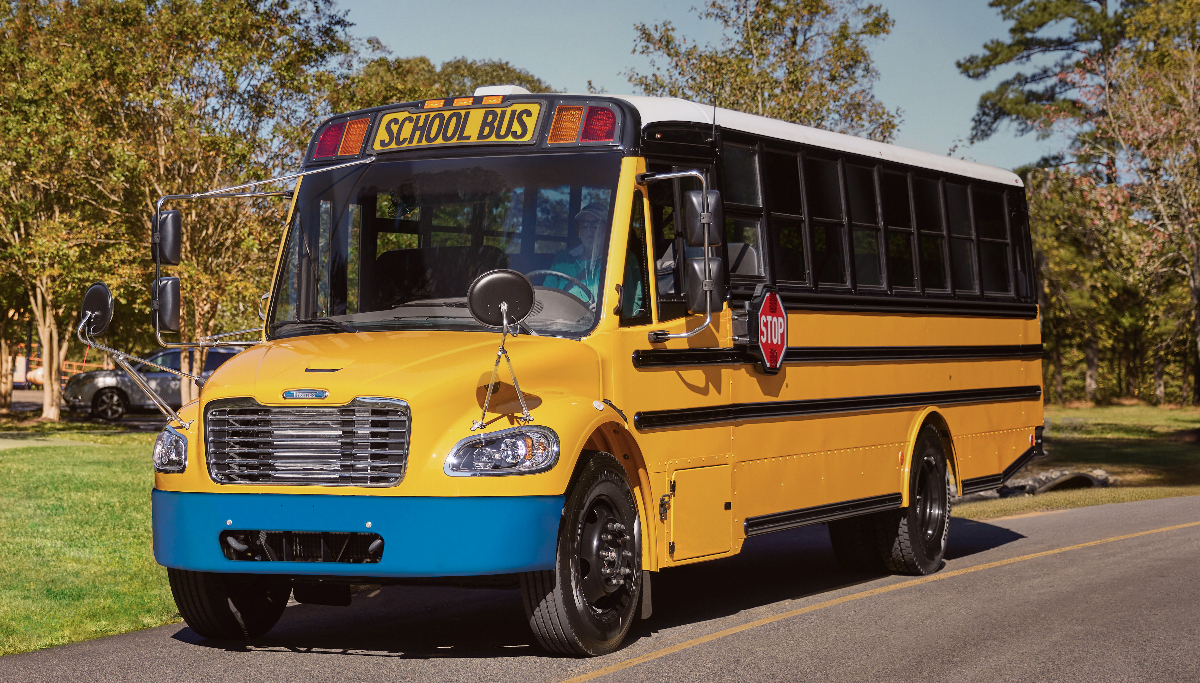
A federal clean transport program is at the center of a policy clash
A battle over the future of electric school buses is unfolding inside one of the largest remaining pools of US clean transport funding. According to the supplied source text, roughly $2.3 billion remains in the Clean School Bus Program, and Congress wrote the law so that at least 50 percent of the funding goes toward zero-emission vehicles. The dispute now centers on whether that mandate will continue to shape how the money is distributed.
The source states that on February 19 EPA Administrator Lee Zeldin canceled the 2024 rebate round and began steering the remaining 2026 funds away from battery-electric buses. It also says the agency issued a Request for Information that instead points toward propane, liquefied natural gas, and hydrogen-powered buses. The comment period for that request runs through April 6.
Why the stakes are larger than school fleets
School buses sit at the intersection of public health, municipal finance, and industrial policy. They are among the most visible public-sector vehicle classes, and unlike passenger cars, they can often be electrified through centralized depots and predictable daily routes. That makes them a natural early target for electrification policy.
The conflict described in the source text therefore matters well beyond the school transportation niche. If federal officials redirect money away from battery-electric buses, the effect would be felt by districts planning fleet replacements, manufacturers scaling up production, utilities preparing charging infrastructure, and local communities expecting quieter vehicles with no tailpipe emissions.
Supporters of electric buses have long argued that the category delivers multiple gains at once. It can cut exposure to diesel exhaust for children, reduce fuel and maintenance costs over time, and support domestic clean-vehicle supply chains. Critics, by contrast, often focus on up-front cost, charging complexity, and concerns about range or cold-weather performance. The current dispute is effectively about which of those considerations will dominate the next round of federal spending.
The legal and political question
The most important factual claim in the source text is the statutory one: that Congress required at least half of the program’s funding to go to zero-emission vehicles. If that reading holds, then any major attempt to prioritize fossil-fuel alternatives over battery-electric buses would invite a direct argument that executive agencies are departing from the law’s text and intent.
That legal dimension helps explain why the issue has escalated beyond routine grant administration. Clean transport funding has become a proxy fight over executive discretion, industrial transition, and the durability of climate-related spending after funds are appropriated. In other words, this is not only about what kind of bus schools will buy next. It is also about how much latitude agencies have to reinterpret congressional programs after political control changes.
The mention of hydrogen in the EPA’s information request is especially notable because the source text says no hydrogen school bus is currently being made. That detail underlines the practical gap between some fuel-policy discussions and the current state of the market. Even when alternatives exist on paper, procurement choices still depend on what districts can actually order, operate, and maintain.
What happens next
The near-term focus is the April 6 close of the comment window. That process will help determine whether the agency’s shift hardens into a formal programmatic change or triggers a stronger pushback from districts, manufacturers, advocates, and legal challengers.
For now, the Clean School Bus Program is a case study in how energy transition policy can be slowed not only by technology or cost, but by reinterpretation inside the state itself. The remaining billions still represent real market power. Where that money goes will shape not just near-term bus purchases, but the credibility of federal commitments to zero-emission transport infrastructure in public fleets.
This article is based on reporting by CleanTechnica. Read the original article.
Originally published on cleantechnica.com




