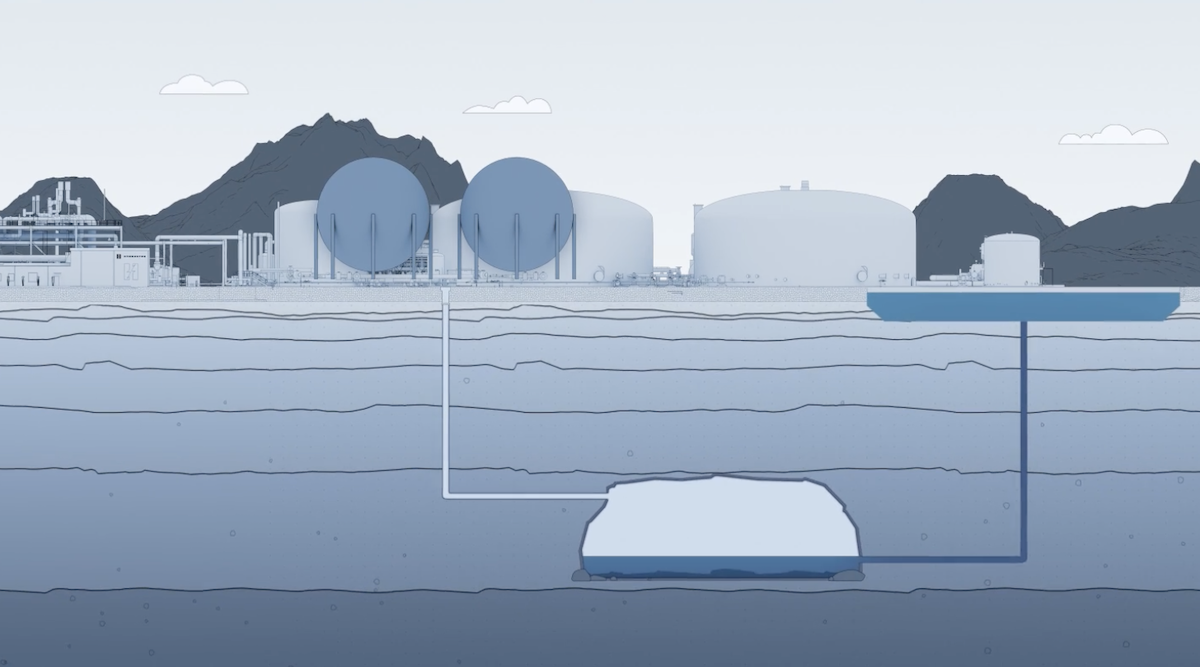
Hydrostor's Massive Compressed Air Project
On February 12, 2026, Canadian energy startup Hydrostor signed a 50-megawatt offtake agreement with California Community Power for its Willow Rock Energy Storage Center, a 500-megawatt advanced compressed air energy storage facility under development in Kern County, California. The project stores energy by compressing air into underground caverns at depths of 2,000 feet, backed by a 600 acre-foot surface reservoir. With more than 8 hours of storage capacity from a 500-megawatt facility, Willow Rock represents a new class of long-duration energy storage that directly competes with the baseload power role traditionally filled by coal plants.
Cost Competitiveness Is Already Here
According to BloombergNEF's 2024 data, compressed air energy storage at 8-hour duration costs approximately $293 per kilowatt-hour, while lithium-ion batteries at 4-hour duration cost $304 per kilowatt-hour. Thermal energy storage comes in even lower at $232 per kilowatt-hour. These figures illustrate that long-duration storage technologies are not only technically viable but already cost-competitive with the lithium-ion batteries that have dominated the market. For coal advocates, this means the economics of building new coal capacity are increasingly unjustifiable when storage can deliver comparable reliability at competitive or lower costs.

Serving Millions Across California
California Community Power serves 112 municipalities spanning from Humboldt to Santa Barbara County, covering 2.7 million ratepayers. Six of its nine community choice aggregators are participating in the Willow Rock offtake agreement, signaling broad institutional confidence in advanced storage technology. The scale of this commitment demonstrates that energy storage is no longer a niche solution for grid balancing but a mainstream infrastructure investment capable of serving large populations reliably.
A Global Pipeline Grows
Hydrostor's ambitions extend well beyond California. The company is developing a 200-megawatt Silver City Energy Storage Centre in Australia and has a total project pipeline of 7 gigawatts across multiple continents. Active discussions are underway with utilities in Arizona, Nevada, New York, and across the Southeast and Northwest United States. The geographic diversity of this pipeline suggests that advanced compressed air storage is not limited to favorable geology in a single region but can be deployed across varied terrain and regulatory environments.
As energy storage deployments accelerate globally, the window for any meaningful coal revival continues to narrow. New storage technologies are solving the intermittency challenge that coal proponents have long cited as renewable energy's fatal flaw. When grid operators can dispatch 8 or more hours of stored energy at costs competitive with fossil fuel generation, the last major argument for continued investment in coal-fired baseload power effectively disappears. The economic case for coal is no longer a question of policy preference but of basic arithmetic.
This article is based on reporting by CleanTechnica. Read the original article.
Originally published on cleantechnica.com




