Summer demand is rising, and solar is taking more of the load
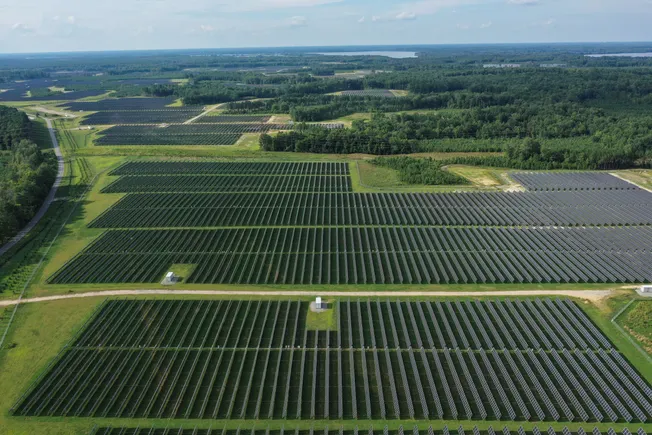
Solar generation in the United States is expected to rise 17% this summer compared with 2025 levels, according to the U.S. Energy Information Administration’s latest Short-Term Energy Outlook. The agency also expects hydro generation to grow 6% and wind 5% over last summer, reinforcing a trend in which renewable resources are increasingly central to meeting electricity demand during the hottest months of the year.
The significance of that forecast goes beyond a one-season bump. EIA says total U.S. electricity sales are likely to increase 1.2% in 2026 to 4,108 billion kilowatt-hours, then grow another 3.3% in 2027. It expects summer demand to rise 2.3% this year compared with 2025 and 3.7% in 2027. In that environment, the resources gaining the fastest ground during peak months matter disproportionately.
Solar is becoming the visible summer growth story
EIA notes that last summer solar generation surpassed wind generation for the first time during the season, and it expects that trend to continue. By the summer of 2027, the agency says solar output should grow another 22% to 178 billion kilowatt-hours, exceeding wind by almost 30% during the season, even though wind is still expected to generate more electricity across the full year.
That is an important distinction. Solar’s strength is becoming especially clear during daylight-heavy, air-conditioning-intensive periods when demand is high and generation from photovoltaics is naturally aligned with load. As more capacity comes online, solar is increasingly moving from a supplementary clean-energy source to a central contributor to summer reliability.

Coal’s decline is just as important as solar’s rise
The same EIA outlook points to continued erosion in coal generation. Output from coal is expected to be about 10% lower in the first half of 2026 than in the same period of 2025, and roughly 6% lower in the second half of the year. Across a slightly longer horizon, EIA projects coal generation will fall from 733 billion kilowatt-hours in 2025 to 658 billion kilowatt-hours in 2027.
Natural gas remains comparatively steady in the near term, with EIA projecting gas-fired generation at 1,704 billion kilowatt-hours this year, up only marginally from 1,702 billion in 2025, before a larger increase in 2027. Nuclear output is expected to stay relatively constant at just under 800 billion kilowatt-hours. The biggest shifts therefore come from the growth of renewables and the continued decline of coal.
Why the forecast matters
- Summer peaks are becoming more dependent on solar growth.
- Coal’s role in the U.S. power mix continues to contract.
- Renewables are gaining seasonal grid importance, not just annual market share.
- Demand growth means new generation has to arrive fast enough to keep pace.
This does not mean the grid’s transition challenges have disappeared. Higher renewable penetration raises questions about storage, transmission, interconnection, and how systems perform outside peak solar hours. But the directional change in the federal government’s own short-term outlook is hard to miss. Solar is scaling into a materially larger role, and it is doing so precisely when the grid needs extra energy the most.
That seasonal advantage could prove politically and operationally significant. It is one thing for renewables to post strong annual totals. It is another for them to help cover the most visible and stressful periods on the grid calendar. When summer demand rises and solar is the fastest-growing major contributor, the resource shifts from environmental talking point to a more practical reliability asset.
The EIA forecast does not settle debates about grid design or market reform. It does, however, make one short-term trend clear. U.S. electricity demand is rising, coal is shrinking, and solar is taking a larger share of the seasonal burden. That is not just a projection about clean energy. It is a projection about how the structure of the U.S. power system is changing in real time.
This article is based on reporting by Utility Dive. Read the original article.
Originally published on utilitydive.com