A financing blueprint is emerging for large solar-plus-storage builds
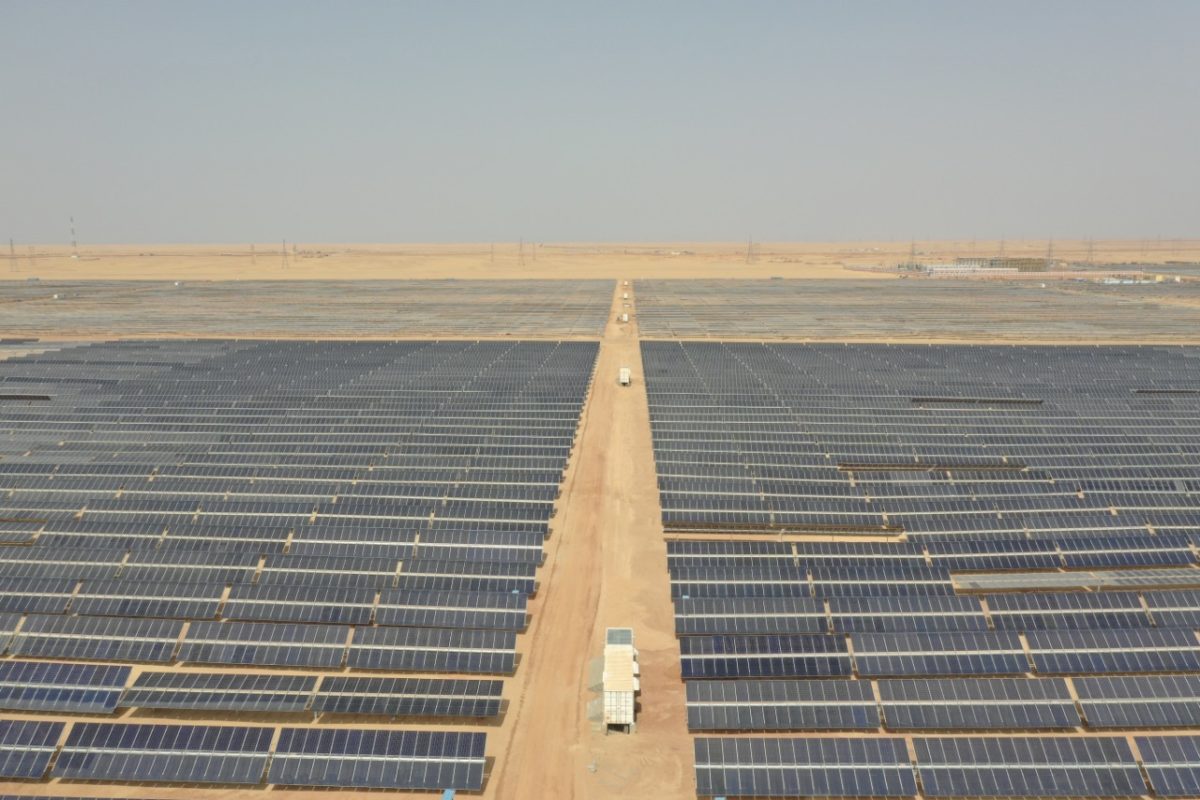
Norwegian developer Scatec has commissioned the first phase of the 1.1 gigawatt Obelisk solar and battery energy storage system project in Egypt, marking not only a major infrastructure milestone but also a notable financing experiment in large-scale clean power. According to the supplied source text, the project combines $479.1 million in debt from development finance institutions with layered equity participation and a battery storage revenue structure that is fully contracted rather than exposed to merchant power-market swings.
That financial architecture matters because the economics of utility-scale solar-plus-storage often depend as much on bankability as on hardware cost. Developers may be able to build large projects technically, but getting them financed at acceptable terms remains one of the decisive constraints in emerging markets. Obelisk offers a concrete example of how multilateral debt, strategic equity, and contracted revenues can be assembled to reduce risk and unlock capital.
The project, located in Nagaa Hammadi in Upper Egypt, has a stated capital cost of $590 million. More than 80% of that total is non-recourse debt, according to the source text, provided by the European Bank for Reconstruction and Development, the African Development Bank, and British International Investment.
Why this capital stack stands out
Clean energy financing frequently hinges on whether lenders believe revenue will be stable enough to service debt over the life of the project. Solar generation can often be underpinned by a power purchase agreement, but the storage component introduces additional complexity. In many markets, batteries depend on merchant arbitrage, ancillary service revenues, or policy structures that can shift over time.
What makes Obelisk notable is that its storage revenue is described as fully contracted, with no merchant exposure. That means the project is not relying on uncertain future market spreads or spot-price volatility to justify the battery investment. Instead, the storage economics are built into a more predictable revenue profile.
That kind of certainty can materially change how lenders view the asset. By reducing exposure to market volatility, a fully contracted structure may lower financing costs and widen the pool of institutions willing to participate. In emerging markets, where currency, policy, and infrastructure risks can already be elevated, that is especially important.

The role of development finance institutions
The debt package comes from three major development finance sources: EBRD, AfDB, and BII. Their participation is significant not just because of scale, but because development finance institutions often play a catalytic role in markets where purely commercial lenders may be more cautious.
DFIs can provide longer tenors, accept certain risks that private lenders avoid, and help establish confidence around projects that advance national energy and development priorities. In practice, their involvement can crowd in additional investment and create templates that future projects can reuse.
With Obelisk, the debt reportedly accounts for more than 80% of total project cost and is non-recourse, meaning repayment is tied to project revenues rather than the broader balance sheets of sponsors. That structure is common in infrastructure finance but only works when lenders view the asset’s contracted cash flows as credible over time.
Layered equity and strategic partnerships
Below the debt layer, the project includes a multi-party equity arrangement. Norfund, through Norway’s Climate Investment Fund, holds 25% of the Obelisk holding company, while Scatec retains 75%. EDF Power Solutions holds 20% of the operating company below that level, leaving Scatec with the remaining stake there as well according to the source text.
This layering spreads both risk and strategic interest. It brings in climate-focused capital, preserves sponsor control, and adds an established energy partner at the operating-company level. For large infrastructure projects, that kind of structure can align development expertise, operational capability, and policy-oriented investment in a way that improves execution confidence.
It also reflects how energy finance is evolving. Large clean power assets are increasingly assembled through consortia rather than simple single-sponsor ownership, particularly when projects include storage, operate in emerging markets, or seek concessional or blended capital.
Why Egypt matters in this story
Egypt has become an important market to watch for utility-scale renewable deployment because it sits at the intersection of rising electricity demand, resource quality, and regional ambitions around clean power and industrial development. A successful solar-plus-storage project of this scale can therefore serve as more than a one-off investment. It can act as proof that complex clean energy infrastructure can be financed with disciplined, repeatable structures.
For other markets in Africa and the Middle East, the key lesson may be less about the exact sponsors and more about the design principles. High debt share, development-finance backing, contracted storage revenues, and layered equity can create a bankable path for projects that might otherwise look too risky.
From project finance to market signal
The Obelisk project is important because it turns an industry aspiration into a financing case study. The conversation around solar-plus-storage often focuses on falling battery prices and grid flexibility benefits. Those are real. But projects are built when capital providers believe the risk-adjusted return is credible.
The source material supports a strong conclusion: Obelisk’s first phase is operating, and its financing model combines multilateral debt, strategic equity, and a fully contracted battery revenue stream. That combination reduces merchant uncertainty and demonstrates a practical route for scaling large clean-energy assets in emerging markets.
If the structure performs as intended, its influence could extend beyond Egypt. It would suggest that one of the hardest parts of the energy transition in growth markets is becoming more solvable: not just how to build solar-plus-storage, but how to finance it at the scale required.
This article is based on reporting by PV Magazine. Read the original article.
Originally published on pv-magazine.com