The Largest Energy Loan in U.S. History
The Department of Energy has committed $26.5 billion in loan financing to Southern Company, marking the single largest loan in the agency's history. The funding will support the construction of approximately 5 gigawatts of new natural gas-fired power generation along with a portfolio of grid modernization investments across Southern's Georgia Power and Alabama Power subsidiaries.
The scale of the deal reflects the enormous capital requirements facing the American electricity sector as it confronts a surge in demand driven by data centers, electric vehicles, and the electrification of heating and industrial processes. Five gigawatts of new gas capacity is equivalent to roughly five large natural gas combined-cycle power plants — enough to power approximately 3.5 million homes.
The DOE projects the loan will generate over $7 billion in cost savings for customers of Georgia Power and Alabama Power by providing below-market financing rates. Federal lending programs can access capital at lower interest rates than utilities can obtain from commercial markets, and those savings flow through to customer bills in the form of lower rates than would otherwise be required to finance the same infrastructure.
Why Natural Gas, Why Now
The decision to finance 5 GW of natural gas capacity may raise eyebrows given the Biden administration's legacy emphasis on clean energy transition and the current administration's broader energy agenda. But the choice reflects a pragmatic reality that utility planners have been grappling with: the pace of electricity demand growth has outstripped the ability of renewable energy alone to meet it.
Data center construction, driven by the AI boom, has created what industry executives describe as unprecedented demand growth. After decades of relatively flat electricity consumption in the United States, utilities across the Southeast and mid-Atlantic are scrambling to add generation capacity. Natural gas plants can be built relatively quickly — typically three to four years from permitting to operation — and provide the firm, dispatchable power that complements intermittent renewable sources.
Southern Company's service territory in Georgia and Alabama is particularly affected by this trend. Georgia has become a major hub for data center development, with significant investments from hyperscale operators including Google, Microsoft, and Meta. Alabama Power is seeing similar demand growth as industrial customers expand operations in the state's growing manufacturing corridor.

Grid Modernization Beyond Generation
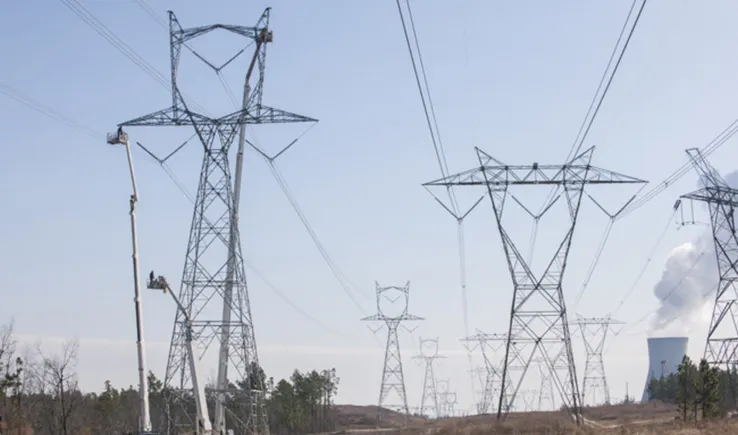
While the headline number is associated with new gas capacity, the loan package also funds broader grid investments. These include transmission upgrades needed to move power from new generation sources to load centers, distribution system improvements to support growing demand, and grid hardening measures designed to improve resilience against severe weather events that have become more frequent and more costly.
The transmission component is particularly significant. Building new power plants means little if the wires connecting them to customers can't handle the additional load. Much of the Southeast's transmission infrastructure was built decades ago and was not designed for current load levels, let alone the growth projected for the next decade. Federal financing can accelerate the pace of transmission construction by reducing the cost of capital and smoothing the regulatory process.
Grid hardening investments address a different but equally pressing challenge. Southeastern utilities have faced billions of dollars in storm damage in recent years, and the cost of rebuilding damaged infrastructure is ultimately borne by customers. Proactive hardening — undergrounding lines in vulnerable areas, upgrading poles and transformers, deploying smart grid technology for faster restoration — can reduce long-term costs even though it requires significant upfront investment.
The Financing Mechanism
The DOE's loan programs have become increasingly important tools for energy infrastructure development, particularly as private capital markets have tightened and interest rates have risen. The Loan Programs Office, which administers the lending, has expanded significantly in recent years, with authority to make loans across a range of energy technologies and infrastructure types.
For Southern Company, the federal loan provides several advantages beyond lower interest rates. The long tenor of government financing — typically 20 to 30 years — better matches the useful life of the infrastructure being built. Commercial bank loans tend to be shorter-term and require refinancing, introducing interest rate risk that ultimately increases costs. Federal lending also provides certainty of execution, eliminating the risk that capital markets could become unavailable during the construction period.
The $7 billion in projected customer savings assumes that the federal lending rate remains substantially below what Southern Company could obtain commercially over the life of the loans. Given current market conditions, that assumption appears reasonable, though future interest rate movements could narrow or widen the gap.
Industry Implications
The loan signals that the federal government is prepared to support natural gas infrastructure as a bridge technology even as longer-term decarbonization goals remain in place. For other utilities facing similar demand surges, the precedent could open the door to additional large-scale federal financing for gas plants and grid upgrades.
Environmental groups are likely to challenge the decision, arguing that locking in decades of natural gas infrastructure is incompatible with climate targets. The counterargument from utilities and the DOE is that the alternative — failing to meet demand growth — would be far worse for both the economy and reliability. Rolling blackouts and industrial curtailments would carry their own economic and social costs.
For Southern Company shareholders, the deal provides growth capital at favorable terms. For its customers in Georgia and Alabama, the promised savings are meaningful — though the proof will be in the rate cases that translate federal financing into actual bill reductions over the coming years.
This article is based on reporting by Utility Dive. Read the original article.
Originally published on utilitydive.com