The Numbers Tell the Story
Constellation Energy's latest earnings report delivered a stark illustration of how rapidly American electricity markets are changing. Average day-ahead electricity prices in the PJM West region — the wholesale market serving much of the mid-Atlantic and parts of the Midwest — surged 49 percent in 2025 compared to the prior year. Capacity prices, which represent payments to generators for being available to produce power, rose even more dramatically.
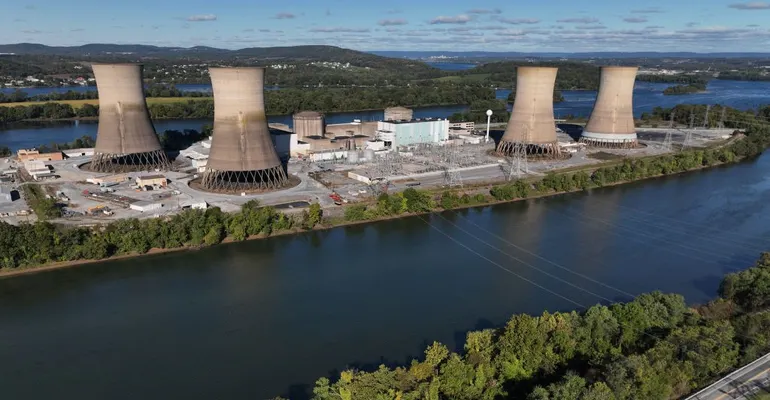
For Constellation, the nation's largest nuclear power operator, these price increases translate directly to improved financial performance. Nuclear plants have relatively fixed operating costs, so higher electricity prices flow almost entirely to the bottom line. The company's fleet of 21 nuclear reactors across the United States — representing roughly a fifth of the nation's nuclear capacity — is generating electricity at a time when every megawatt-hour commands a premium that would have seemed unlikely just a few years ago.
What's Driving the Surge
The primary driver is demand growth that has caught the power industry off guard. After two decades of essentially flat electricity consumption in the United States, load growth has returned with a vengeance. Data centers are the most visible source of new demand, with hyperscale facilities operated by Amazon, Google, Meta, and Microsoft drawing enormous amounts of power for AI training and inference workloads.
The PJM Interconnection, which operates the grid across 13 states and the District of Columbia, has seen interconnection requests from data center developers surge to unprecedented levels. Many of these requests are concentrated in Northern Virginia's "Data Center Alley" and surrounding areas, where the existing grid infrastructure is already strained. The mismatch between rapidly growing demand and slowly expanding supply has pushed prices upward across the region.
But data centers aren't the only factor. Industrial reshoring, electric vehicle adoption, and the electrification of building heating are all adding incremental demand. Individually, each factor might be manageable. Together, they represent a structural shift that the power industry's planning processes — which typically assume modest, predictable demand growth — were not designed to accommodate.

Capacity Markets Under Pressure
Capacity prices have increased alongside energy prices, reflecting the tightening supply-demand balance. In PJM's capacity auctions, generators bid to provide a specified amount of reliable generating capacity for future delivery periods. When the projected supply margin shrinks — when available generation barely exceeds expected peak demand — capacity prices rise to incentivize new investment and discourage the retirement of existing plants.
Recent PJM capacity auctions have produced clearing prices significantly above historical norms. The signal is unmistakable: the market is telling developers and investors that new generation is needed and that existing generators should stay online as long as possible. For Constellation's nuclear fleet, which faces periodic questions about economic viability, the high capacity prices provide additional revenue certainty that supports continued operation.
The capacity market dynamics have created a peculiar situation where utilities that previously seemed to have adequate generation reserves are now scrambling to secure supply. Long-term power purchase agreements that seemed generous a few years ago now look like bargains. Utilities that locked in contracts at lower prices are benefiting, while those that relied on spot markets are paying the premium.
The Nuclear Advantage
Constellation's position as the largest nuclear operator gives it structural advantages in the current market environment. Nuclear plants produce electricity around the clock with very high reliability — capacity factors routinely exceed 90 percent. Unlike natural gas plants, nuclear facilities are insulated from fuel price volatility. And unlike renewables, they produce power regardless of weather conditions.
The combination of high, predictable output and rising electricity prices has made nuclear generation extraordinarily profitable. Constellation's nuclear fleet was already benefiting from state clean energy credits that value nuclear's zero-carbon output. With wholesale energy and capacity prices now also elevated, the company is earning premium returns from multiple revenue streams.
This favorable position has not gone unnoticed. Constellation's stock price has reflected investor enthusiasm for the company's leverage to rising power prices, and the company has explored opportunities to expand its nuclear footprint — including restarting previously shuttered reactors and exploring next-generation small modular reactor technology.
Implications for Consumers and Industry
The price increases visible in wholesale markets are gradually working their way to consumer electricity bills, though the impact varies by state and utility. Customers in deregulated markets feel the effects more quickly and directly. Those in regulated markets are somewhat insulated by the rate-setting process, though utilities are filing rate cases that reflect higher generation costs.
For energy-intensive industries, the price environment is prompting difficult decisions. Some companies are seeking long-term power contracts to lock in costs before prices rise further. Others are investing in behind-the-meter generation — solar panels, batteries, or even on-site gas generators — to reduce their exposure to wholesale market volatility. The largest data center operators are signing direct agreements with generators, including nuclear plants, to secure reliable power supply at predictable prices.
The broader question is whether the current price environment represents a new normal or a temporary spike that will correct as new supply comes online. The pipeline of new generation projects — including natural gas plants, solar farms, battery storage, and eventually nuclear — is large, but development timelines mean most of that capacity won't be available for three to five years. In the meantime, Constellation and other generators are positioned to benefit from a market that is, by most measures, the tightest it has been in a generation.
This article is based on reporting by Utility Dive. Read the original article.
Originally published on utilitydive.com