A growing solar argument centers less on panels and more on farm survival
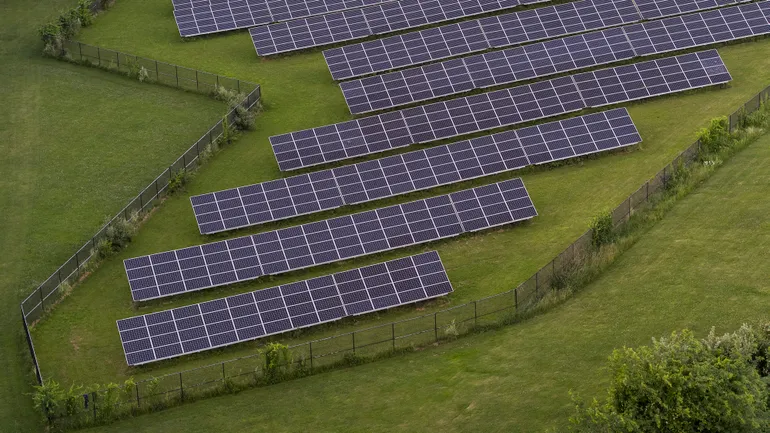
Community solar is often debated as a land-use conflict: energy generation versus agriculture. But an opinion piece published by Utility Dive makes a different case. Abby Broedlin, vice president of asset management at Nautilus Solar Energy, argues that distributed solar can help keep farmland in agricultural hands by giving financially strained farms a stable source of income.
The argument is explicitly that of an industry executive, not a neutral research finding. Even so, it reflects a meaningful shift in how parts of the solar sector are trying to frame development on rural land. Instead of presenting solar as a competing use, the industry is increasingly describing some projects as a financial buffer against the market forces pushing farms toward sale or conversion.
The financial pressure on family farms
Broedlin’s premise is that many farms are not disappearing because owners want to leave agriculture, but because the economics have become too volatile. Commodity prices can collapse quickly, input costs keep rising, and energy-related disruptions can raise costs before a planting season even begins. Against that background, even something as basic as covering property taxes can become difficult.
If that diagnosis is right, then the question is not whether farms should remain exactly as they were in the past. It is whether new revenue models can help them remain farms at all. That is where community solar enters the argument.
Lease income as a stabilizer
According to the piece, lease payments from community solar projects can offset or fully cover property taxes, one of the major fixed costs farmers face regardless of crop performance. Predictable lease income can help a farm absorb weak harvests or volatile market years and may reduce the pressure to sell land into residential or commercial real estate markets.
That claim does not mean solar is suitable for every parcel or every agricultural community. It does mean that, in some regions, the relevant comparison may not be solar versus untouched farmland. It may be solar versus the eventual loss of farmland altogether.
Why distributed solar is central to the pitch
The opinion piece makes a distinction between community solar and larger projects designed to export power elsewhere. Community solar is presented as smaller-scale distributed generation that serves nearby homes and businesses. That local framing matters politically because it positions the project as part of a rural community’s own infrastructure rather than an external extraction of land value.
It also helps explain why the industry increasingly stresses coexistence rather than replacement. The core message is that modern farming may need to include more mixed land-use models if rural landowners are going to remain financially resilient.
A debate likely to intensify
None of this settles the larger controversy around solar on agricultural land. Critics still worry about landscape change, land concentration, and whether energy development can gradually displace food production. Supporters argue that flexible policy can preserve both local power generation and agricultural viability.
What Broedlin’s argument captures is a strategic reframing already underway in the renewable energy sector. Solar developers are no longer only selling decarbonization. They are also trying to sell income stability, especially in places where the economics of farming have become increasingly fragile.
Whether that case persuades lawmakers and rural communities will depend on local conditions and project design. But the underlying point is hard to dismiss: if farmland is being lost because the financial model no longer works, then the future of agriculture may be shaped as much by cash flow and land taxes as by ideology about what a farm should look like.
This article is based on reporting by Utility Dive. Read the original article.
Originally published on utilitydive.com