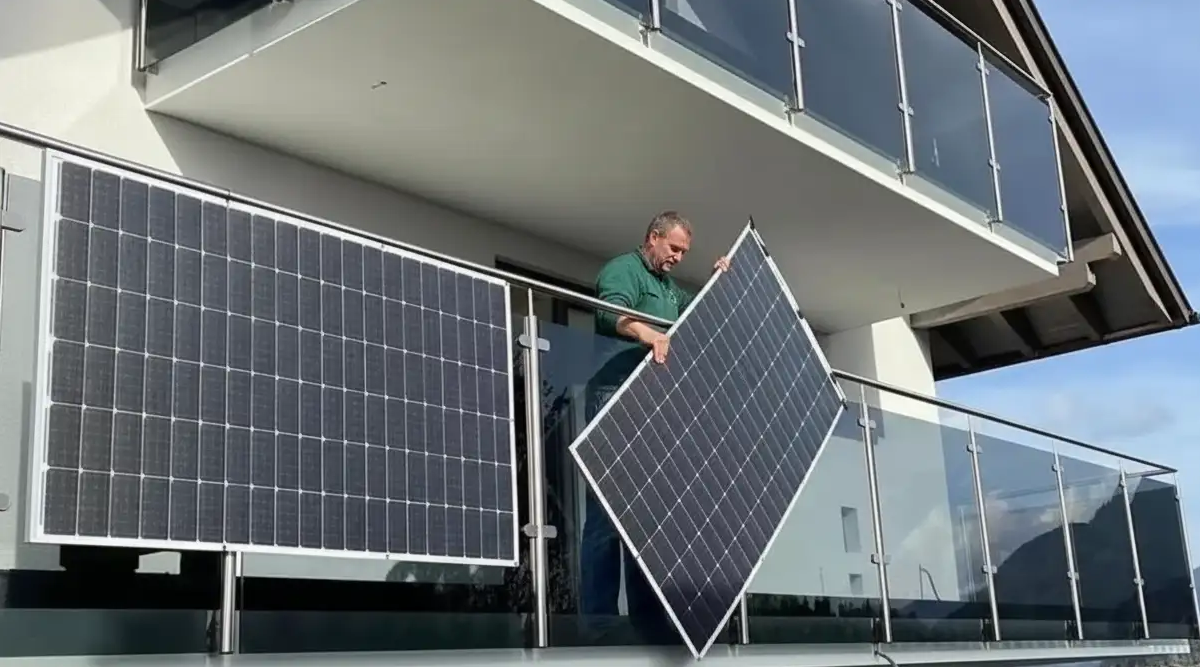
A Small Solar Format With Outsized Appeal
Balcony solar is no longer just a European phenomenon. According to the supplied CleanTechnica text, plug-in solar systems that can hang from a balcony or small outdoor space are beginning to spread in the United States, with Illinois emerging as an early testing ground for broader adoption.
The concept is simple: a transportable solar panel that plugs into a household outlet so residents can offset part of their electricity use without a full rooftop installation. That simplicity is the source of its appeal. It lowers the financial and practical barriers to entry for renters, apartment dwellers, and homeowners with limited roof access.
From Ukraine to Germany to the US
The supplied source text traces the recent rise of balcony solar back to Ukraine, where households adopted hangable, plug-in panels to work around attacks on power infrastructure. The idea then spread rapidly in Germany, where public subsidies accelerated uptake.
CleanTechnica cites SolarPower Europe figures showing German households registered 276,000 balcony panels in 2023, added another 435,000 in 2024, and passed the one million mark last year. Those numbers suggest the technology has already moved beyond novelty in at least one major market.
Manufacturers have noticed. The source text says Enphase launched an IQ Balcony Solar System for German households in 2025, describing it as a plug-and-play option for apartments, patios, and smaller outdoor areas. That kind of productization matters because it turns an improvised energy workaround into a commercial category.

The US Bottlenecks
In the United States, the barriers are less about hardware than rules. The supplied text identifies two main obstacles. One is the lack of enabling state legislation for devices that feed electricity into a household system without utility preauthorization. The other is property-owner and homeowner-association restrictions that can limit what residents install.
Illinois may become an important early case. CleanTechnica says Senate Bill 3104 would replace the state’s current preauthorization requirement with a simpler notification form to the utility. That would not solve every issue, but it would make adoption materially easier and signal that regulators are beginning to treat balcony solar as a legitimate part of the residential energy mix.
Why This Matters
Balcony solar will not replace rooftop arrays or utility-scale projects. Its significance lies elsewhere. It offers a modular, low-commitment form of energy independence at a moment when households are increasingly sensitive to electricity costs and grid vulnerability. It also expands who gets to participate in distributed energy.
If states begin clearing the regulatory path, balcony solar could become one of the more interesting edge cases in the energy transition: not glamorous, not massive, but practical enough to spread. Germany has already shown the category can scale. Illinois may show whether the United States is ready to let it.
This article is based on reporting by CleanTechnica. Read the original article.

Originally published on cleantechnica.com




