A battery buildout is taking shape at utility scale
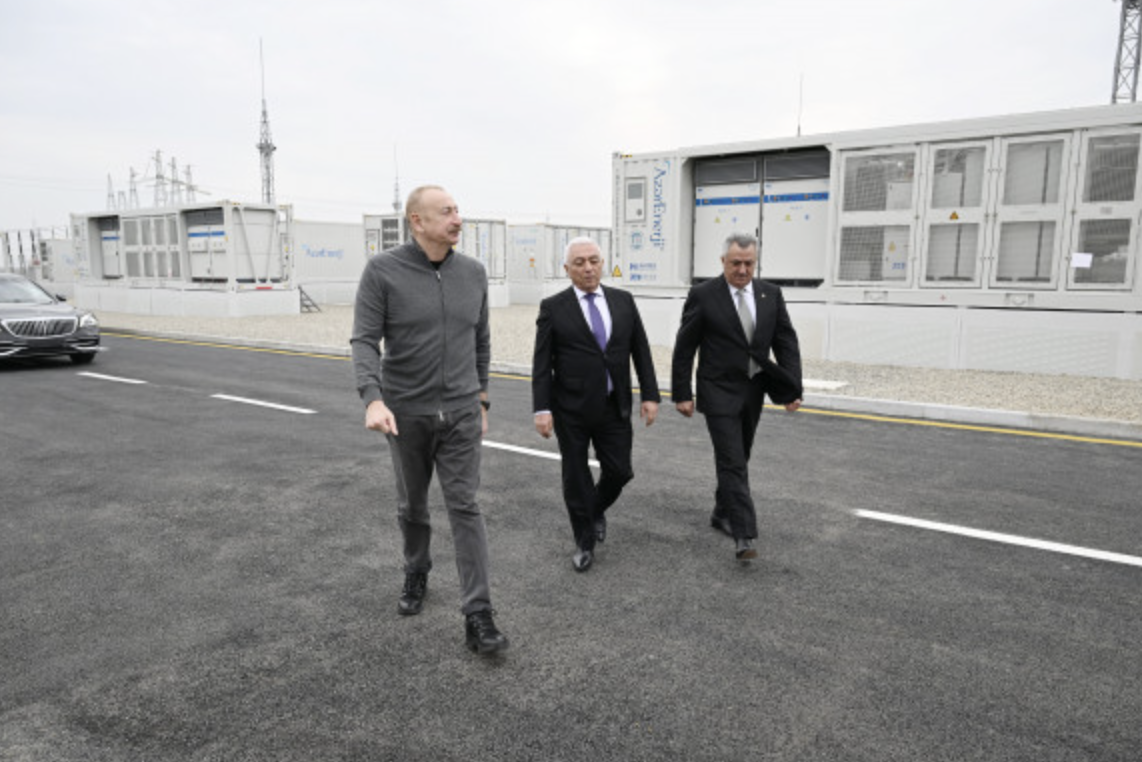
Azerbaijan has commissioned a major battery energy storage project as part of a broader 250 megawatt, 500 megawatt-hour rollout led by state-owned power producer AzerEnerji. President Ilham Aliyev inaugurated the development, which is intended to improve grid stability and support the integration of renewable energy.
The initiative centers on large storage hubs tied to two substations: the 500 kV Absheron substation and the 220 kV Agdash substation. The Absheron battery system includes 50 battery containers and 13 inverter containers, along with a control building equipped with SCADA monitoring to track battery performance, frequency, and voltage.
Those details signal something important. This is not a pilot-scale experiment or a symbolic demonstration project. It is infrastructure designed to operate inside the grid, with the visibility and controls needed for utility-level performance.
Why storage matters for grids adding renewables
Battery systems help electric grids manage variability. When renewable generation rises and falls with weather or time of day, storage can shift energy, smooth fluctuations, and provide fast-response services that help maintain frequency and voltage. That is why countries expanding wind and solar increasingly see battery projects not as optional add-ons, but as part of the architecture required to make higher shares of variable power workable.
The Azerbaijani project is explicitly framed in those terms. The supplied report says the rollout is meant to strengthen grid stability while supporting renewable-energy integration. That combination is key. Grid stability is the operational objective; renewable integration is one of the strategic reasons to pursue it.
For countries modernizing power systems, battery deployment often starts by solving immediate technical problems and then expands into a wider energy-transition role. Once storage is installed at meaningful scale, it can reduce curtailment, help absorb sudden changes in output, and improve the grid’s flexibility under stress.

The infrastructure details point to serious operational intent
The inclusion of SCADA monitoring is notable because it places the project squarely within standard utility control logic. Operators need real-time visibility into battery behavior, state of charge, dispatch conditions, voltage support, and performance at the substation level. Without that layer, storage can exist physically but not function as a dependable grid asset.
By specifying control infrastructure and inverter capacity, the project suggests Azerbaijan is not simply buying containers of batteries. It is building a system meant to interact dynamically with the transmission network. That matters because the credibility of utility-scale storage depends on operational integration as much as on nameplate capacity.
The 250 MW/500 MWh overall program size also indicates a two-hour storage duration at full output across the broader rollout. That duration is commonly associated with grid balancing and short-duration flexibility, rather than very long backup coverage. In practice, systems like this are often most useful for smoothing peaks, managing renewable fluctuations, and providing ancillary support.
Energy storage is becoming a marker of grid modernization
Azerbaijan’s project reflects a larger global shift. Battery energy storage is increasingly treated as core grid infrastructure rather than a niche clean-tech segment. That is especially true where governments want to add renewables without undermining power quality or reliability.
The strategic value is straightforward. Building renewable generation without parallel investment in flexibility can create congestion, instability, or underused assets. Building storage alongside grid upgrades gives system operators more options. It can also make future renewable additions easier to accommodate.
For Azerbaijan, the political significance is also clear. A president-led inauguration signals that the project is being presented as national infrastructure, not just sectoral investment. That public framing can matter for investor confidence, policy momentum, and the pace of follow-on projects.
What the project suggests about the next phase
The available source text is limited, so it does not establish the full mix of technologies, suppliers, or project timelines beyond the rollout scope. But it does support a broader conclusion: Azerbaijan is moving from talking about storage to energizing it at scale. That transition is where policy ambition starts becoming operational capability.
If the system performs as intended, it will help stabilize the grid, provide visibility into how large batteries behave in Azerbaijani operating conditions, and create a template for later deployments. More broadly, it shows how countries outside the earliest battery markets are now treating storage as a practical requirement for grid resilience and renewable integration.
That is the real significance of the commissioning. Battery storage is no longer confined to the energy-transition language of future plans. In Azerbaijan, at least part of that future is now wired into substations, connected to control rooms, and switched on.
This article is based on reporting by PV Magazine. Read the original article.
Originally published on pv-magazine.com