SpaceX sends another 24 Starlink satellites into orbit
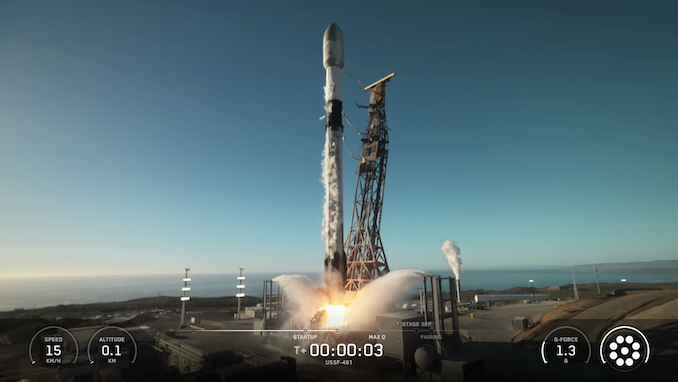
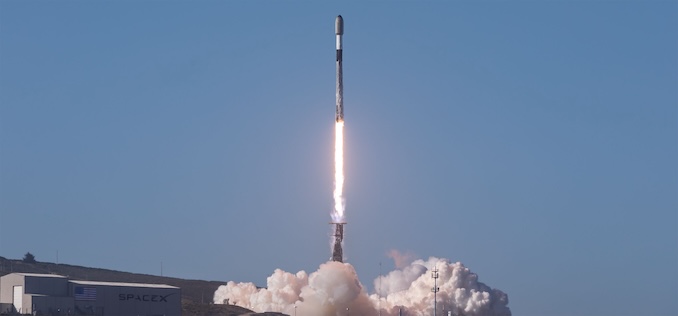
SpaceX launched 24 Starlink satellites on June 11 from Vandenberg Space Force Base in California, continuing the rapid expansion of its broadband network in low Earth orbit. The mission, designated Starlink 17-44, lifted off from Space Launch Complex 4 East at 8:05:59 a.m. PDT, according to Spaceflight Now.
The launch added another batch of spacecraft to a constellation that the report said now exceeds 10,500 Starlink satellites in orbit. That figure underscores both the scale of SpaceX’s deployment effort and the pace at which the company continues to add capacity.
A familiar rocket, still setting a hard pace
The mission flew on Falcon 9 first-stage booster B1071, which completed its 34th flight. That reuse count alone captures one of the central stories in commercial launch: Falcon 9 is no longer just a frequently flown rocket, but a repeatedly reflown one operating at industrial tempo.
According to the supplied source text, B1071 has previously supported missions for the National Reconnaissance Office, SpaceX rideshare flights, Germany’s SARah-1, NASA’s SWOT spacecraft, South Korea’s CAS500-2, and multiple earlier Starlink deliveries. That record reflects how SpaceX is using a common booster fleet across government, scientific, and internal commercial missions rather than treating those lines of business as operationally separate.

Another successful drone-ship recovery
After stage separation, the first stage landed on the drone ship Of Course I Still Love You in the Pacific Ocean roughly eight and a half minutes after launch. Spaceflight Now said this marked the 202nd landing on that vessel and the 622nd booster landing for SpaceX overall.
Those cumulative counts matter because they show that recovery is no longer the experimental part of Falcon 9 operations. It has become routine infrastructure. Each successful landing supports lower hardware turnover, faster launch cadence, and a model in which reusability is directly tied to constellation growth.
Why this mission matters beyond the count
On the surface, another Starlink launch can look incremental. But the significance is in repetition at scale. SpaceX is using a mature launch system to expand a network that functions as both a communications business and a demand engine for its own rockets. Every additional satellite extends capacity, refreshes orbital assets, and reinforces the vertically integrated structure that distinguishes Starlink from traditional satellite operators.
The June 11 mission also arrived one day before SpaceX stock was set to become publicly available on the Nasdaq, according to the source. Even without drawing broader conclusions from that timeline, the juxtaposition is notable. The company’s launch operations and its satellite network are deeply linked to its financial identity, and Starlink remains central to that story.
Industrial launch as a daily reality
The broader takeaway is that SpaceX is normalizing a cadence that would have been treated as extraordinary only a few years ago. A booster on its 34th flight, a drone ship passing 200 landings, and a constellation above 10,500 satellites all point to an operating model built around repetition and throughput rather than one-off spectacle.
That does not mean the underlying questions around orbital traffic, spectrum use, and long-term constellation management disappear. But based on the supplied source, the immediate development is clear: another Falcon 9 launch was executed on schedule, another reusable booster returned successfully, and another 24 satellites were added to the largest Starlink network yet.
The short version
Starlink 17-44 was not a breakthrough mission in the traditional sense. It was more consequential in a different way. It showed the continued reliability of SpaceX’s launch-and-recovery system and the company’s willingness to keep pushing satellite deployment at scale. In the current space industry, that kind of operational consistency is itself a major development.
This article is based on reporting by Spaceflight Now. Read the original article.
Originally published on spaceflightnow.com