Artemis III Crew Revealed
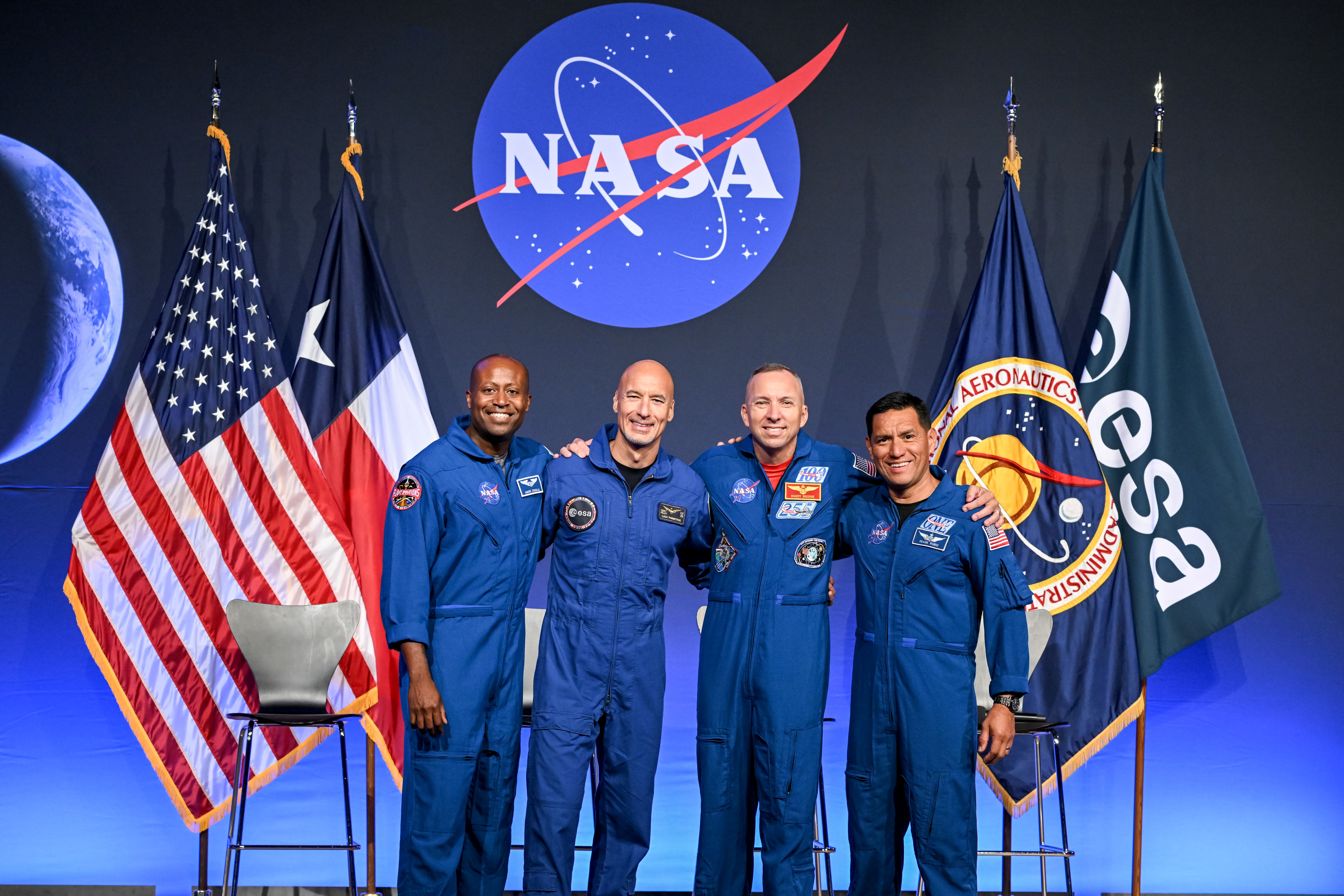
On June 9, 2026, NASA announced the four astronauts who will crew the Artemis III mission. The team includes NASA astronauts Andre Douglas, Randy Bresnik, and Frank Rubio, along with ESA (European Space Agency) astronaut Luca Parmitano. The announcement was made via a NASA image article featuring a group photo taken at the agency's facilities.
Mission Objectives
Artemis III is designed to operate in low Earth orbit, where it will test integrated operations between the Orion spacecraft and one or both commercial landers developed by SpaceX and Blue Origin. This mission serves as a critical step toward returning humans to the lunar surface, validating key technologies and procedures in a near-Earth environment before venturing farther into deep space.

Crew Background
Andre Douglas is a NASA astronaut selected in 2021, bringing expertise in engineering and robotics. Luca Parmitano, an ESA astronaut, has previously flown on Expeditions 36/37 and 60/61, including a stint as commander of the International Space Station. Randy Bresnik, a veteran of two spaceflights, has logged over 149 days in space. Frank Rubio, who holds the record for the longest single spaceflight by an American astronaut (371 days), adds extensive experience in long-duration missions.
Commercial Landers
The mission will evaluate the performance of SpaceX's Starship-based lander and Blue Origin's Blue Moon lander. These commercial systems are essential for future Artemis missions that aim to land astronauts on the Moon. Testing them in low Earth orbit allows engineers to assess docking, propulsion, and life support systems before committing to lunar operations.

Significance for Artemis Program
Artemis III represents a pivotal milestone in NASA's Artemis program, which seeks to establish a sustainable human presence on the Moon. By integrating the Orion capsule with commercial landers, the mission will demonstrate the capability to transfer crew between spacecraft—a key requirement for lunar landings. The data gathered will inform the design of subsequent missions, including Artemis IV and beyond.
Next Steps
The crew will now begin intensive training for the mission, focusing on Orion systems, lander interfaces, and emergency procedures. NASA has not yet announced a launch date, but the mission is expected to occur in the late 2020s. Further details about the mission profile and timeline will be released as preparations progress.

Public Engagement
NASA plans to provide regular updates on Artemis III through its website and social media channels. The agency encourages the public to follow the mission's development and learn more about the crew and their training.
For more information about the Artemis III crew and mission, visit the official NASA website.
This article is based on reporting by NASA. Read the original article.
Originally published on nasa.gov