The CIA is describing a future of hybrid human-AI intelligence work
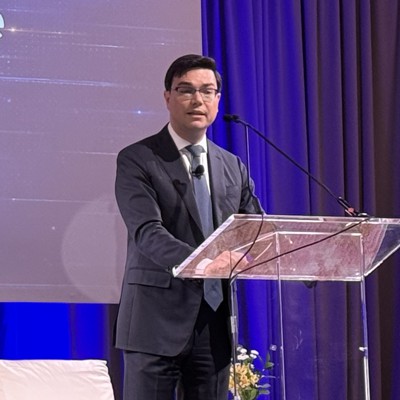
The Central Intelligence Agency has offered one of its clearest public signals yet about how deeply it expects artificial intelligence to become embedded in intelligence analysis. Speaking at a public event, CIA Deputy Director Michael Ellis said agency employees will increasingly work alongside AI “coworkers” and, within a decade, could manage teams of AI agents as autonomous mission partners.
The supplied source frames the shift as evolutionary rather than fully substitutive. Ellis said the tools will not “do the thinking” for analysts. Instead, they will help with basic but consequential tasks such as drafting key judgments, editing for clarity, comparing drafts against tradecraft standards, and triaging trends for human review.
That description matters because it places AI directly inside the workflow of analytic production. Rather than being limited to peripheral experimentation, these systems are being positioned as built-in collaborators inside the platforms analysts already use.
From pilot projects to operational workflows
The CIA is not talking about AI as a distant concept. According to Ellis, the agency had more than 300 AI projects last year and, for the first time in its history, used AI to generate an intelligence report. Even without further detail on that report, the statement is notable. It suggests the agency has crossed a symbolic threshold from testing tools to letting them contribute to core analytic output.
That does not mean the process is fully automated. The emphasis in the source remains on human oversight and human judgment. But the workflow implications are still profound. Drafting, editing, standards compliance, and trend triage are not trivial administrative steps. They influence speed, consistency, and how quickly analysts can move from incoming signals to finished products.
For an agency that works under pressure to identify patterns across economics, terrorism, cyber threats, and geopolitical activity, even modest gains in those functions could have outsized impact.
What an AI “coworker” might actually do
Ellis’ description provides a useful operational sketch. In the near term, AI appears headed toward the role of an embedded assistant that can help organize work, produce cleaner drafts, and surface issues that merit closer human attention. That is less dramatic than the popular image of autonomous machine analysts, but more plausible and more immediately transformative.
Intelligence analysis generates large amounts of text and demands adherence to method and tradecraft. AI is naturally suited to some of the repeatable pieces of that process, especially language handling. If integrated carefully, such systems could reduce clerical drag while preserving analyst control over interpretation and conclusion.
The key question is where assistance ends and influence begins. A tool that edits for clarity or checks standards can still shape how intelligence is framed. Even a triage system can affect which signals receive prompt review. That is why the agency’s insistence that AI will not replace thinking is important, but not sufficient on its own to settle broader concerns.
The longer-term vision: officers managing agent teams
The source says Ellis expects the CIA within a decade to treat AI tools as an “autonomous mission partner,” with officers overseeing teams of AI agents in a hybrid model. That is a more ambitious concept than a writing assistant. It implies decomposition of work across multiple systems that can pursue tasks semi-autonomously and then present outputs for human direction.
In practical terms, such agents might monitor streams of information, compare emerging patterns, flag anomalies, or prepare structured inputs for analysts. The source does not specify exact tasks, so the safest reading is that the CIA sees agentic coordination as a future operating model rather than a fully defined present capability.
Still, the organizational meaning is clear. Managing AI agents would become part of the job. Intelligence officers would not simply use software tools; they would supervise machine collaborators at scale.
Why the CIA is speaking publicly now
Public comments of this kind are rare for an agency whose mission depends heavily on secrecy. That makes the disclosure itself significant. It signals both confidence in the strategic value of AI and a recognition that public expectations around frontier technology now extend into national security institutions.
The source notes that the CIA recently elevated its Center for Cyber Intelligence into an entire mission center, a move Ellis said is already helping the agency deploy new tools in the field and gain access to priority targets. That organizational change suggests AI adoption is part of a broader modernization push tied to cyber operations, technical collection, and faster analysis cycles.
In other words, the AI remarks are not isolated. They fit into a wider picture of an intelligence service trying to increase speed and scale while confronting technologically sophisticated adversaries.
The opportunities and the risks
The appeal of AI for intelligence work is obvious. Analysts face growing volumes of information, tighter timelines, and increasingly complex data environments. Tools that can summarize, compare, draft, and flag trends promise efficiency gains. They may also help newer analysts conform more quickly to tradecraft expectations.
But intelligence is also a domain where mistakes carry outsized consequences. The source does not dwell on risk, yet the implications are unavoidable. AI systems can be wrong, biased, overconfident, or vulnerable to adversarial manipulation. In intelligence work, those weaknesses are not mere product flaws. They can affect national security judgments.
That makes the human-in-the-loop framing essential. The CIA appears to be presenting AI as an accelerator and assistant rather than a final arbiter. Whether that balance holds in practice will be one of the most important implementation questions in the years ahead.
A signal of where government AI adoption is heading
The CIA’s comments reflect a broader trend across government: AI is moving from experimental side projects into mission workflows. What distinguishes the agency’s plan is the level of integration it is willing to describe. “Coworkers” and “teams of AI agents” are not just technical terms. They are organizational terms. They imply changes in labor structure, supervision, training, and accountability.
If this model spreads, future analysts may spend as much time directing machine systems as writing assessments themselves. That would not eliminate human expertise, but it would redefine how expertise is expressed inside the workflow.
For now, the most concrete takeaway is that the CIA has already crossed into AI-assisted report generation and intends to push much further. The intelligence workforce of the next decade, if Ellis’ forecast holds, will be neither fully human nor fully automated. It will be hybrid by design.
This article is based on reporting by Defense One. Read the original article.
Originally published on defenseone.com