Solid-State Batteries Move Into Real-World Testing
One of the most persistent promises in electric-vehicle technology has taken a meaningful step toward commercial reality. A Dodge Charger Daytona test vehicle fitted with a solid-state battery from Factorial Energy has begun road testing in the United States, making it, according to the supplied source text, the first production car on North American roads powered by a solid-state pack.
That matters because solid-state battery development has been rich in prototypes, claims and lab milestones but much thinner in real-world automotive validation. Moving a pack from bench-scale engineering into a road-going vehicle is not proof of imminent mass deployment, but it is a more consequential stage than another specification sheet or demonstration cell.
What the Companies Have Claimed So Far
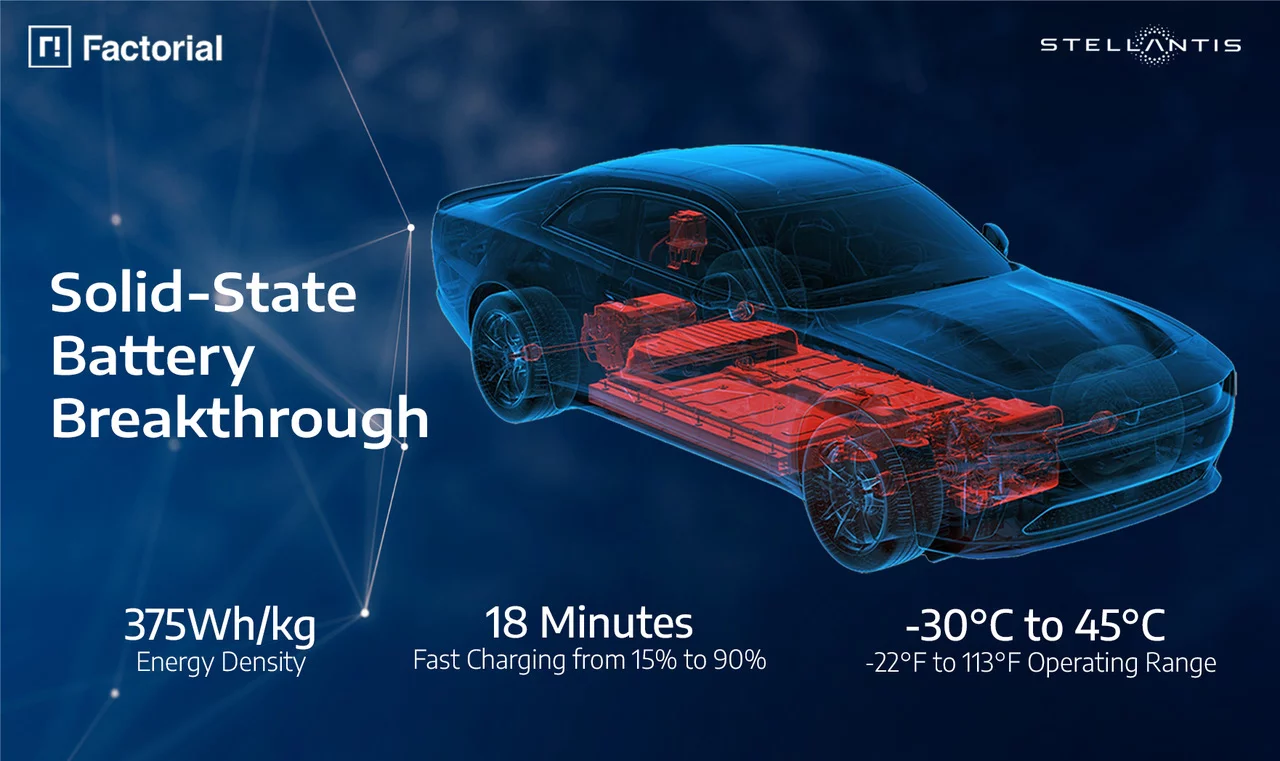
Stellantis and Factorial had previously reported progress on a battery with a claimed energy density of 375 watt-hours per kilogram, recharge capability from 15% to 90% in 18 minutes and operation across temperatures from minus 22 degrees Fahrenheit to 113 degrees Fahrenheit. Those figures, if realized in production conditions, would represent a substantial advance over many current EV packs.
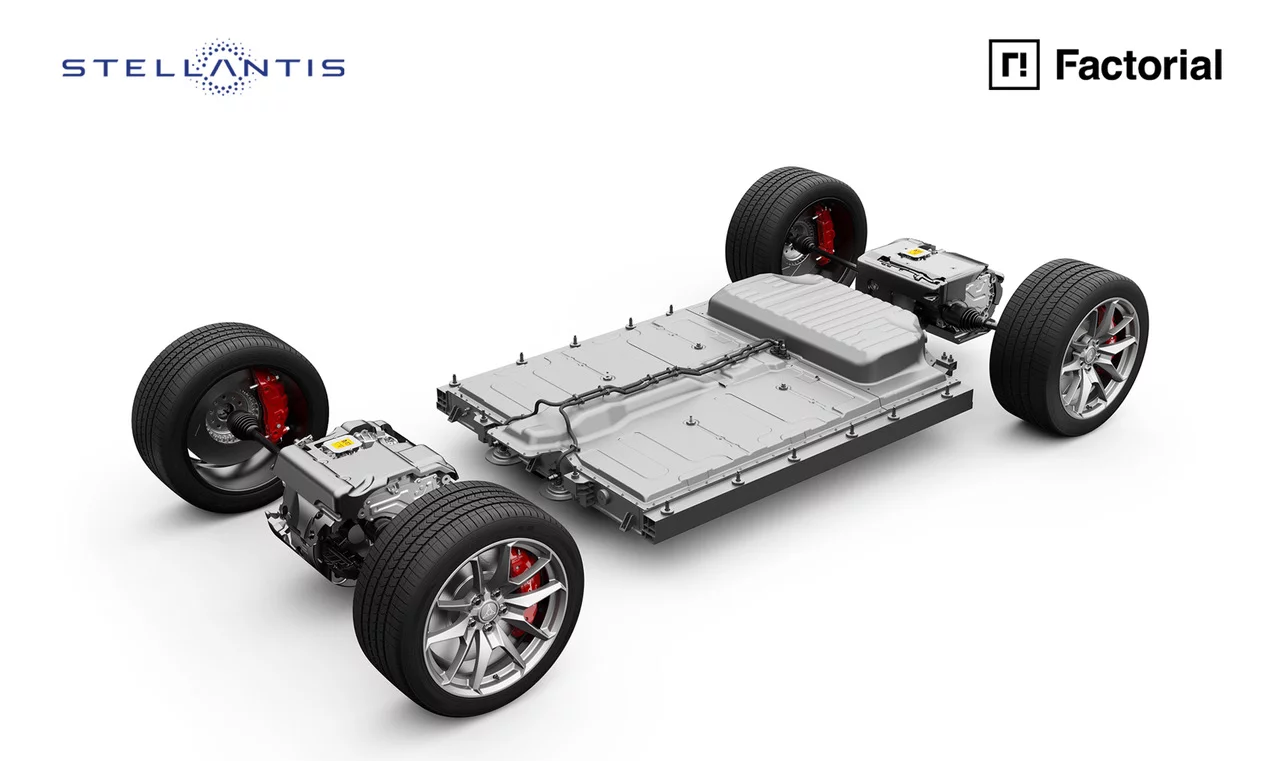
The challenge is that battery claims made outside an actual car do not settle the hardest questions. Engineers still need to understand thermal behavior, structural integration, durability, safety margins and performance under variable driving conditions. That is why the start of road testing is important. It shifts the technology from controlled development milestones to a setting where systems must work together under real constraints.

Why Integration Is Hard
Stellantis said fitting the cells into the development vehicle required advanced engineering solutions from both companies. The source text does not detail those solutions, but the implication is clear: moving novel battery chemistry into a vehicle platform is not a drop-in exercise. Packaging, cooling, electrical management and crash considerations all become more complex when the cell architecture differs from the lithium-ion designs automakers already understand at scale.
That integration work may be the real story. Breakthrough battery concepts often stall not because the chemistry is impossible, but because turning a promising cell into a manufacturable, certifiable, affordable vehicle system is brutally difficult. Road testing suggests Stellantis and Factorial believe they have crossed at least one important threshold in that process.
Why the Timing Matters for the EV Industry
The EV market badly wants a battery that can deliver more range, faster charging and better low-temperature performance without unsustainable cost or safety tradeoffs. Solid-state designs have long been positioned as candidates for that role because they could potentially raise energy density and improve charging behavior. But the timeline has repeatedly slipped across the industry.
That makes even a single test car noteworthy. It does not mean the sector’s battery problem is solved. It means one major automaker and one battery company are now collecting the kind of evidence that matters most: what happens when the pack leaves the lab and starts dealing with roads, weather, vibration, packaging constraints and real automotive duty cycles.
Still a Step, Not a Finish Line
The companies have not detailed how long the tests will run or what benchmarks must be met before the technology reaches production planning. So caution remains warranted. A test vehicle can validate feasibility without proving manufacturability, cost competitiveness or mass-market readiness.
Even so, this is a useful marker in a field known for overpromising. The road test does not prove that solid-state batteries are about to transform the EV market, but it does show the technology is advancing beyond theory. For Stellantis, which has not always been seen as the automotive industry’s boldest technology leader, the test also signals a more assertive role in next-generation battery development. The broader significance is simple: solid-state batteries are still not here at scale, but they are now a little harder to dismiss as permanently over the horizon.
This article is based on reporting by New Atlas. Read the original article.
Originally published on newatlas.com