A simple manufacturing idea with outsized implications
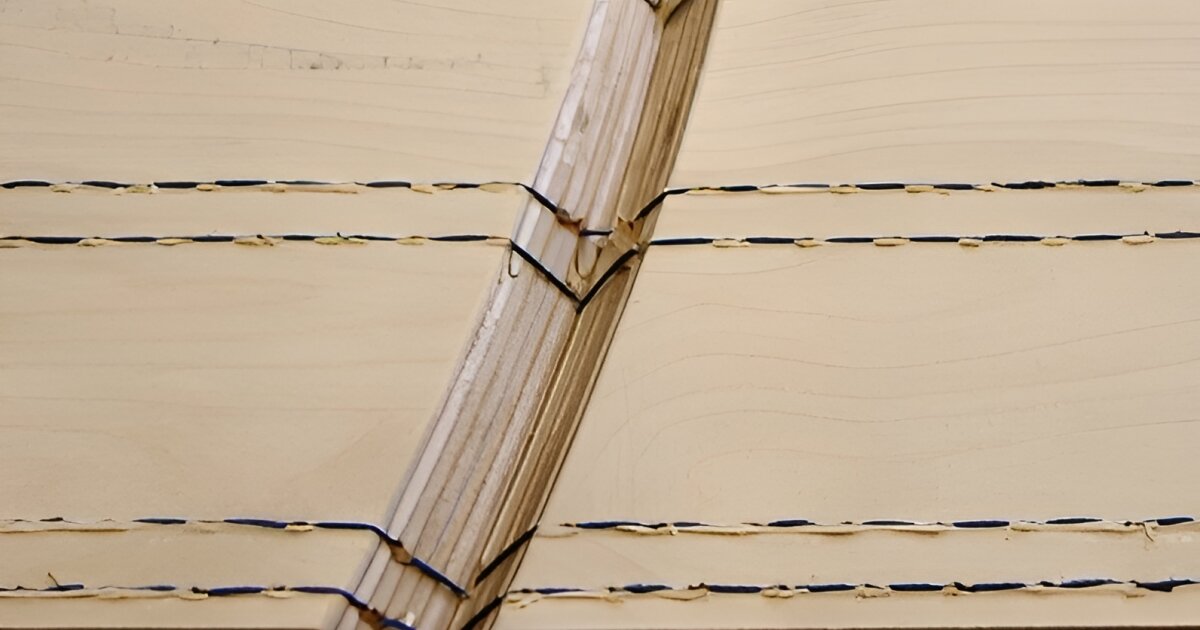
Researchers at Graz University of Technology are testing a surprisingly direct alternative to gluing wood laminates together: sewing them. According to the supplied report, the team found that stitching wood veneers like fabric can make laminated wood structures far more resistant to peeling forces and delamination, while using processes close to standard industrial sewing methods.
The appeal of the idea lies in its simplicity. Laminated wood products are already central to many lightweight engineered structures, but adhesive-bonded layers can fail when repeated loads begin to pull them apart. The Austrian team’s approach treats that weakness as a reinforcement problem rather than a chemistry problem.
Why stitching changes the mechanics
Lead researcher Florian Feist compared the effect of the seams to steel rebar in concrete. The analogy is useful because it explains the role of the stitching without overstating the novelty. The seams are not replacing wood. They are helping it carry critical tensile forces that otherwise encourage the layers to separate.
That matters most under peeling loads, where one layer begins to detach from another. According to the report, stitched laminates were significantly more robust under those conditions than glued ones. The team found load-bearing capacity against forces perpendicular to the wood surface could be about four times higher than with adhesive bonding alone. It also reported that the energy required to drive a crack through the stitched laminate rose by as much as fourteenfold compared with adhesive-bonded laminates.
Those are large differences. They suggest the stitching is not acting as a marginal supplement, but as a structural intervention that materially changes how failure begins and spreads.

Using textile logic in timber engineering
The process is notable because it borrows from textile manufacturing rather than inventing an exotic new production system. The researchers used a standard industrial sewing machine, but with two important adaptations: a triangular needle tip designed to avoid cutting through wood fibers and a nylon yarn intended to be both strong and flexible.
That combination appears to let the team stitch laminates up to 20 millimeters thick at a sewing speed of about 2.5 meters per minute. If that level of throughput can be translated into industrial settings, the method could be attractive not just because it works, but because it may fit into existing manufacturing logic more easily than a more radical materials process would.
Why this matters for real products
The report frames the research against products like skis and snowboards, where layered materials must stay light, strong, and dimensionally stable under repeated stress. That is a useful starting point, but the potential significance is broader. Engineered wood is increasingly important in mobility, construction, sporting goods, and design because it combines renewable sourcing with favorable strength-to-weight characteristics.
One persistent limitation is that layered wood structures can delaminate under the wrong load conditions or after prolonged use. If stitching can delay that failure mode substantially, designers may gain a new option for building durable composite timber parts without relying solely on stronger adhesives.
There is also a design implication embedded in the report. Sewing can be used not only to reinforce veneers, but also to create folds or seams in the wood itself. That opens the possibility of shaping functions and structural functions being combined more directly in manufactured wood components.
Old tools, new material logic
Part of what makes this work compelling is that it does not fit the usual script of advanced materials innovation. There is no rare chemistry, no headline nanomaterial, and no expensive new machine architecture in the supplied summary. Instead, the advance comes from asking whether a very old joining method from one domain can solve a stubborn failure mode in another.
That kind of cross-domain transfer is often where practical innovation emerges. Sewing is ancient. Veneer lamination is mature. Putting them together in a mechanically meaningful way is what makes the result interesting.
What the study suggests now
On the evidence provided, the cautious conclusion is strong enough: stitched wood laminates can withstand peeling loads much better than glued laminates and can significantly delay delamination. The process works on standard industrial sewing equipment with specific modifications and could support both stronger joints and new design possibilities.
Whether the technique scales commercially will depend on cost, production integration, and how it performs across different wood species and end uses. But the engineering logic is already clear. By treating wood layers more like textiles in the way they are joined, the researchers have identified a route to tougher lightweight structures that does not demand abandoning familiar materials.
For engineered timber, that is a meaningful shift. It suggests durability gains may come not only from better adhesives or thicker sections, but from rethinking how the layers are physically locked together. Sometimes the next material advance is not a new substance at all. Sometimes it is a new stitch.
This article is based on reporting by New Atlas. Read the original article.
Originally published on newatlas.com