Cement’s climate problem is enormous
Cement is one of the foundational materials of modern civilization and one of its biggest industrial emissions problems. The candidate report from New Atlas points to why: the world produces roughly 4 billion tons of cement each year, and the manufacturing process is responsible for an estimated 8% of global carbon-dioxide emissions.
That emissions burden comes largely from how cement is made. Raw materials such as limestone and silica-rich minerals are heated in kilns to extreme temperatures, approaching 1450 degrees Celsius, to form clinker, the intermediate material later ground into cement powder. That intense heat requirement is one reason the industry has proven so difficult to decarbonize.
A different route to belite
Scientists at the University of British Columbia say they have devised a method that could dramatically reduce that footprint by using electricity in a preheating electrochemical conversion step. According to the source text, the approach significantly lowers the extreme heating requirements of cement manufacturing and can make use of recycled cement and concrete as inputs.
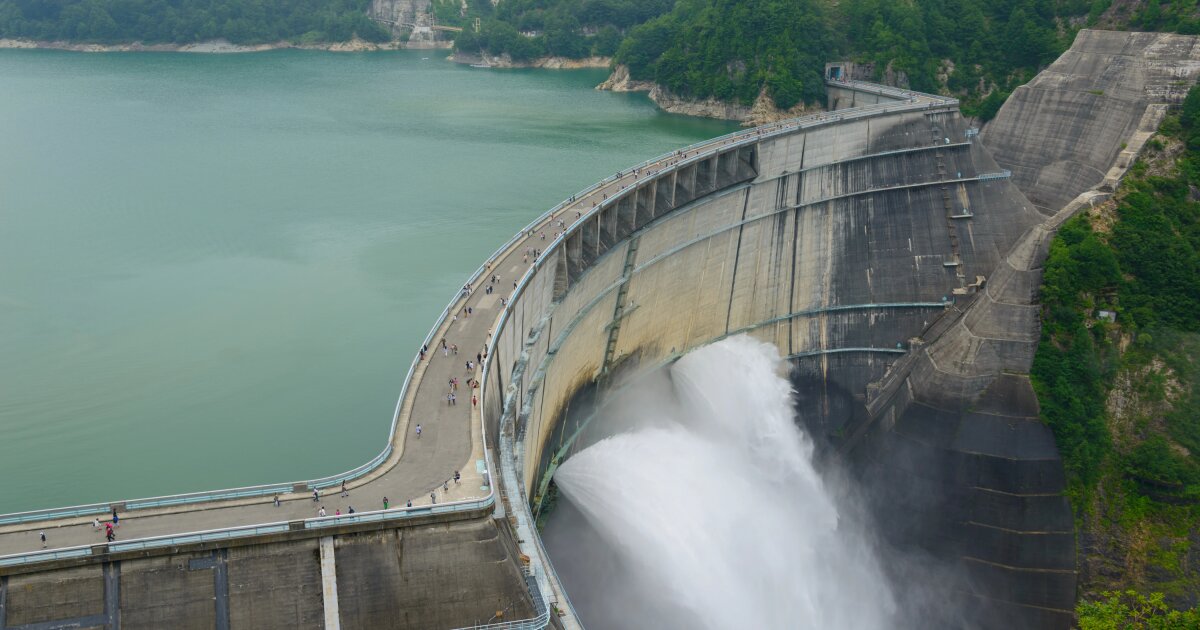
The article specifically highlights belite, one of the calcium silicate minerals found in clinker and often used in massive structures such as dams. That matters because it suggests the research is not only about lowering emissions in the abstract. It is focused on producing a functional material already relevant to large-scale infrastructure.
Electrification is a familiar decarbonization theme across heavy industry, but cement has remained a stubborn target because of its heat intensity and chemistry. A process that reduces thermal demand before the kiln stage could open a more realistic pathway than trying to swap fuels alone while leaving the rest of the process untouched.

Why recycled concrete matters too
The second piece of the reported breakthrough is just as important as the electricity. The process can use recycled cement and concrete, which reframes waste material as feedstock. In industrial climate terms, that is powerful because it addresses two problems at once: lowering emissions from new production and reducing the need to discard old material that still contains usable mineral value.
Circularity in construction is often discussed more than delivered. Concrete tends to be treated as demolition waste rather than as a meaningful ingredient in the next generation of materials. If the UBC process can make recycled cement a practical input for lower-carbon belite production, it would move the industry closer to actual material loops instead of one-way extraction and disposal.
The challenge is scale
Research advances do not automatically become industrial revolutions. Cement is among the most scale-sensitive businesses in the world, with giant established plants, tight margins, entrenched supply chains, and conservative performance requirements. New methods have to prove not only that they work in principle, but that they can produce consistent material, integrate with existing infrastructure, and compete economically.
That makes the next steps decisive. The source says the work is outlined in ACS Energy Letters, which gives the concept a formal research basis. What it does not yet establish is whether the process can move smoothly from lab-scale or pilot-scale success into the vast global production system that feeds construction markets.
Still, the industrial logic is compelling. If electricity can replace part of the highest-emissions thermal burden, and if recycled concrete can substitute for virgin inputs, the potential gains stack together. For a sector with few easy wins, that combination stands out.
Why this story matters beyond cement
Cement decarbonization is often overshadowed by cleaner consumer-facing sectors such as cars or power generation, but heavy materials shape the climate trajectory just as surely. Roads, bridges, housing, ports, tunnels, and dams all depend on cement. Any credible path to lower industrial emissions needs progress here.
That is why developments like this deserve attention. They may not produce the instant visibility of a new battery or a flashy EV launch, but they address the underlying material systems that lock in emissions for decades. A better cement process would not just trim carbon at the margins. It would touch the basic fabric of modern infrastructure.
- UBC researchers say electricity can reduce cement’s extreme heating requirements through an electrochemical preheating step.
- The process also uses recycled cement and concrete as inputs.
- If scalable, the approach could matter in a sector responsible for about 8% of global CO2 emissions.
This article is based on reporting by New Atlas. Read the original article.
Originally published on newatlas.com