Underwater Data Center Goes Live
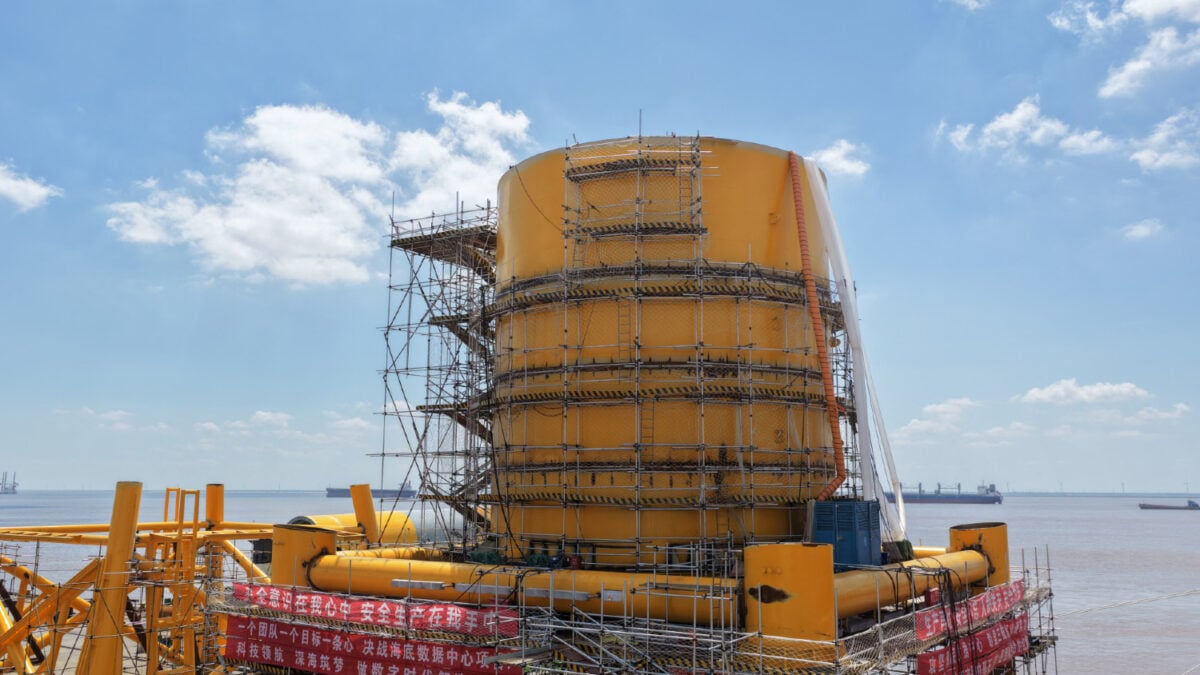
China has officially activated the world's first underwater data center, a groundbreaking project located approximately six miles off the coast of Shanghai's Lin-gang Special Area. The facility, built by HiCloud Technology in collaboration with China Communications Construction, sits about 30 feet below the ocean surface and represents a novel approach to data center infrastructure. With a construction cost of roughly $226 million, the underwater data center is designed as a proof-of-concept rather than a large-scale addition to China's computing capacity, maxing out at 24 megawatts—significantly smaller than the gigawatt facilities being built elsewhere to support artificial intelligence demands.
Energy Efficiency and Cooling Advantages
According to Chinese government officials, the underwater data center is expected to reduce power consumption by about one-fifth compared to traditional land-based data centers. This efficiency gain stems from two key factors: the facility draws most of its power from an offshore wind farm, and it leverages the natural cooling properties of the surrounding ocean water to offset typical cooling requirements. Data centers on land consume vast amounts of electricity for cooling systems, so submerging them in water offers a passive cooling solution that could significantly cut energy use.

Environmental Concerns and Regulatory Scrutiny
While any reduction in environmental impact is welcome, the underwater data center raises ecological questions. A similar project proposed off the coast of California faced environmental hurdles, with scientists warning that heat generated from such facilities could trigger toxic algae blooms or harm local wildlife. Studies have also highlighted risks from unpredictable events like ocean heatwaves, which could lead to mass wildlife deaths and de-oxygenated water zones. China's project underwent stricter regulatory scrutiny than comparable U.S. proposals, potentially minimizing these risks. However, the long-term environmental effects remain uncertain.
Water Consumption Crisis in Data Centers
The urgency for innovative cooling solutions is underscored by a recent report from the United Nations University Institute for Water, Environment and Health, which projects that global data center water consumption could reach 9.3 trillion liters by 2030—equivalent to the water needs of all of sub-Saharan Africa. Traditional data centers rely heavily on water for cooling, exacerbating freshwater scarcity. Underwater data centers could alleviate this pressure by using seawater instead, though the thermal impact on marine ecosystems must be carefully managed.
Future Implications and Industry Trends
China's underwater data center signals a growing trend of exploring unconventional locations for computing infrastructure, from underwater to space. As AI and cloud computing drive exponential demand for data processing, developers are seeking any available space—on land, underwater, or in orbit—to build data centers. While this project demonstrates technical feasibility, its small scale means it is unlikely to significantly impact China's overall data center capacity. Nevertheless, it serves as a testbed for future deployments, potentially paving the way for larger underwater facilities if environmental concerns are adequately addressed.
Conclusion
The activation of the world's first underwater data center marks a milestone in data center innovation, offering potential energy savings and reduced freshwater use. However, the environmental trade-offs, particularly regarding marine life and heat pollution, require careful ongoing assessment. As the industry watches this experiment, the balance between technological progress and ecological stewardship will determine whether underwater data centers become a sustainable solution or a cautionary tale.
This article is based on reporting by Gizmodo. Read the original article.
Originally published on gizmodo.com