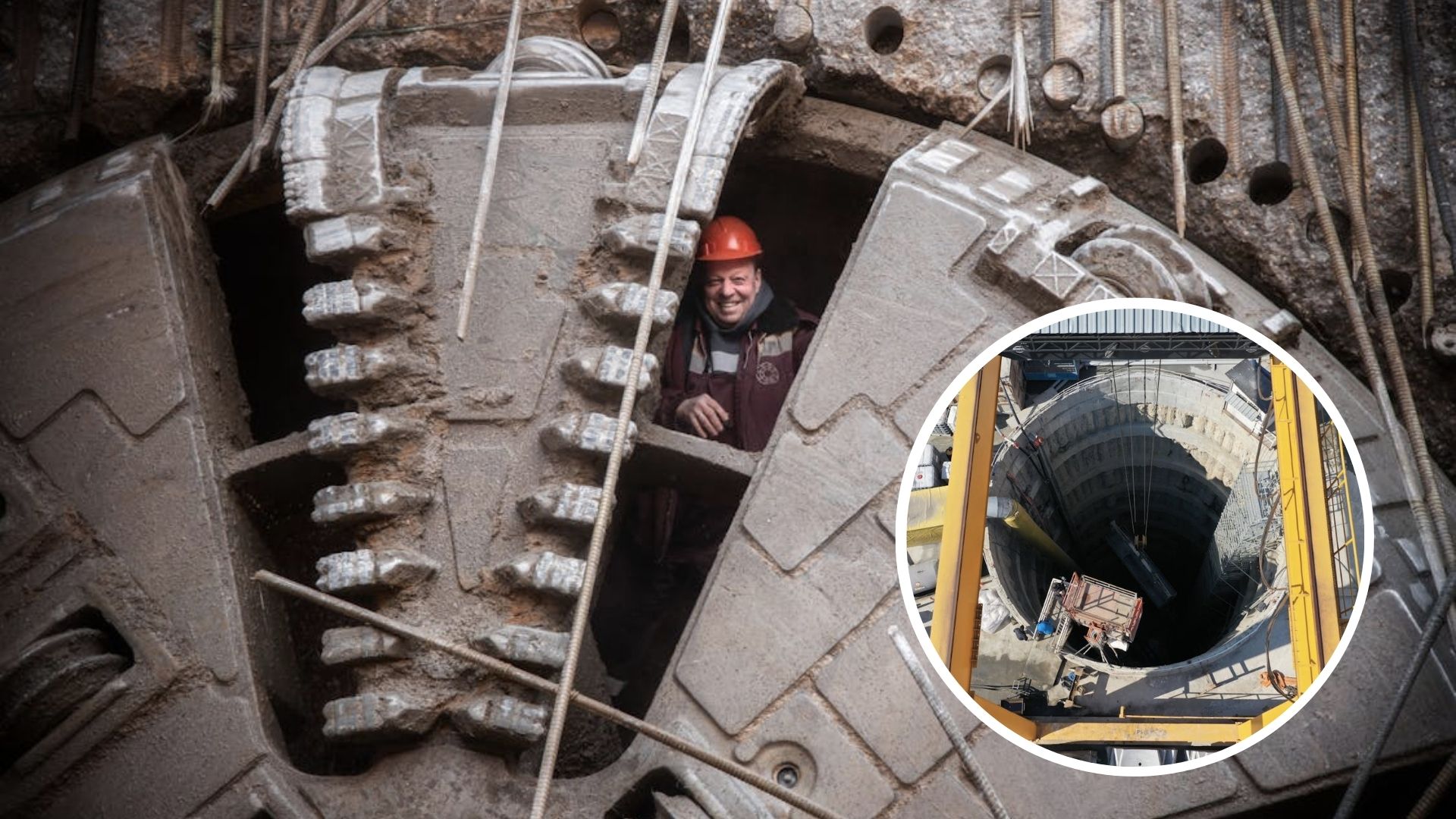
China’s tunnelling industry is moving from scale to influence
A report from Interesting Engineering highlights a shift that reaches beyond construction equipment: China is becoming a major force in the global tunnelling industry through the development of tunnel boring machines. The framing matters because tunnel boring machines are not niche industrial curiosities. They are core enablers for rail, road, water, utility, and urban expansion projects, and their design and manufacturing base can shape which countries set pace in large-scale infrastructure delivery.
The article points specifically to the world’s largest manufacturer of tunnel boring machines and casts its advance as a challenge to the United States in innovation. That is a stronger claim than simple manufacturing scale. It suggests the competitive issue is not just output volume or lower-cost production, but technical capability and the pace at which industrial know-how is being translated into deployable infrastructure systems.
Why tunnel boring machines matter strategically
Tunnel boring machines sit at the intersection of heavy industry, advanced manufacturing, and long-horizon public works. Countries that can design, build, and continuously improve them gain leverage in projects that are economically and politically significant. Urban transit expansion, water diversion, underground freight corridors, and resilient utility systems all depend on the ability to move underground efficiently and at scale.
That makes the sector a revealing proxy for a wider industrial contest. When a manufacturer becomes dominant in tunnel boring technology, it reflects strengths in supply chains, systems engineering, materials, project execution, and customer support. None of those capabilities emerge overnight. They are cumulative, and once established, they can reinforce each other across domestic and export markets.

The U.S. angle is about more than one machine category
The source article’s emphasis on a challenge to U.S. innovation is notable because it frames the issue as structural. The United States has deep engineering expertise, but the report implies that China’s tunnelling sector is gaining enough momentum to shift perceptions about who leads in a strategically important industrial domain.
This is relevant at a moment when infrastructure is again being discussed in terms of national capability rather than only public spending. Large machinery, long-duration civil works, and the industrial ecosystems behind them have become part of a broader conversation about competitiveness. A country that cannot keep pace in enabling technologies may find itself slower, more expensive, or more dependent when trying to build out major networks underground.
What the candidate supports directly
The supplied candidate metadata and excerpt support a focused set of claims. They establish that the report concerns the world’s largest tunnel boring machine manufacturer, that it presents China as becoming a major force in the global tunnelling industry, and that it frames the development as a challenge to the United States in innovation.
They do not support narrower technical claims about a specific model, production totals, export figures, or performance metrics, so those should not be inferred. Even so, the broader point is substantial. The story is about industrial positioning in a complex technology stack that underpins modern infrastructure.
Infrastructure competition is becoming more technology-centric
For years, infrastructure debates often focused on financing, permitting, and political will. Those remain central, but the machinery and manufacturing layers are increasingly part of the equation. Tunnel boring machines require precision engineering, robust maintenance ecosystems, and the ability to tailor systems to varied geology and project demands. Leadership in that field can compound into practical advantages: faster delivery times, stronger export presence, and greater confidence from project developers.
If China is now becoming a major force, as the report states, that development could influence how future infrastructure packages are imagined and executed around the world. It could also push rivals to reconsider whether they are investing enough in heavy industrial innovation, not only in software or advanced services.
Why this matters now
The timing of the report fits a wider reordering in industrial policy. Governments are paying closer attention to domestic production capacity, strategic supply chains, and physical buildout capabilities. Underground infrastructure is less visible than factories or data centers, but it is no less critical. The equipment used to construct it can signal where engineering leadership is concentrating.
For the United States, the challenge described here is therefore not symbolic. It points to a question with broader consequences: can U.S. industry match or exceed the innovation tempo of Chinese manufacturers in sectors that blend advanced machinery with national infrastructure ambition?
The real signal
The strongest takeaway is not that one machine maker is large. It is that scale in a foundational infrastructure technology is now being interpreted as evidence of strategic industrial momentum. If China’s tunnel boring sector is drawing this level of attention, it is because the competitive landscape is shifting in a way that reaches well beyond the tunnel itself.
That is why the story matters. It captures a contest over who builds the tools that build the future, and whether the U.S. is prepared to respond in kind.
This article is based on reporting by Interesting Engineering. Read the original article.
Originally published on interestingengineering.com