A short game built around reward decisions may offer a fast way to detect a core feature of depression
Researchers at New York University have developed a smartphone game that takes about three minutes to play and, in an early study, reliably separated people with major depression from healthy control participants. The tool is designed to detect anhedonia, the reduced ability to experience pleasure that affects a large share of people with clinical depression.
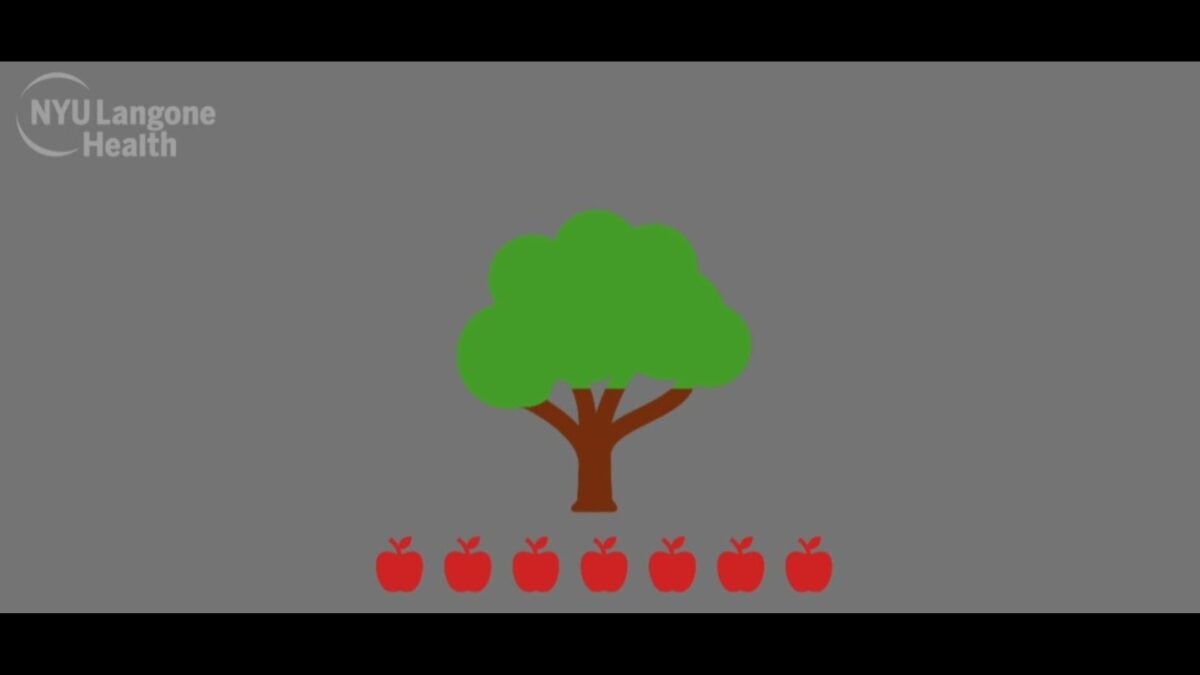
The game is simple on its face. Players collect apples from trees. Each tree starts out productive, then yields fewer apples over time, forcing the player to decide when to stay and when to move to a new tree. That choice pattern turned out to be informative.
According to the researchers, people without depression tended to switch trees after the yield had dropped to around four or five apples per round. Participants with major depression switched earlier, sometimes when a tree was still giving around eight apples. The degree of early switching also tracked with illness severity.
The team is seeking Food and Drug Administration clearance for the game as a diagnostic tool.
What the game is actually measuring
The premise rests on a concept called a reference point, an internal benchmark people use to judge whether an outcome feels rewarding. In everyday life, an unexpected positive event can create a burst of pleasure because it exceeds expectations. Over time, expectations reset, allowing future surprises to feel rewarding again.
The researchers argue that in many depressed people, especially those with anhedonia, that reset process may not function normally. Expectations rise and then remain elevated, blunting the emotional effect of subsequent rewards. In that view, depression is not only about low mood. It can also involve a distorted response to novelty and reward change.
The apple game tries to turn that abstract idea into a measurable behavior. A player who keeps abandoning a still-productive tree may be responding differently to the changing value of rewards than someone who waits longer. The game effectively converts a subtle feature of decision-making into a digital marker.
Study results suggest signal, not just novelty
The early study involved 120 volunteers: 70 healthy controls and 50 people with major depression. The difference in play behavior between the groups was not just visible on average; it also correlated with how severe a participant’s depression was reported to be.
That matters because screening tools are more useful when they do more than sort people into two broad bins. A measure that moves with symptom intensity has a better chance of supporting monitoring, treatment adjustment, or follow-up assessments.
The researchers describe the tool as something they ultimately hope could function like a basic clinical instrument, offering a quick read on a difficult-to-measure psychiatric symptom. That is an ambitious goal, but the appeal is obvious. Depression diagnosis still depends heavily on interviews, questionnaires, and self-reported symptoms that can fluctuate with context or be difficult for patients to describe.
Why clinicians may care
Mental health screening is often constrained by time, access, and subjectivity. A digital behavioral task that can be completed on a phone in minutes could fit into primary care, specialty clinics, or remote care models more easily than longer evaluations.
It may also help with a part of depression that clinicians and patients both struggle to quantify. Anhedonia is widely recognized as central to many depressive episodes, yet it can be hard to evaluate in a standardized way. People may know that joy feels muted, but not have a clear vocabulary for how that impairment shows up moment to moment.
Behavioral tools can sometimes capture those distortions indirectly. Instead of asking patients how they feel about reward, they observe how patients behave when reward conditions change. That can be especially useful when symptoms are subtle or when a person’s own account does not fully capture their functional state.

Important limits remain
This is still early-stage work. The source text describes the study as research in volunteers, not a deployed clinical test, and the FDA clearance process has not been completed. That means the game should be viewed as a promising candidate, not an established diagnostic standard.
There are also broader questions that future studies would need to address. A behavioral pattern linked to depression in one sample may not generalize cleanly across age groups, cultures, medication status, or coexisting psychiatric conditions. Anxiety, attention differences, fatigue, and familiarity with smartphone games could all influence behavior in ways that must be untangled.
Even if the signal proves robust, a game like this would likely complement, not replace, traditional assessment. Depression is too heterogeneous to reduce to one digital measure. But a fast behavioral tool could still be valuable as part of a larger evaluation toolkit.
A bigger shift in psychiatry
The deeper significance of the work is methodological. Psychiatry has long sought better objective measures of mental states without reducing complex experiences to crude biomarkers. Digital tasks offer one possible middle path. They do not claim to directly read the brain, but they can quantify behavior in controlled settings that are difficult to recreate with questionnaires alone.
If successful, the NYU game would fit into that emerging category: brief, scalable, behavior-based instruments that translate cognitive or emotional theories into data. That could improve screening, support treatment monitoring, and help match symptoms to mechanisms more precisely.
For now, the strongest takeaway is that a carefully designed three-minute task produced meaningful differences between depressed and non-depressed participants in a study built around a core symptom of illness. That is enough to make the tool worth watching.
Depression remains one of medicine’s most common and disabling conditions. Any technique that can make it easier to detect a central feature quickly, consistently, and outside a specialist setting will attract attention. This game is not there yet, but it is aiming at a real clinical gap.
This article is based on reporting by Gizmodo. Read the original article.

Originally published on gizmodo.com