A Township Painted With a Bulls-Eye
The quiet township of Ypsilanti, Michigan, population roughly 20,000, is not the kind of place that typically figures into national security calculations. Yet the community now finds itself at the center of a combustible debate about whether civilian neighborhoods should host infrastructure directly tied to America's nuclear weapons program — and whether that proximity makes them targets in an era of drone warfare.
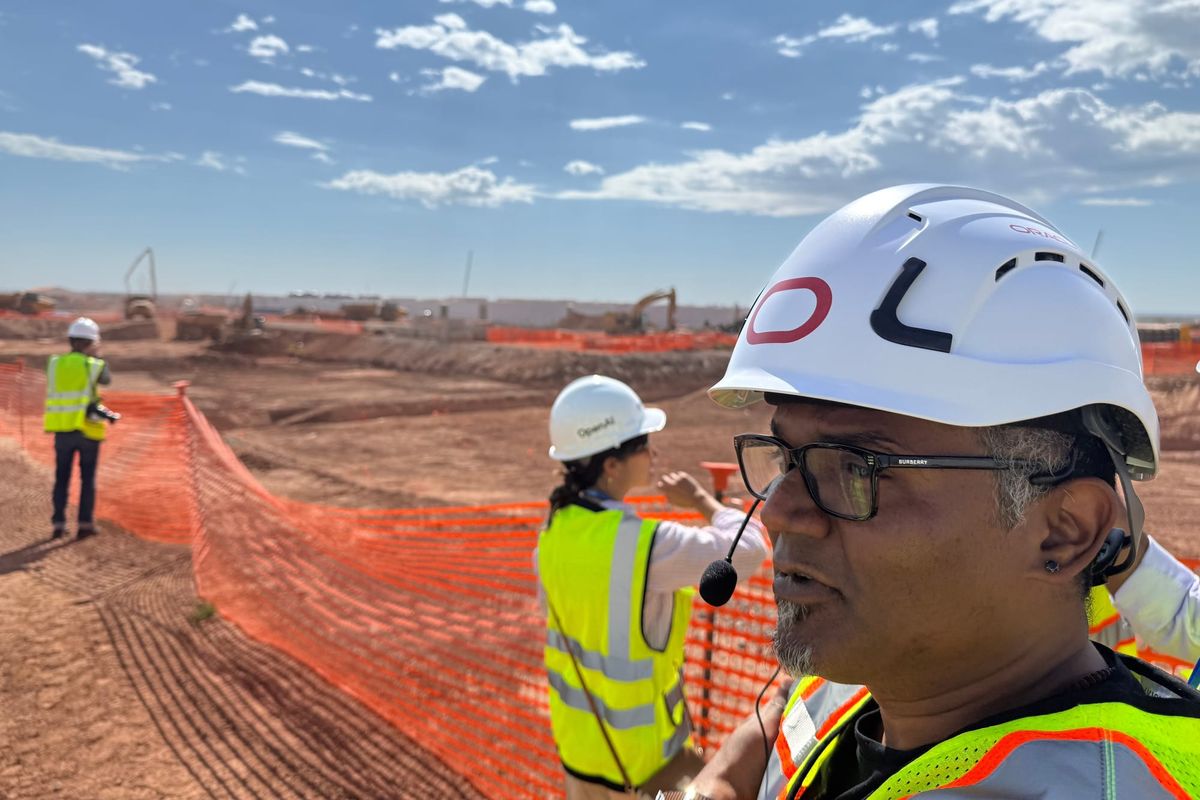
At a recent Board of Trustees public meeting, township attorney Douglas Winters delivered a stark warning to elected officials. The University of Michigan and Los Alamos National Laboratories, he said, had "put a big bulls-eye target on this entire township." His concern was not hypothetical: the University has committed to building a $1.25 billion AI datacenter in Ypsilanti that will service LANL, the birthplace of the atomic bomb and the headquarters of America's nuclear weapons science community.
The Datacenter's Controversial Mission
When the University of Michigan and Los Alamos first announced their collaboration in 2024, they described it in the language of scientific partnership: a world-class computing facility to advance research at the intersection of artificial intelligence and national defense. But in January of this year, LANL formally confirmed what many residents had suspected — the datacenter would be used in nuclear weapons research, not merely civilian science.
That confirmation transformed the character of the debate. What had previously been framed as a typical NIMBY dispute over noise, water consumption, and rising electricity costs suddenly acquired a harder edge. Winters told the board that the facility would house some of the most powerful computers on Earth, designed to run nuclear weapons modeling and simulation workloads that demand extreme computational density. "We were told at the very beginning by U of M's Vice President of public relations that they were going to build, in his words, the biggest, baddest, fastest computers in the world," he said.

Iranian Drones and the New Threat Landscape
Winters grounded his concerns in recent operational history. He pointed to the ongoing U.S.-Iran conflict, during which Iranian drone strikes had disabled AWS servers operating in the Middle East. If adversaries are willing and capable of targeting commercial cloud infrastructure to degrade American military and intelligence capabilities, the attorney argued, a facility explicitly dedicated to nuclear weapons computing represents an orders-of-magnitude more attractive target.
"This is not a commercial datacenter," Winters said. "A Los Alamos datacenter is going to be the brains of the operation for nuclear modeling, nuclear weaponry." His argument is that the facility's strategic value — precisely what makes it appealing to the university and LANL — is also what makes it dangerous to have in a residential township. High-value targets attract high-value attacks.
The concern is not entirely speculative. Military doctrine increasingly recognizes that adversary nations will attempt to strike command, control, and computation infrastructure during conflict. A facility running nuclear weapons simulations would fall squarely within that targeting category, and unlike hardened military installations, a university-affiliated datacenter in a suburban Michigan township has none of the defensive infrastructure typically associated with such sensitive work.
Community Opposition and the Limits of Protest
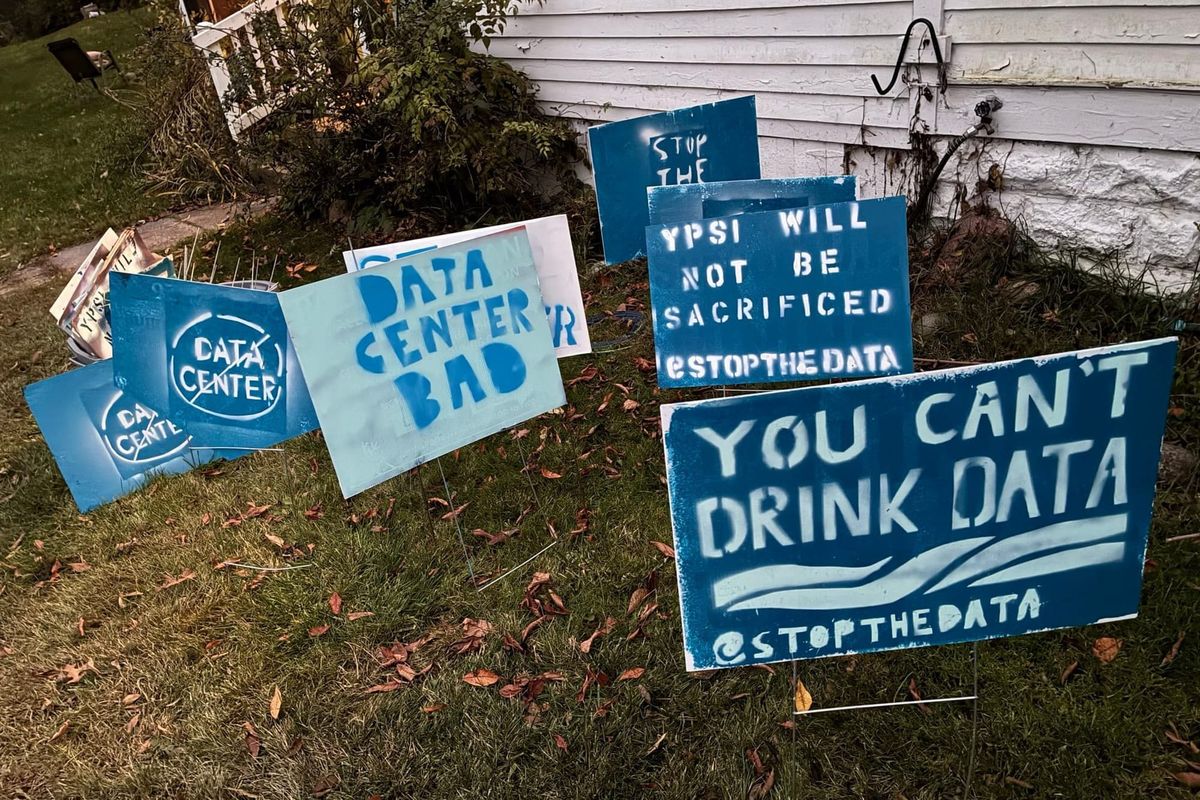
Ypsilanti residents have been fighting the datacenter since it was first proposed. Their objections mirror those raised by communities nationwide confronting the rapid buildout of hyperscale AI infrastructure: massive water consumption for cooling, pressure on local electrical grids, noise from cooling systems running around the clock, and the environmental footprint of facilities that consume as much power as small cities.
Those concerns remain valid and pressing. But the nuclear weapons angle has complicated the politics considerably. Opposition to a commercial datacenter is broadly acceptable across the political spectrum. Opposition to a facility supporting Los Alamos — and, by extension, America's nuclear deterrent — lands differently, and activists in the township must navigate the tension between legitimate local concerns and the appearance of obstructing national security infrastructure.
The University of Michigan has not formally responded to Winters' characterization of the security risks. The institution has consistently framed the datacenter as a research partnership serving scientific and educational goals, with the LANL relationship representing one component of a broader academic mission. That framing has done little to reassure residents who feel that the security implications of the project were never adequately disclosed or debated publicly before the partnership was formalized.

The Broader Question of Nuclear Infrastructure Siting
The Ypsilanti situation illuminates a policy gap that the rapid expansion of AI-enabled defense computing is likely to expose in more communities. The infrastructure requirements of modern nuclear weapons science have changed dramatically. Where Cold War-era facilities were concentrated on isolated federal reservations, the computational demands of contemporary nuclear research increasingly point toward civilian academic and commercial computing environments.
That shift creates siting questions for which there is no established regulatory framework. The Atomic Energy Act governs nuclear materials and weapons design work; zoning law governs where buildings can be built. Neither framework was designed to address the risks of putting weapons-grade computing infrastructure in the middle of a suburban township. Winters closed his presentation with a question that will linger long after whatever decision the township ultimately makes: "Artificial intelligence is power. Supercomputers are power. And when something becomes that important, it becomes a target."
This article is based on reporting by 404 Media. Read the original article.
Originally published on 404media.co