A federal anti-deepfake regime is moving from statute to platform enforcement
A key compliance deadline tied to the Take It Down Act has now arrived, bringing a sharper legal burden to digital platforms that host or spread nonconsensual intimate imagery, including AI-generated deepfakes. Beginning May 19, 2026, the Federal Trade Commission is enforcing Section 3 of the law, which requires covered platforms to provide a clear reporting process and remove reported material and identical copies within 48 hours.
The shift matters because it moves the law from punishing creators and distributors of abuse to imposing operational obligations on the platforms that circulate it. For years, victims and advocates have argued that takedown systems were too fragmented, too slow and too dependent on users repeatedly finding reposted copies themselves. The new rule is designed to change that burden.
What platforms must do
According to the source text, digital platforms must offer a straightforward and accessible process for victims to request removal of nonconsensual intimate photos or videos and any identical copies. That process has to be available even to people who do not have accounts on the service. Once a request is submitted, the victim must receive an identifying number that can also be shared with law enforcement.
The 48-hour removal requirement is the most concrete operational benchmark. It gives platforms a fixed response window and creates a measurable compliance standard. FTC Chairman Andrew Ferguson, in a letter referenced by the source material, warned of potential civil penalties of $53,088 per violation.
The FTC reportedly sent that warning to a broad set of major tech companies, including Amazon, Apple, Alphabet, Bumble, Match Group, Discord, Meta, Microsoft, Reddit, TikTok and X.

Why the law emerged
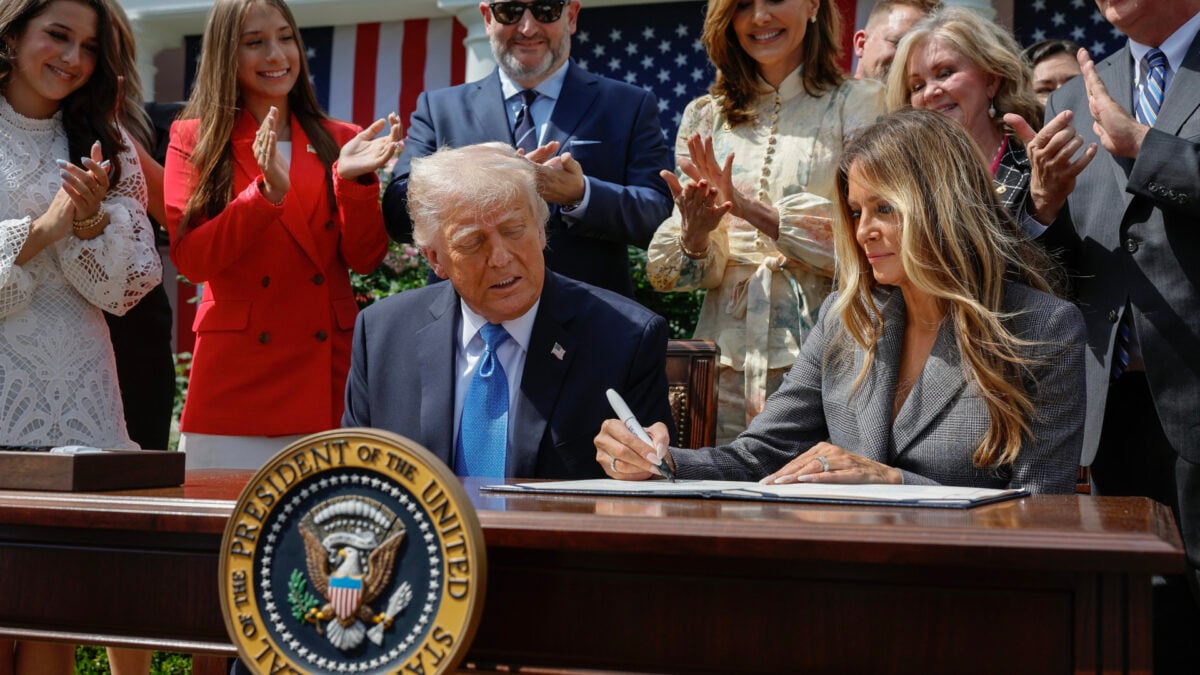
The Take It Down Act was signed one year earlier and created federal liability for knowingly distributing deepfake or intimate images involving minors or nonconsenting adults. The new enforcement phase extends that framework to platform responsibility. The urgency is obvious: generative image and video tools have made sexual deepfake abuse cheaper, faster and easier to scale.
The source text cites the case of a 37-year-old man from Columbus, Ohio, described as the first person convicted under the Act after using more than 120 AI platforms and models to create and distribute sexual images of minors and nonconsenting adult women. That example illustrates the fragmented ecosystem regulators are trying to contain. Harm is no longer tied to one site or one tool. It can spread across dozens of services in parallel.
The X and Grok problem
The compliance deadline also lands amid scrutiny of X, where nonconsensual deepfakes have reportedly spread widely in recent months. The source text identifies Elon Musk’s Grok as a highly visible symbol in that debate. Whether or not any single model is the sole driver of the problem, the broader issue is that generative systems can supply abusive content while platforms amplify it through discovery, reposting and recommendation.
The legal focus on platforms acknowledges that moderation failures are part of the distribution chain. Even if a model generates an image elsewhere, the social system that hosts and recirculates it can determine the scale of the damage.

What could improve, and what may not
The new framework could make a real difference for victims if platforms build efficient intake and copy-matching systems. Requiring sites to remove identical copies rather than only the specific URL initially reported is especially important. In abuse cases, reposting is often the problem, and forcing victims to hunt every duplicate one by one turns enforcement into a second burden.
Still, the source text also highlights skepticism. Critics worry that the law may not solve the problem effectively and may create broader disputes around moderation, free expression and edge cases. The underlying abuse ecosystem is adaptive. Bad actors can move to smaller platforms, offshore services or encrypted distribution channels. And “identical copy” enforcement is easier than dealing with lightly altered derivatives or related synthetic content that is not pixel-for-pixel the same.
The material provided does not establish how the FTC will handle those harder variations, only that the agency is now enforcing the core takedown duties.
A test of platform readiness
For major tech companies, the immediate challenge is operational rather than philosophical. Can they verify reports quickly, identify duplicate content reliably, process requests from non-users, and document compliance under a tight deadline? Those systems require moderation staff, automation and legal coordination. Large companies have the resources, but the scale of abuse may still stress their pipelines.
For smaller platforms, the burden could be heavier. The rule does not disappear simply because a company has fewer staff. That may push some services to strengthen trust-and-safety infrastructure or rely more heavily on third-party moderation tooling.

The bigger shift
The important development is that U.S. regulation of AI-enabled image abuse is no longer theoretical. A year after the law was signed, enforcement has turned toward the infrastructure of circulation. That reflects a growing view in Washington that platform design and response systems are inseparable from harms caused by generative media.
The next phase will show whether the FTC can translate a formal 48-hour rule into real deterrence. If platforms act quickly and consistently, the new duties could reduce the persistence of some of the most harmful forms of synthetic abuse. If not, May 19 may be remembered less as a clean fix than as the start of a longer fight over how much responsibility intermediaries must bear in the age of deepfakes.
This article is based on reporting by Gizmodo. Read the original article.
Originally published on gizmodo.com