A massive price tag lands on an ambitious missile defense vision
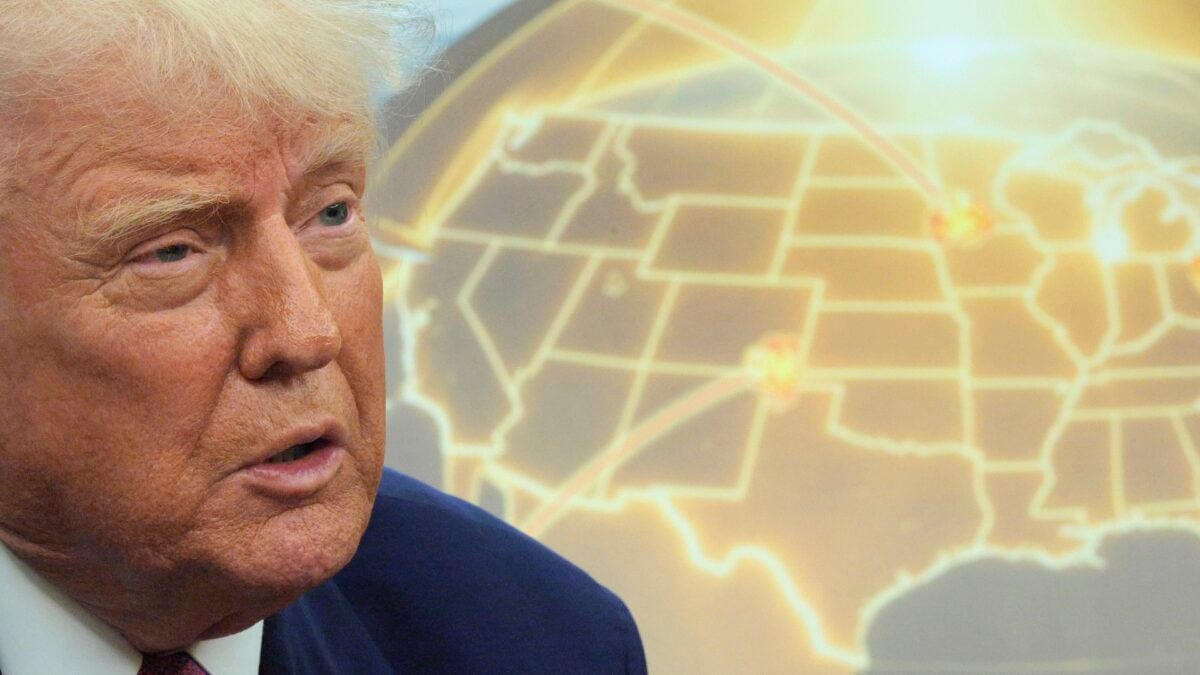
A new estimate from the Congressional Budget Office has sharply raised the financial stakes around President Donald Trump’s Golden Dome missile defense plan. According to the source material, the program would cost about $1.2 trillion to develop, deploy, and operate over 20 years.
That figure stands in stark contrast to the $175 billion cost Trump had previously cited. The size of the gap matters because it turns a familiar debate over missile defense feasibility into a much larger argument about national priorities, federal spending, and whether an expansive shield over the United States is either technically realistic or politically sustainable.
From executive order to long-term budget burden
The source says Trump signed an executive order in January 2025 calling for the creation of the program shortly after beginning his second term. At that time, the initiative was called the Iron Dome for America. The Golden Dome label later became the more widely used name.
The concept is modeled on Israel’s Iron Dome system, but the comparison has always been complicated. Israel’s system is designed for a much smaller geography and a very different threat environment. By contrast, Golden Dome is framed as a national-scale defensive umbrella for the United States. The source also says Trump has presented it as protection not only from terrestrial missile threats but also from missiles that could be sent from space.
That framing is significant because it stretches the program beyond a conventional homeland missile defense upgrade and into a more expansive strategic vision. Once a defense concept is asked to cover not just known missile trajectories but also future space-based threats, questions about cost, technical maturity, and mission creep become much harder to avoid.

Skepticism is not new
The article text makes clear that the plan has long faced skepticism. One recurring criticism is practical: missile defense is often described as an attempt to intercept one fast-moving projectile with another, a challenge that becomes more difficult as the defended area grows. The source also notes that Israel’s Iron Dome, despite being viewed as relatively effective, is designed for a territory far smaller than the continental United States.
That scale problem is central. A system that is difficult and expensive to build for a smaller state does not automatically translate into a workable model for a much larger country. Geography changes the sensor network, interceptor coverage, basing strategy, and operational burden. Even without introducing new claims beyond the source text, the implication is clear: replication is not straightforward.
The source also references historical precedent. Trump’s vision is described as being inspired by President Ronald Reagan’s Strategic Defense Initiative in the 1980s, a plan associated with space-based defenses and widely remembered under the nickname “Star Wars.” That comparison places Golden Dome in a long American tradition of technologically ambitious missile shield proposals that draw political attention precisely because they promise near-total protection, even when experts doubt whether that promise can be delivered.
Political and strategic consequences
The new estimate was requested by Senator Jeff Merkley of Oregon, according to the source. Merkley described the plan as a giveaway to defense contractors paid for by working Americans. That criticism captures one side of the political fight that is likely to intensify if the $1.2 trillion estimate becomes the benchmark figure in public debate.
Cost alone does not determine defense policy, but it changes the conversation. A program measured in trillions enters competition with almost every other major national commitment, from domestic infrastructure to health spending to other military modernization programs. Even supporters of missile defense may find themselves pressed to explain whether Golden Dome offers more value than other forms of deterrence or defense investment.
The source adds that experts have expressed doubts about the overall plan. While the supplied text is truncated before those arguments are fully detailed, the existence of sustained skepticism is clearly supported. That matters because the debate is no longer only partisan. It also concerns whether the underlying concept can meet the strategic claims attached to it.

Why this estimate matters now
Congress has reportedly allocated only a fraction of the projected cost so far. That means the CBO estimate does not simply describe a future procurement bill; it establishes the scale of the political and budgetary mountain the administration would need to climb. If $1.2 trillion becomes the accepted long-range estimate, Golden Dome will have to be judged not just as a defense idea but as one of the most expensive long-horizon security projects in the country.
The immediate takeaway is that Golden Dome has moved into a different category of scrutiny. It is no longer enough to describe it as an aspirational shield modeled on a successful foreign system. The program now faces a harder test: whether its technical ambitions and strategic rationale can withstand the budget reality laid out by Congress’s own fiscal analysts.
For now, the most concrete development is the estimate itself. And at $1.2 trillion over 20 years, it ensures Golden Dome will remain a flashpoint in the wider argument over how the United States defines security, risk, and technological possibility.
This article is based on reporting by Gizmodo. Read the original article.
Originally published on gizmodo.com


