The Panspermia Question Gets New Evidence
A new scientific study has added weight to the provocative hypothesis that life on Earth may have originally come from Mars, transported between planets aboard rocks ejected by massive asteroid impacts. The research demonstrates that microorganisms could survive the extreme conditions of interplanetary travel, lending scientific credibility to an idea that has long existed at the boundary between mainstream science and speculation.
The study, which combines laboratory experiments with computational modeling of impact physics, addresses several key objections that have historically been raised against the panspermia hypothesis. By showing that the journey from Mars to Earth is survivable under specific conditions, the researchers have narrowed the gap between theoretical possibility and demonstrated plausibility.
How Microbes Could Planet-Hop
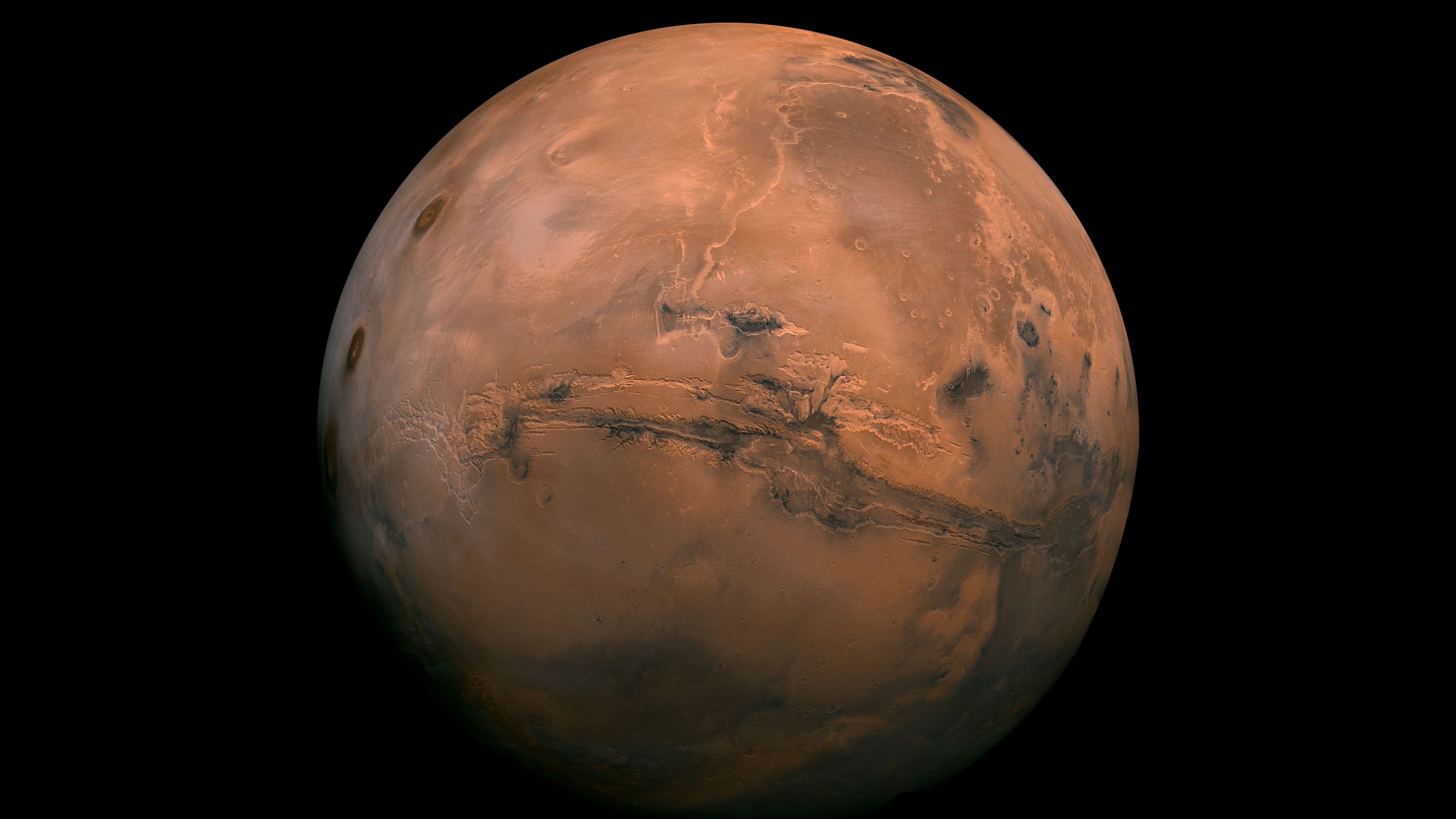
The mechanism for interplanetary life transfer begins with a sufficiently large asteroid or comet striking Mars with enough force to eject rocks from the Martian surface at escape velocity — roughly 5 kilometers per second. Some of these rocks would eventually cross Earth's orbital path, entering our atmosphere and delivering any passengers that survived the journey.
The study focused on three critical survival challenges: the initial shock of the impact ejection event, the extended period of radiation exposure in interplanetary space, and the intense heating during atmospheric entry at Earth. The researchers found that microorganisms embedded within rocks of certain sizes and compositions could survive all three phases, particularly if the transit time was relatively short.
Laboratory Evidence
The research team subjected extremophile microorganisms — organisms that thrive in extreme conditions on Earth — to simulated impact shocks, vacuum exposure, radiation levels comparable to interplanetary space, and rapid heating similar to atmospheric entry. Certain species of bacteria and archaea survived all conditions when protected by even modest rock enclosures.
Particularly promising were results with endospore-forming bacteria, which can enter dormant states resistant to extreme environmental stress. These organisms showed survival rates that, when combined with the number of rocks exchanged between Mars and Earth over geological time, suggest that viable organisms could have been transferred multiple times during the solar system's history.
Why Mars First
The hypothesis that life might have originated on Mars before being transferred to Earth has a specific scientific rationale. Early Mars may have been more hospitable to the origin of life than early Earth. Mars cooled faster, developed a stable surface and potentially habitable conditions earlier, and had chemical conditions that some origin-of-life researchers consider more favorable for the emergence of the first self-replicating molecules.
Additionally, the orbital mechanics favor Mars-to-Earth transfer. Rocks ejected from Mars are more likely to reach Earth than rocks traveling in the opposite direction, because Earth's stronger gravity creates a larger gravitational capture cross-section. Mars-origin meteorites found on Earth confirm that this transfer route is not just theoretical but actually occurs.
Implications for Astrobiology
If life on Earth did originate on Mars, the implications would be profound. It would mean that all terrestrial life — from bacteria to humans — has Martian ancestry. It would also increase the expected frequency of life in the universe, since it would demonstrate that life can not only arise on a planet but spread between planets within a solar system.
The finding would also reframe the search for life on Mars. Rather than looking for independent alien life, scientists might be searching for distant relatives — organisms that share a common ancestor with Earth life but have evolved independently on Mars for billions of years.

Caveats and Controversies
The study demonstrates that interplanetary transfer of life is possible, not that it actually occurred. The fact that microbes can survive the journey does not prove that any did. And even if microbial life existed on early Mars, it may never have been exposed to the specific impact events needed for transfer.
Many scientists remain skeptical, arguing that the probability of the full chain of events occurring successfully — from life originating on Mars, to survival through ejection, space transit, and atmospheric entry, to successful colonization of early Earth — remains extremely low even if each individual step is possible.
Looking Forward
The question of life's origin may eventually be answered by comparing biological samples from Mars with Earth life. If Mars harbors or harbored life with the same biochemical foundations as terrestrial organisms, it would strongly suggest a common origin. The Mars sample return mission, currently under development, could provide the material needed to make this comparison — potentially answering one of the most fundamental questions in all of science.
This article is based on reporting by Space.com. Read the original article.

Originally published on space.com