NASA closes a milestone mission around the Moon
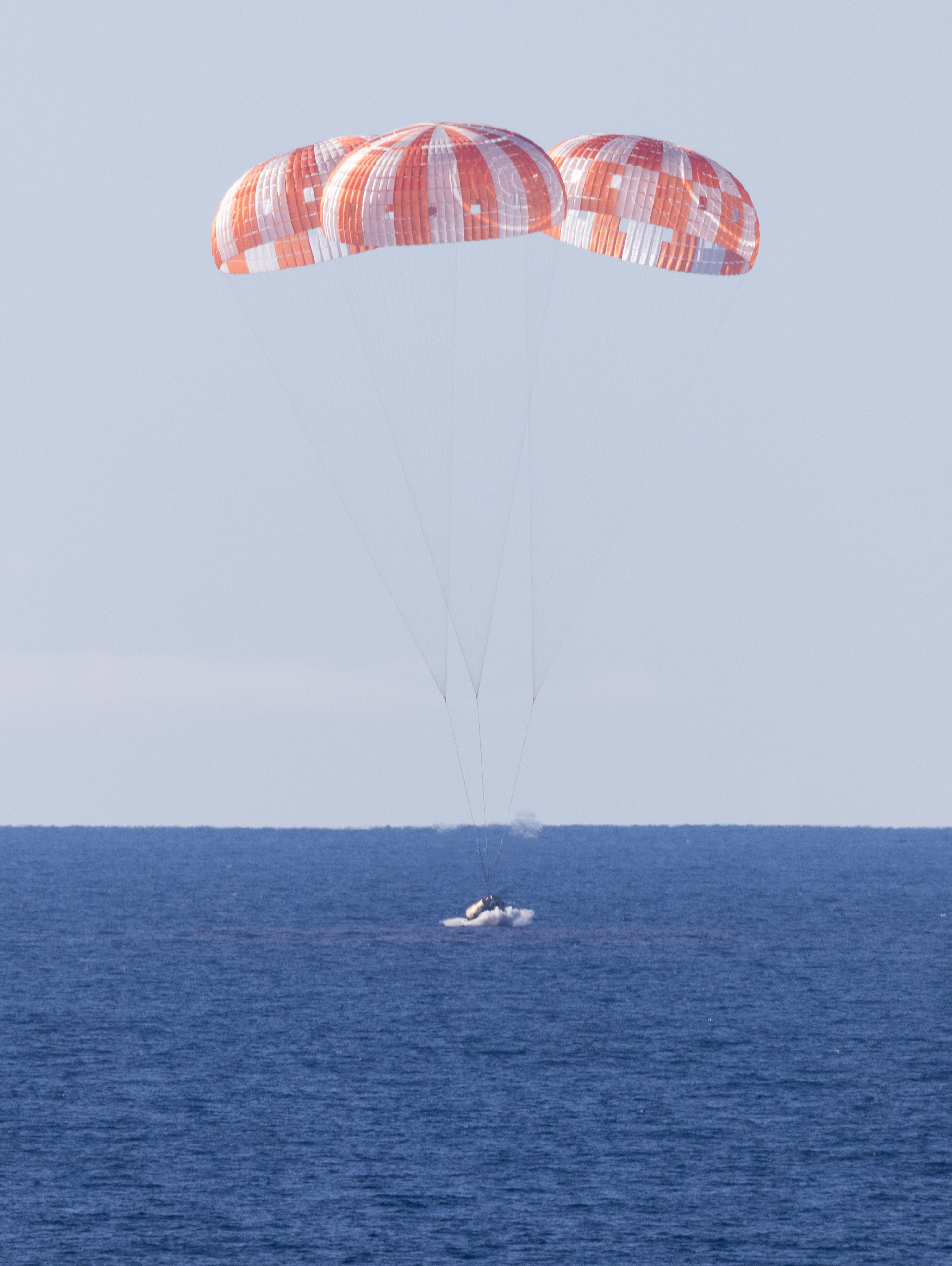
NASA's Artemis II mission has returned to Earth, bringing home the first astronauts to travel to the Moon in more than half a century. Orion splashed down in the Pacific Ocean off the California coast at 5:07 p.m. PDT on Friday, April 10, 2026, ending a mission of nearly 10 days that carried the crew around the Moon and back.
The crew consisted of NASA astronauts Reid Wiseman, Victor Glover, and Christina Koch, along with Canadian Space Agency astronaut Jeremy Hansen. In NASA's telling, the flight was not only a successful end-to-end test of the Artemis system, but a record-setting one: during the mission, the crew reached a maximum distance of 406,771 kilometers, or 252,756 miles, from Earth.
That combination of symbolism and systems validation is what gives Artemis II its weight. It marked the first crewed flight of Orion and the Space Launch System, and it did so on a mission profile ambitious enough to push human exploration farther again after decades without a crewed lunar voyage.
A mission built to prove the architecture
NASA framed Artemis II as a test flight, but it was also a demonstration of confidence in the hardware and operations stack the agency plans to use for future lunar missions. Orion carried four astronauts on a round-trip journey around the Moon. SLS launched them there. Recovery teams then met the spacecraft after splashdown and assisted the crew out of the capsule in the Pacific.
Because Artemis II was the first time astronauts flew on both this rocket and this spacecraft, NASA's own statement emphasizes the level of risk the crew accepted. Administrator Jared Isaacman called out the mission as an example of extraordinary skill, courage, and dedication, arguing that the crew pushed Orion, SLS, and human exploration farther than before.
That official language matters because Artemis II was never only about the distance traveled. It was about validating a lunar exploration system in actual crewed operations. Every major stage of the mission carried that burden: launch, deep-space transit, lunar flyby, the return trajectory, reentry, and recovery. By completing the mission and returning the crew safely, NASA gained the outcome it needed most from a test of this scale.
The crew and the records
Wiseman served as commander, Glover as pilot, and Koch and Hansen as mission specialists. Together they became the first astronauts to make a lunar journey in more than 50 years, a benchmark NASA highlighted in its release as both historic and forward-looking.
The distance figure is one of the clearest markers NASA attached to the mission's significance. Reaching 406,771 kilometers from Earth turned Artemis II into more than a symbolic restart of lunar flight. It established a measurable benchmark for the program's first crewed mission and gave NASA a simple public way to describe how far this particular test pushed.
The crew's safe return also closes an important narrative loop for Artemis. Before astronauts can be sent to attempt a lunar landing under a later mission, NASA needed a crewed flight that verified the experience of operating Orion in deep space. Artemis II now becomes that reference point: a mission that took astronauts out to lunar distance and brought them home without proceeding to a landing.
What NASA says comes next
NASA's release makes the program's next step explicit. With Artemis II completed, the agency says attention now turns to the assembly of Artemis III and preparations to return to the lunar surface. The statement goes beyond a single landing objective, placing Artemis III inside a larger vision that includes establishing a base and sustaining a longer-term human presence connected to the Moon.
That framing is important because Artemis II was designed to reduce uncertainty before the next leap. A successful crewed test flight does not complete the Artemis agenda, but it does change the posture of the program. Instead of planning around a notional first crewed outing, NASA can now plan from the experience of an actual one.
The agency also thanked its workforce, military recovery teams, and international partners, reflecting how many institutions were involved in making the mission work. Hansen's place on the crew is a visible reminder that Artemis is being presented not just as a U.S. program, but as one built with allied participation.
Why the return matters
Artemis II is consequential because it turns a long-promised lunar return into an accomplished crewed mission rather than a future milestone. NASA can now point to astronauts who have flown around the Moon in Orion, to a completed splashdown and recovery, and to concrete operational data from a full mission cycle.
It also gives the Artemis program something it needed politically and programmatically: a clear success story. Splashdown, crew recovery, and the mission's published numbers provide a clean closing image for a test flight meant to demonstrate readiness. The mission did not need a lunar landing to change the shape of the conversation. It needed to prove that the Artemis architecture could carry people to lunar distance and return them safely.
By that measure, Artemis II achieved what NASA most needed from it. The first astronauts to make a lunar journey in more than half a century are back on Earth. Orion has completed its first crewed mission. And the agency can now shift from proving the path to the Moon to preparing for the next attempt to work on its surface.
This article is based on reporting by NASA. Read the original article.
Originally published on nasa.gov