The Road Back to the Moon Gets Real
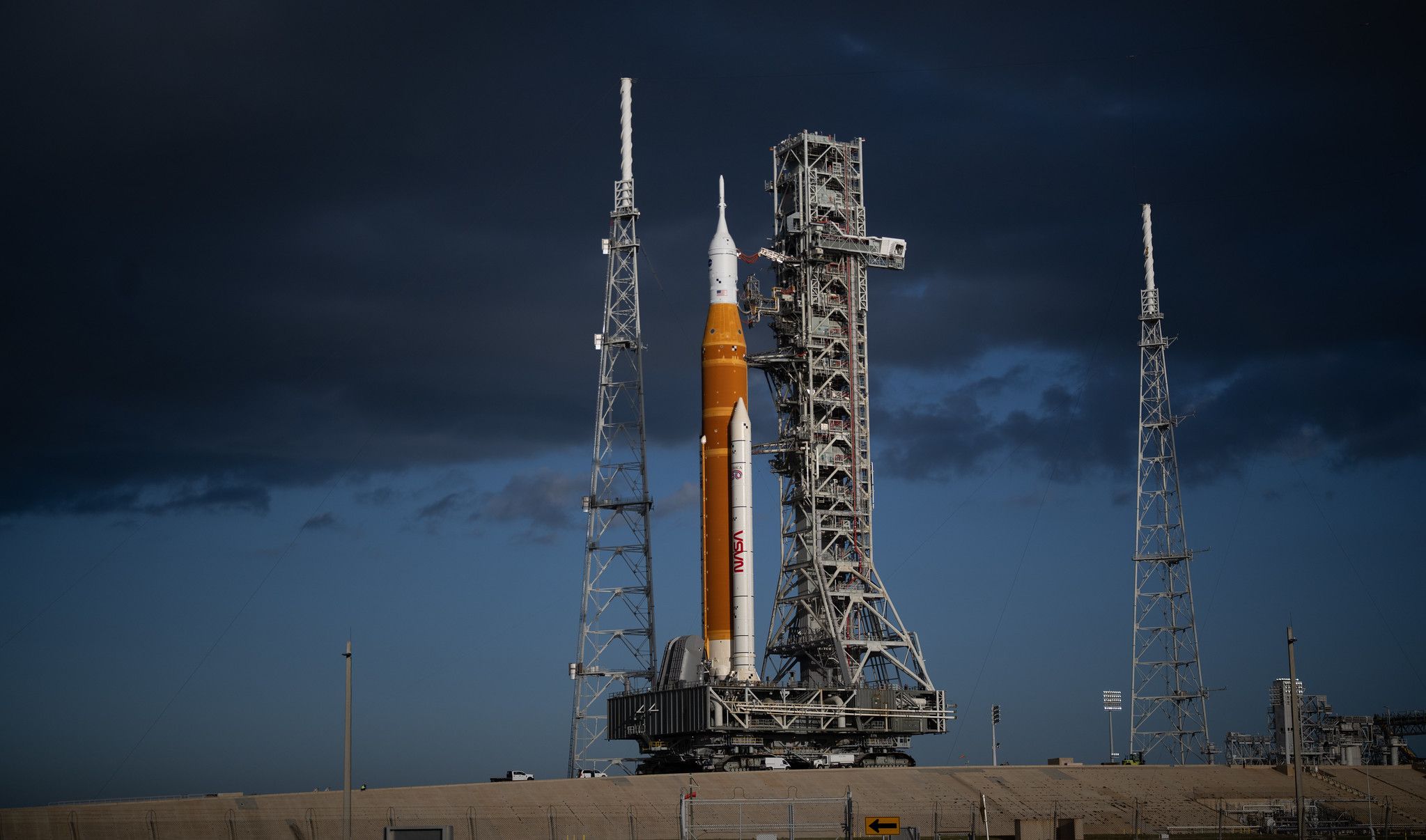
NASA's Space Launch System rocket carrying the Orion spacecraft for the Artemis 2 mission has completed its rollback to Launch Complex 39B at Kennedy Space Center, a milestone that moves humanity's first crewed lunar mission since 1972 into its final pre-launch configuration. The rollout follows an extended period at the Vehicle Assembly Building where technicians addressed issues identified during pre-launch testing, and represents the agency's formal commitment to an imminent launch attempt.
Artemis 2 will carry four astronauts — Commander Reid Wiseman, Pilot Victor Glover, Mission Specialist Christina Koch, and Canadian Space Agency astronaut Jeremy Hansen — on a ten-day free-return trajectory around the Moon without landing. The mission will validate Orion's life support systems, navigation, and crew interface in the actual deep space environment before Artemis 3 attempts to land astronauts on the lunar surface.
What the Rollback Signifies
The physical movement of a fully stacked rocket to the launch pad is the most visible operational commitment in the launch campaign, requiring the cooperation of dozens of NASA engineering teams and marking the transition from integration and testing to active launch preparation. For the Artemis program, which has faced years of schedule slippage, technical challenges, and cost growth, rolling the vehicle to the pad is a tangible demonstration that the mission is finally in its terminal countdown phase.
The rollback follows Artemis 1 — an uncrewed test flight in late 2022 that successfully sent Orion on a 25-day mission around the Moon and back, demonstrating the fundamental performance of the SLS and Orion systems. Artemis 1's success was critical both for validating the hardware and for restoring confidence in the program after years of development struggles.

The Crew and Their Mission
The four-person Artemis 2 crew represents a historic composition: Victor Glover will be the first Black astronaut to fly beyond low Earth orbit, and Jeremy Hansen will be the first Canadian astronaut to travel to the Moon — a moment of significant national pride in Canada. Christina Koch, who holds the record for the longest spaceflight by a woman, brings extensive ISS experience valuable for operating Orion's complex life support systems in deep space.
The mission profile involves a translunar injection burn from Earth orbit, a close lunar flyby within approximately 8,900 kilometers of the lunar surface, a free-return trajectory back to Earth without requiring a second burn to escape lunar gravity, and a high-speed reentry at approximately 40,000 kilometers per hour — conditions significantly more demanding than ISS return missions.
Technical Challenges Addressed
The extended time in the Vehicle Assembly Building before the latest rollout was used to address issues identified during ground testing, including work on the SLS's core stage thermal protection system, Orion's environmental control and life support systems, and inspection of the solid rocket boosters following anomalies noted during Artemis 1's post-flight analysis. NASA officials have characterized the fixes as addressing known issues rather than discovering new problems.
The SLS rocket's main engines — four RS-25 heritage engines from the Space Shuttle program — have undergone extensive refurbishment since Artemis 1. Unlike the Shuttle, where engines were recovered and reused after each flight, the SLS disposes of its core stage, meaning each mission uses a new set of engines assembled from the stockpile of Shuttle-era hardware. This situation will change when newly produced RS-25s become available.

Path to the Lunar Surface
Artemis 2's success is the prerequisite for Artemis 3, which will carry the first woman and next man to land on the Moon — a mission that will also mark the first use of SpaceX's Human Landing System, a lunar variant of the Starship vehicle designed to descend from lunar orbit to the surface and return the crew to Orion. The integration of NASA's SLS/Orion system with SpaceX's landing vehicle represents an unprecedented level of cross-program technical coordination, and Artemis 2 provides critical data for finalizing that interface.
The international dimension of Artemis is also significant: the program's Gateway lunar orbital station will involve contributions from ESA, JAXA, CSA, and other international partners, and the crewed missions are establishing the operational cadence and safety record that will allow partner agency astronauts to join future lunar surface expeditions.
This article is based on reporting by Space.com. Read the original article.
Originally published on space.com