Morning Commute Drives Afternoon Ozone
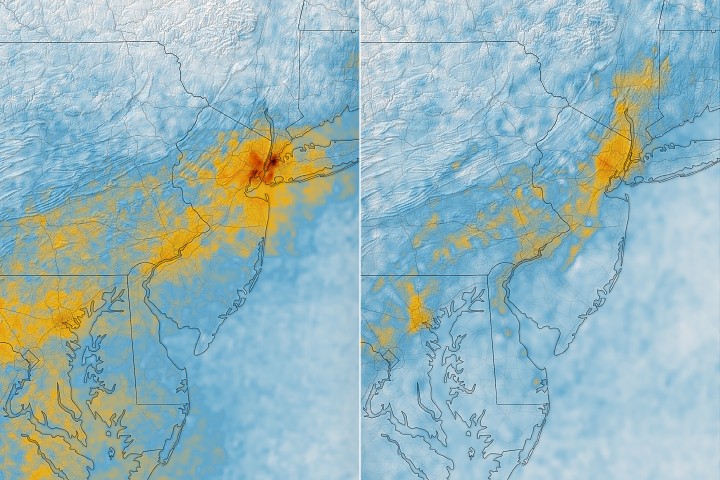
New data from NASA's TEMPO (Tropospheric Emissions: Monitoring of Pollution) mission has provided an unprecedented look at the daily pulse of air pollution over the densely populated Northeast corridor. On May 18, 2026, the instrument captured striking images showing high concentrations of nitrogen dioxide (NO2) during the morning commute at 7:05 a.m. local time, stretching from New York City to Washington, D.C. By 3:05 p.m., those NO2 levels had dropped significantly, but only because chemical reactions had transformed the gas into ground-level ozone, a harmful pollutant that peaks in the afternoon.
How TEMPO Tracks Pollution
TEMPO is a geostationary instrument that measures air quality over North America with hourly updates during daylight hours. Unlike polar-orbiting satellites that provide only one or two snapshots per day, TEMPO can monitor the evolution of pollutants throughout the day. This capability is crucial for understanding the complex chemistry that turns emissions from vehicles, power plants, and industry into secondary pollutants like ozone.
On May 18, 2026, TEMPO observed a classic pattern: NO2 concentrations were highest in the morning along major highways and urban centers. As the sun rose, sunlight drove photochemical reactions that converted NO2 into ozone, a process that typically peaks in the mid-afternoon. By 3:05 p.m., NO2 levels had fallen, but ozone concentrations had risen, creating unhealthy air quality along the corridor.

Implications for Public Health
Ground-level ozone is a respiratory irritant that can cause coughing, throat irritation, and aggravate asthma and other lung diseases. The U.S. Environmental Protection Agency (EPA) sets National Ambient Air Quality Standards for ozone to protect public health. The TEMPO data highlights how morning emissions directly contribute to afternoon ozone exceedances, providing valuable information for air quality forecasts and health advisories.
Residents of the Northeast are familiar with smog alerts on hot summer days. The new TEMPO observations underscore the importance of reducing NOx emissions—nitrogen oxides that include NO2—from vehicles and other sources. Even as overall air quality has improved in recent decades, the daily cycle of pollution remains a challenge, especially in the densely populated corridor between New York and Washington.
A New Era of Air Quality Monitoring
TEMPO, launched in April 2023, is part of NASA's Earth Venture program and is hosted on an Intelsat commercial satellite. It measures a variety of pollutants, including nitrogen dioxide, ozone, sulfur dioxide, and formaldehyde. By providing hourly data, TEMPO enables scientists to track pollution sources, transport, and chemical transformation in real time.
The May 18 observations are just one example of TEMPO's capabilities. Researchers are using the data to study pollution patterns across North America, from wildfires in the West to industrial emissions in the Midwest. The mission's high temporal resolution is particularly valuable for understanding the daily cycle of pollution and its health impacts.

Looking Ahead
As climate change increases the frequency of heatwaves, the conditions that favor ozone formation are expected to become more common. TEMPO data will be essential for developing strategies to mitigate ozone pollution and protect public health. The May 2026 observations along the New York-Washington corridor serve as a clear reminder of how our daily activities shape the air we breathe.
This article is based on reporting by science.nasa.gov. Read the original article.
Originally published on science.nasa.gov