When Heat Becomes a Weapon Against Your Own Side
The battlefield has always been hot — metaphorically and often literally. But as climate change pushes average temperatures higher across the regions of the world where conflict is most likely, and as the pace and intensity of modern infantry combat create metabolic demands that generate internal heat faster than the body can dissipate it, heat has become not just an environmental hazard but a genuine tactical constraint. New research emerging from military physiologists, sports scientists, and thermal engineers is beginning to answer questions that soldiers and commanders have grappled with for centuries: exactly how hot is too hot, how quickly does heat degrade performance, and what can be done about it?
The answers are more nuanced and more actionable than the traditional military heuristics — drink water, take breaks, acclimatize before deployment — that have guided heat management doctrine for generations. Modern heat science, drawing on precision wearable sensors, advanced thermoregulatory modeling, and experimental trials that would have been impossible without contemporary physiological monitoring technology, is generating a detailed map of heat's effects on the cognitive and physical performance characteristics that determine whether soldiers live or die.
The Physiology of Heat Failure
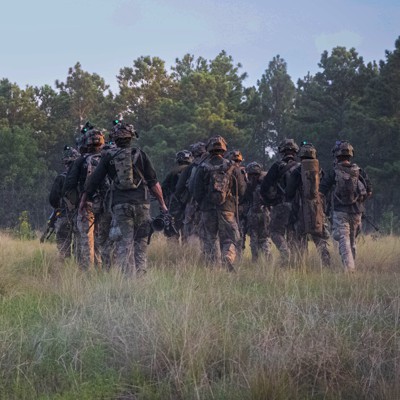
Understanding why heat degrades military performance requires understanding what heat actually does to the human system during sustained high-intensity activity. When a soldier in full kit — typically 50 to 80 pounds of body armor, ammunition, and equipment — moves rapidly in temperatures above 90 degrees Fahrenheit with significant solar radiation load, the heat generated by muscular activity far exceeds the body's ability to dissipate it through sweat evaporation and convective cooling. Core body temperature begins to rise, and at approximately 38.5 degrees Celsius (101.3 degrees Fahrenheit), measurable cognitive degradation begins: reaction time lengthens, decision-making quality declines, working memory becomes less reliable, and fine motor control deteriorates.
By the time core temperature reaches 39 degrees Celsius — a threshold that can be reached in under an hour of high-intensity activity in extreme heat — performance decrements are significant. At 40 degrees Celsius, heat exhaustion becomes likely, with symptoms including dizziness, confusion, and reduced coordination that can render a soldier combat ineffective. Heat stroke, with potentially fatal consequences, begins to occur with increasing frequency above 40.5 degrees Celsius.
What the new research has revealed is that these thresholds are not fixed characteristics of human physiology — they are modified by acclimatization status, hydration, sleep quality, sleep deprivation, prior heat exposure, aerobic fitness, and the specific nature of the cognitive task being performed. A well-acclimatized, well-hydrated, highly fit soldier tolerates substantially more heat than a soldier who has just arrived from a temperate climate and is fatigued from travel. Understanding these individual-level factors opens the door to personalized heat management strategies that treat soldiers as biological systems with known parameters rather than as interchangeable units following one-size-fits-all guidelines.
Wearable Monitoring and Real-Time Assessment
One of the most significant practical developments in military heat science is the maturation of wearable sensors capable of providing real-time estimates of core body temperature without requiring invasive measurement. Traditional core temperature monitoring — the gold standard for research purposes — requires a rectal probe or ingestible telemetric pill, neither of which is practical for routine field use. New sensor systems using skin temperature, heart rate, heat flux, and accelerometry data in combination with personalized physiological models can now estimate core temperature to within approximately 0.3 degrees Celsius in real time, providing commanders with heat readiness data for their units that was previously unavailable.
Several military research programs are integrating these sensors with command and control software that aggregates heat readiness data across a unit and flags individuals approaching risk thresholds. The intent is to give commanders the information they need to make evidence-based decisions about pace, rest cycles, and the reallocation of physically demanding tasks before heat casualties occur — shifting from reactive to preventive heat management.
Cooling Technology and Future Interventions
On the equipment side, heat science is driving development of new cooling garments and microclimate systems designed to extend the effective operating time of soldiers in extreme heat. Phase-change material vests that absorb body heat as the material transitions from solid to liquid provide passive cooling for approximately 60 to 90 minutes under typical heat conditions. Active cooling systems using small thermoelectric or vapor-compression cycles connected to water-cooled garments can extend cooling duration significantly but add weight and complexity.
Research is also exploring pharmacological and nutritional interventions that can extend heat tolerance: specific hydration protocols optimized for both water and electrolyte replacement, pre-cooling strategies that lower starting core temperature before a mission, and heat acclimatization acceleration protocols that achieve in one week the physiological adaptations that normally require three. These interventions are being evaluated in the context of the compressed training timelines that characterize modern force generation, where the weeks-long acclimatization periods traditional doctrine calls for are rarely achievable.
As climate projections continue to show expansion of extreme heat events across the Middle East, South Asia, Africa, and increasingly the southern United States — all regions of strategic military importance — the investment in heat science is not a niche concern but a core element of readiness. The soldier who can operate effectively at 45 degrees Celsius is not just better off personally; they represent a genuine tactical advantage over adversaries whose forces are not similarly optimized.
This article is based on reporting by Defense One. Read the original article.
Originally published on defenseone.com