BMW ties hydrogen range gains to manufacturing flexibility
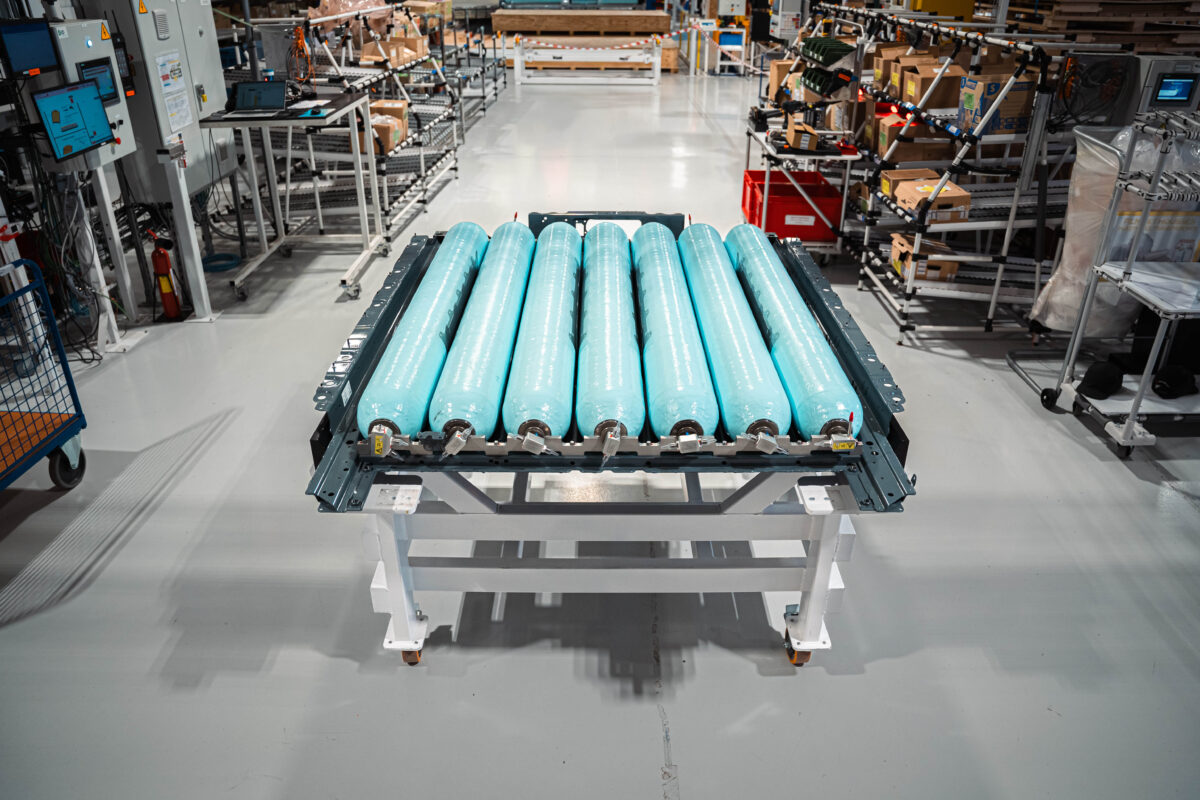
BMW Group has introduced a new 700 bar high-pressure hydrogen tank for its iX5 Hydrogen model, framing the update as both a vehicle-performance improvement and a production strategy move. According to the company details cited by pv magazine, the tank system can deliver up to 750 kilometers of range while allowing fuel-cell vehicles to be built on the same production line as models using other drivetrain types.
That combination matters because one of hydrogen mobility’s persistent challenges has been scale. Carmakers can demonstrate the technical viability of fuel-cell vehicles, but manufacturing them efficiently alongside battery-electric, hybrid, and combustion vehicles remains difficult. BMW’s approach suggests it is trying to lower that barrier by avoiding a dedicated production architecture for a relatively niche drivetrain.
The tank system uses multiple connected chambers managed by a central valve and stores up to seven kilograms of hydrogen. BMW also says refueling can be completed in under five minutes, a figure that continues to distinguish hydrogen fuel-cell vehicles from battery-electric models in use cases where downtime is costly or inconvenient.
Why the tank design matters
A 700 bar storage system is notable because hydrogen’s usefulness in transport depends heavily on how much energy can be stored safely and compactly. For passenger vehicles, range and refill time are among the most visible measures of practicality. BMW’s latest specification addresses both. A stated 750-kilometer range puts the iX5 Hydrogen in territory that can support longer-distance driving without frequent stops, while sub-five-minute refueling preserves the core promise of hydrogen for drivers accustomed to conventional fueling patterns.
The company’s emphasis on a shared production line is just as important as the tank itself. Automakers have been cautious about committing too much factory space or too much capital to hydrogen passenger vehicles before demand is established. If BMW can assemble fuel-cell variants without carving out a separate manufacturing footprint, it gains flexibility: it can produce vehicles in smaller numbers, adapt to regional demand, and continue testing the commercial case without the same level of fixed-cost exposure.
That does not resolve the broader infrastructure problem. The source text does not claim a breakthrough on hydrogen station availability, and that remains central to adoption. But it does show BMW working on the part of the equation it can control most directly: onboard storage, range, and manufacturability.
Hydrogen investment is moving beyond vehicles
The BMW announcement arrived alongside other hydrogen developments highlighted in the same industry roundup, underscoring that progress in the sector is not limited to vehicle design. In the UK, ITM Power secured GBP 40 million in investment from Great British Energy and also received a GBP 46.5 million government grant in principle to support a 1 GW expansion of its South Yorkshire facility.
The UK government said the funding is intended to strengthen domestic electrolyzer manufacturing capacity and support industrial strategy goals. That matters because electrolyzers sit at the heart of green hydrogen production. A larger domestic manufacturing base could reduce supply bottlenecks, support industrial decarbonization plans, and improve the economics of scaling hydrogen projects across multiple sectors.
Meanwhile, Hyundai Engineering & Construction is expanding into large-scale liquid hydrogen storage, with South Korea revealing plans to develop such systems. That points to another recurring obstacle in hydrogen deployment: storage and transport at meaningful industrial scale. Vehicle announcements tend to attract public attention, but hydrogen’s commercial future will depend just as much on the upstream equipment, storage technologies, and logistics systems that can move and hold the fuel efficiently.
What this means for the hydrogen market
Taken together, these developments suggest a more layered hydrogen story than the usual debate over whether fuel-cell cars will overtake battery-electric vehicles. BMW’s new tank points to incremental progress in the vehicle itself. ITM Power’s funding reflects manufacturing buildout for hydrogen production equipment. South Korea’s storage plans signal that infrastructure and industrial handling are also moving forward.
That is significant because hydrogen has often struggled with a sequencing problem. Vehicles need fueling infrastructure. Infrastructure needs reliable supply. Supply needs production equipment and investment confidence. Industrial users need storage and transport systems. Each part depends on the others, which can slow adoption even when the underlying technologies improve.
The latest announcements do not solve that chain in one step, but they show activity at several links at once. BMW is working to make fuel-cell vehicles easier to build and faster to refuel. The UK is backing electrolyzer capacity to support hydrogen production. South Korea is looking at large-scale storage systems that could help move hydrogen from demonstration to more sustained use.
For now, the strongest conclusion is not that hydrogen has reached mass adoption, but that major companies and governments are continuing to invest in practical bottlenecks. In a sector that has often been criticized for overpromising, these are concrete signals: a tank with defined performance metrics, factory expansion funding with named amounts, and national plans centered on storage capability.
- BMW says the iX5 Hydrogen can reach up to 750 kilometers using its new 700 bar tank system.
- The tank stores up to seven kilograms of hydrogen and supports refueling in under five minutes.
- The company says fuel-cell vehicles can be built on the same production line as other drivetrain types.
- ITM Power secured GBP 40 million in investment and a GBP 46.5 million government grant in principle for a 1 GW expansion.
- South Korea is pursuing development of large-scale liquid hydrogen storage systems.
The near-term test will be whether these separate advances begin to reinforce one another. If they do, hydrogen’s role in mobility and industry may become less speculative and more operational. BMW’s latest tank is one piece of that broader shift.
This article is based on reporting by PV Magazine. Read the original article.
Originally published on pv-magazine.com