Overview of the Standoff
House Minority Leader Hakeem Jeffries (D-NY) announced on Monday that Democrats will not support reauthorizing Section 702 of the Foreign Intelligence Surveillance Act (FISA) unless Bill Pulte is removed as acting Director of National Intelligence (DNI). The statement escalates a political battle that threatens to let the surveillance law expire later this week.
Section 702, which permits warrantless surveillance of foreign targets, is set to expire unless Congress passes a reauthorization bill. The law has long been controversial due to its potential to incidentally collect data on Americans without a warrant. Jeffries argued that President Trump's appointment of Pulte—who has no national security or intelligence experience—has made an already delicate negotiation untenable.
Jeffries' Press Conference Remarks
During a press conference on Monday, Jeffries stated: "There were already challenges when it came to extending foreign surveillance authority, given the refusal by the Trump administration to put in place the kind of common sense reforms that would be designed to both promote our national security interests on the one hand, and on the other protect the privacy and civil liberties of the American people." He added that negotiations were in a "very sensitive place" before Trump's announcement regarding Pulte. "And then Donald Trump, as he often does, tosses a hand grenade into those sensitive negotiations by elevating Bill Pulte as Director of National Intelligence," Jeffries said.

Bill Pulte's Background and Controversies
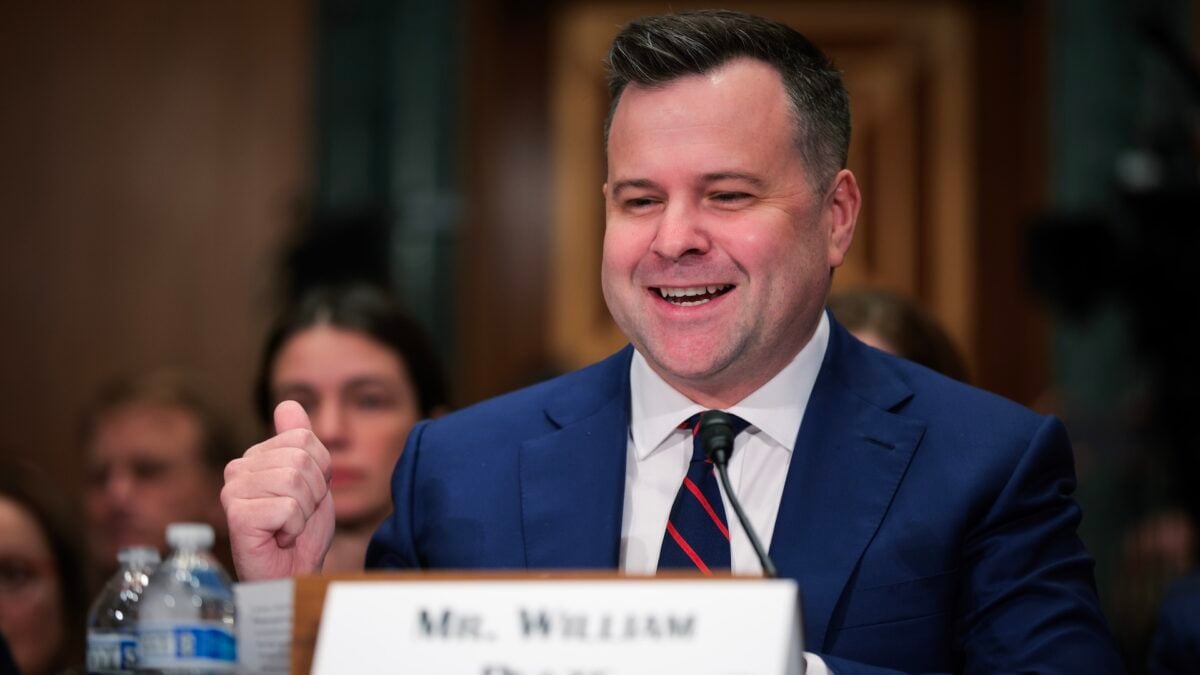
Bill Pulte was appointed by President Trump to succeed Tulsi Gabbard, who announced she would step down later this month due to her husband's cancer diagnosis and treatment. Pulte previously served as head of the Federal Housing Finance Agency (FHFA) during Trump's second term. He has no background in national security or intelligence.
Pulte has drawn criticism for recommending that the Department of Justice investigate New York Attorney General Letitia James, Federal Reserve board member Lisa Cook, and other Democratic politicians, alleging mortgage fraud. Critics view this as an attempt to weaponize the Justice Department against Trump's political opponents. Many observers believe this is the primary reason Pulte was installed as acting DNI.
Senator Mark Warner's Warnings
Sen. Mark Warner (D-VA), a member of the Senate Intelligence Committee, called Pulte a "national security risk" on Sunday. Warner expressed alarm at the potential for Pulte to misuse intelligence powers. He envisioned a scenario where Pulte could fabricate threats to election integrity, prompting Trump to deploy ICE to polling stations and federalize the midterm elections. "The long list of ways that he may be utilized to help Trump is extraordinarily frightening," Warner said.

Broader Concerns About FISA Section 702
Even if Democrats succeed in blocking Pulte's confirmation, the underlying issues with FISA remain. Section 702 allows the NSA and CIA to conduct warrantless surveillance on foreign targets, but it also permits the collection of communications involving Americans without a warrant. Supporters argue the law is essential for national security, but critics contend that safeguards are too broad and have been abused in the past.
Jeffries acknowledged that the controversy over Pulte has further complicated the reauthorization debate. Some Democrats worry that removing Pulte alone will not address the fundamental flaws in the surveillance law. The party has long pushed for reforms to protect civil liberties and privacy, but the Trump administration has resisted such changes.
Political Implications and Next Steps
The standoff puts pressure on Republican leadership to either remove Pulte or find a compromise that satisfies Democratic concerns. With the expiration deadline looming, the stakes are high. If Section 702 lapses, intelligence agencies would lose a key tool for counterterrorism and foreign intelligence gathering.
Jeffries' announcement signals that Democrats are willing to use their leverage to force a change in leadership at the ODNI. However, it remains unclear whether Republicans will accede to the demand or allow the law to expire. The situation underscores the deep partisan divisions over surveillance policy and the Trump administration's use of executive power.
Conclusion
The Democratic threat to block FISA reauthorization unless Bill Pulte steps down represents a significant escalation in the ongoing battle over surveillance and executive authority. While the immediate focus is on Pulte's appointment, the broader debate over warrantless surveillance and civil liberties continues. The coming days will determine whether Congress can reach a deal or allow Section 702 to expire.
This article is based on reporting by Gizmodo. Read the original article.
Originally published on gizmodo.com