Expanding the Driverless Footprint
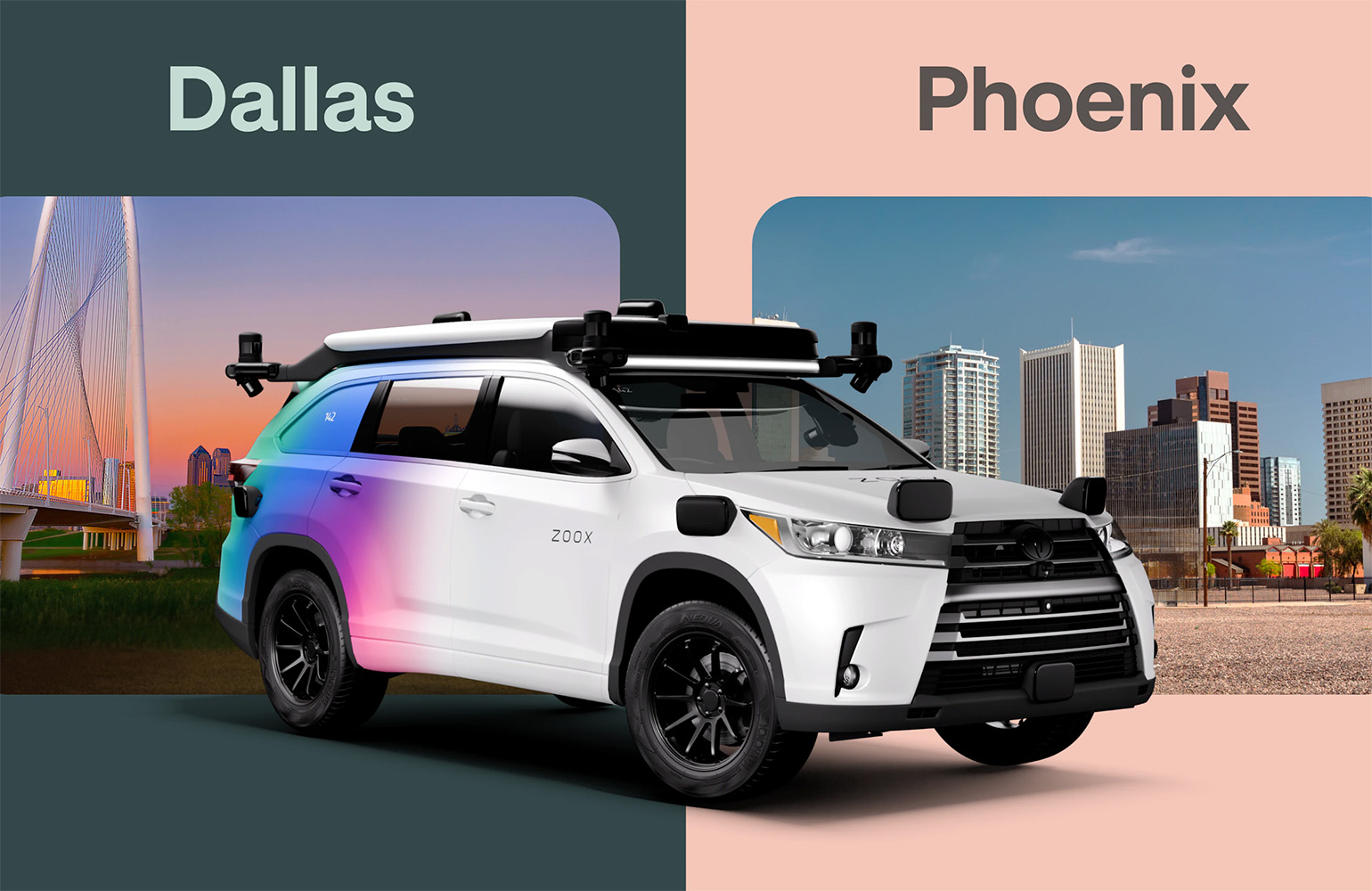
Zoox, the autonomous vehicle company owned by Amazon, has begun testing its purpose-built robotaxis on public roads in Phoenix and Dallas, expanding its operational footprint to 10 markets across the United States. The expansion marks a significant step for a company that has taken a deliberately different approach to autonomous driving by designing its vehicles from the ground up for driverless operation rather than retrofitting existing cars.
The Phoenix and Dallas deployments add two of the country's most important markets for autonomous vehicle testing. Phoenix has become the de facto proving ground for the autonomous vehicle industry, with Waymo already operating a commercial robotaxi service in the metropolitan area. Dallas adds a major new geography with different traffic patterns, road designs, and driving behaviors that will challenge and refine Zoox's self-driving system.
Purpose-Built, Not Retrofitted
What distinguishes Zoox from most of its competitors is its vehicle design philosophy. While companies like Waymo and Cruise have adapted existing car platforms by adding sensor suites and computing hardware, Zoox designed its robotaxi from a blank sheet of paper specifically for autonomous, driverless operation.
The result is a distinctive vehicle with no steering wheel, no pedals, and a symmetrical design that allows it to travel in either direction without turning around. Passengers sit in two facing bench seats in a carriage-like configuration, with entry and exit from both sides. The vehicle's compact footprint, roughly the size of a small sedan, belies its spacious interior, which is possible because the design eliminates the engine compartment and driver's cockpit that consume space in conventional vehicles.
This purpose-built approach has advantages and disadvantages. The custom design allows for optimal sensor placement, better passenger experience, and more efficient use of space. However, it also means Zoox cannot simply scale production using existing automotive manufacturing lines, a challenge that has contributed to the company's longer development timeline compared to competitors using modified production vehicles.

The 10-Market Strategy
With Phoenix and Dallas, Zoox is now operating test fleets across 10 markets, including the San Francisco Bay Area and Las Vegas. This geographic diversity is strategically important for developing a robust autonomous driving system that can handle the full range of conditions encountered across the United States.
Each market presents unique challenges. San Francisco offers steep hills, dense pedestrian traffic, and frequent fog. Las Vegas brings extreme heat, wide boulevards, and the unpredictable behavior of tourists and pedestrians in entertainment districts. Phoenix features sprawling suburban roads, intense sun glare, and monsoon-season weather. Dallas adds highway driving at Texas speeds, complex interchange systems, and weather ranging from ice storms to extreme heat.
By training its system across this diversity of environments, Zoox aims to develop a self-driving capability that is genuinely general-purpose rather than narrowly tuned to specific geographies. This contrasts with Waymo, which has focused on deep operational experience in a smaller number of markets before expanding.
Amazon's Strategic Investment
Amazon acquired Zoox in 2020 for approximately $1.3 billion, a price that seemed steep at the time but looks increasingly strategic as autonomous delivery and transportation become central to Amazon's logistics ambitions. While Amazon has not publicly detailed how Zoox fits into its broader logistics plans, the potential applications are clear.
A fleet of purpose-built autonomous vehicles could serve both ride-hailing customers and Amazon's last-mile delivery needs, potentially sharing infrastructure and operational systems across both use cases. The vehicles' symmetrical design and curbside access from both sides make them well-suited for package delivery in urban environments.
Amazon has continued to invest heavily in Zoox since the acquisition, funding ongoing development, testing operations, and the build-out of manufacturing capabilities. The company has also provided access to Amazon's cloud computing infrastructure and AI research capabilities, accelerating the development of Zoox's self-driving algorithms.
The Competitive Landscape
Zoox enters Phoenix as a challenger in Waymo's strongest market. Waymo, which has been operating commercially in Phoenix since 2020, has built significant brand recognition and operational experience in the area. For Zoox, the head-to-head comparison will be a critical test of whether its purpose-built vehicle approach delivers a meaningfully better passenger experience.
The broader autonomous vehicle industry has consolidated significantly since the mid-2010s hype cycle. Cruise, General Motors' robotaxi unit, suspended operations in late 2023 following a pedestrian safety incident and regulatory challenges. Apple abandoned its autonomous vehicle project entirely. Several other well-funded startups have either shut down or pivoted to less ambitious applications.
The survivors, primarily Waymo and Zoox among passenger robotaxi companies, are now in a race to demonstrate that autonomous ride-hailing can be operationally viable at scale. Waymo has the lead in terms of commercial deployment, but Zoox's purpose-built vehicle and Amazon's deep pockets make it a formidable competitor as the industry moves from testing to commercial scaling.
Road to Commercialization
Zoox has not announced a specific timeline for launching commercial ride-hailing service in Phoenix or Dallas, and the current deployments are testing operations with safety drivers present. The company is expected to begin fully driverless testing, without safety drivers, in select markets later this year, with commercial service potentially following in 2027.
For the autonomous vehicle industry, Zoox's steady expansion is an encouraging signal that the technology continues to advance despite the setbacks and skepticism that have marked the sector in recent years. The question is no longer whether autonomous vehicles can work but how quickly they can scale to become a meaningful part of the transportation landscape.
This article is based on reporting by The Robot Report. Read the original article.

Originally published on therobotreport.com