![Humanoid robots get to work at German BMW factory [video]](https://i0.wp.com/electrek.co/wp-content/uploads/sites/3/2026/03/BMW_humanoid.jpg?resize=1200%2C628&quality=82&strip=all&ssl=1)
The Factory Floor Comes to Life
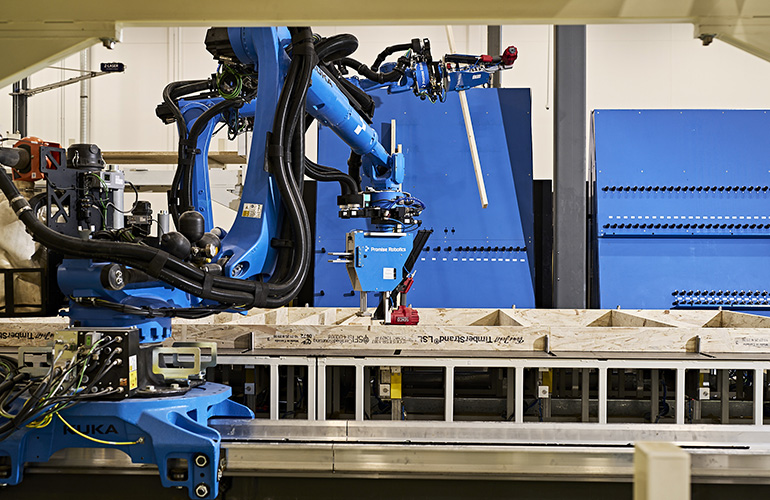
For decades, industrial robots in automotive manufacturing have meant large, fixed-installation arms — the welding robots, painting systems, and assembly manipulators that have populated car factory floors since the 1970s. These systems are powerful and precise but fundamentally inflexible: they operate in defined zones, execute preprogrammed movements, and require significant retooling when production lines change.
The robots now arriving at BMW's German factory are fundamentally different in their design philosophy: bipedal, mobile, and intended to work in spaces designed for human workers rather than requiring spaces redesigned around them. Their deployment confirms what robotics industry observers have been anticipating — that automotive manufacturing will be among the first industries to achieve meaningful commercial deployment of humanoid robots beyond the pilot stage.
Why Automotive Manufacturing Is Ready
The automotive factory floor presents a set of conditions that are simultaneously demanding and, in specific respects, favorable for humanoid robot deployment. The environments are structured enough that reliable navigation is achievable with current technology. Many specific tasks — carrying components, performing visual inspection, operating existing tools and fixtures, moving between workstations — match the capability profiles of current-generation humanoid systems more closely than the diverse manipulation requirements of, say, e-commerce fulfillment or home care robotics.
BMW has existing relationships with robotics companies through its conventional industrial automation programs and has the engineering sophistication to manage a complex technical integration. It also has the financial scale to absorb early deployment costs in ways that smaller manufacturers cannot — making it a natural first mover in a technology transition that will eventually affect manufacturing broadly.
Current Deployment Scope
The BMW deployment is not a wholesale replacement of human workers with humanoid systems. The current implementation uses humanoid robots for specific tasks — material handling, parts transport, and assistance functions — in areas where their mobility advantage relative to fixed industrial systems is most valuable. Human workers remain central to the assembly operations.
This incremental deployment model is consistent with how successful automation has typically entered manufacturing environments: beginning with the tasks that are most straightforward to automate, demonstrating reliability, and expanding scope as the technology matures and operators build confidence and expertise. The BMW deployment provides the operational data, integration learning, and public demonstration that will inform subsequent rollouts across the automotive industry and beyond.
The Humanoid Robot Vendors
The specific humanoid robot platform being deployed at BMW was not specified in available reporting, but the leading candidates in the automotive deployment space include Figure AI, Apptronik, Agility Robotics, and Boston Dynamics — all of which have announced or rumored automotive manufacturing partnerships over the past year. The competition among these vendors to secure high-profile automotive deployments is intense, as reference customers in recognizable manufacturing environments provide the operational credibility that accelerates sales cycles in other industries.
Tesla's Optimus program is being evaluated for Tesla's own manufacturing facilities but has not been confirmed for third-party deployment. The race to be the first humanoid robot platform in BMW — and to demonstrate the performance metrics that would support expansion — is one of the more consequential competitions in the current robotics market.
Workforce Implications
The workforce dimensions of humanoid robot deployment in automotive manufacturing are politically and economically significant. The automotive industry employs millions of workers globally, including in Germany where BMW's manufacturing base is located and where strong unions and co-determination practices give workers significant voice in decisions about production technology adoption.
BMW's deployment has proceeded through the established consultation processes required by German labor law and the company's works council agreements. How human workers experience the integration — whether as a relief from physically demanding or hazardous tasks or as a threat to employment security — will shape both the pace of expansion and the social license for the technology in one of Europe's most important industrial sectors. The BMW case will be studied carefully by other manufacturers and by policymakers developing frameworks for managing AI and automation transitions in the workforce.
This article is based on reporting by Electrek. Read the original article.
Originally published on electrek.co