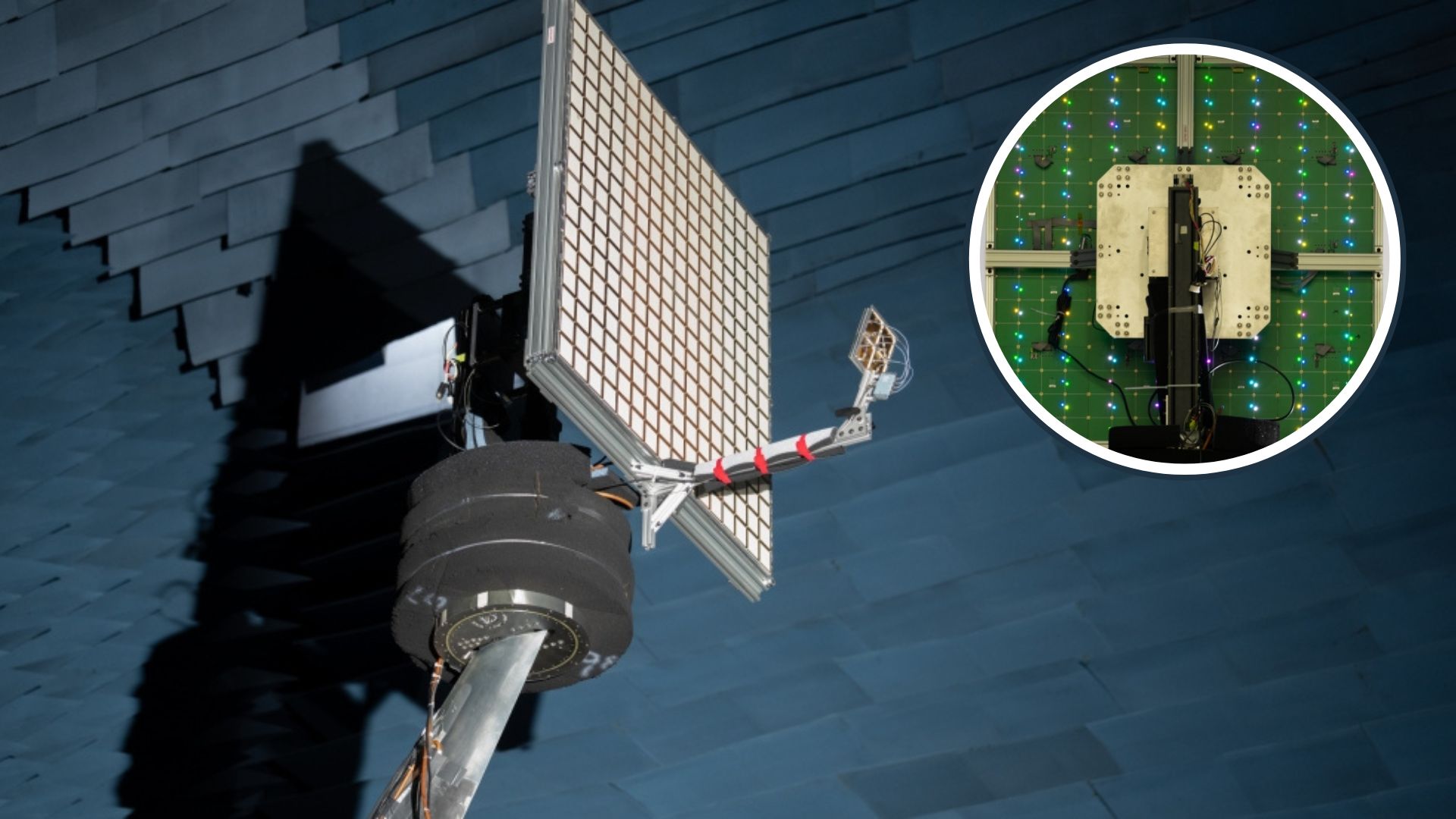
Revolutionizing Satellite Communications
The Pentagon is actively seeking innovative solutions to protect military satellite communications from increasingly sophisticated electronic attacks. A breakthrough antenna design, known as a reflectarray, promises to deliver robust anti-jamming capabilities while consuming 95% less power than conventional systems. This development could significantly enhance the resilience of military space assets against electronic warfare threats.
How the Reflectarray Antenna Works
Unlike traditional parabolic dish antennas, the reflectarray uses a flat surface embedded with thousands of tiny radiating elements. Each element can be individually controlled to shape and steer the antenna's beam electronically, without moving parts. This allows the antenna to dynamically nullify interference sources by creating deep nulls in the direction of jammers. The key innovation lies in its ability to achieve this with minimal power draw, a critical advantage for power-constrained satellites.

Power Efficiency Breakthrough
The new design reduces power consumption by an astonishing 95% compared to existing phased-array antennas. This is achieved through advanced materials and circuit designs that minimize ohmic losses and improve phase-shifter efficiency. Lower power requirements translate to smaller solar panels, reduced thermal management needs, and longer satellite operational lifetimes. For military satellites, this means more available power for other mission-critical systems.
Countering Electronic Warfare Threats
Electronic warfare in space is a growing concern for defense agencies. Adversaries can jam satellite communication links, disrupt GPS signals, or even spoof commands. The reflectarray antenna's ability to rapidly steer nulls toward jammers makes it a powerful countermeasure. Tests have demonstrated that the antenna can maintain secure communication links even in the presence of multiple, high-power jamming sources. This capability is vital for ensuring command and control, intelligence gathering, and battlefield connectivity.
Pentagon's Strategic Interest
The Pentagon's investment in this technology underscores the strategic importance of resilient space-based communications. As the US military increasingly relies on satellites for everything from drone operations to nuclear command and control, protecting these assets from electronic attack is paramount. The reflectarray antenna is part of a broader push to develop 'hardened' satellite systems that can operate through contested environments.
Technical Specifications and Advantages
- Frequency Range: Designed for military X-band and Ka-band frequencies, ensuring compatibility with existing satellite communication systems.
- Beam Steering: Electronic beam steering with sub-millisecond response time, allowing rapid adaptation to changing jammer positions.
- Null Depth: Deep nulls exceeding 30 dB relative to the main lobe, effectively silencing even powerful jammers.
- Power Consumption: Less than 100 watts for a typical satellite-sized array, compared to over 2 kW for conventional phased arrays.
- Weight: Lightweight construction using printed circuit board technology, reducing launch costs.
Implications for Military Operations
With this antenna, military forces can maintain secure, uninterrupted satellite communications even in the most contested electronic warfare environments. This ensures that troops on the ground, naval vessels, and aircraft can receive critical data and commands. The technology also supports advanced capabilities like beam hopping and frequency agility, further complicating enemy jamming efforts.
Future Developments and Integration
The reflectarray antenna is currently in advanced prototyping stages, with plans for space qualification testing within the next two years. Integration into next-generation military satellites, such as the Protected Tactical Satellite Communications (PTS) program, is being explored. Additionally, the technology could be adapted for ground-based terminals, providing a complete anti-jamming solution from space to the warfighter.
Conclusion
The development of this low-power, high-performance reflectarray antenna marks a significant step forward in protecting military satellite communications from electronic warfare. By drastically reducing power requirements while maintaining superior jamming resistance, this technology promises to keep military forces connected and secure in the most challenging environments. As the Pentagon continues to prioritize space resilience, innovations like this will play a crucial role in maintaining US military superiority.
This article is based on reporting by Interesting Engineering. Read the original article.
Originally published on interestingengineering.com