Defense robotics financing remains large-scale
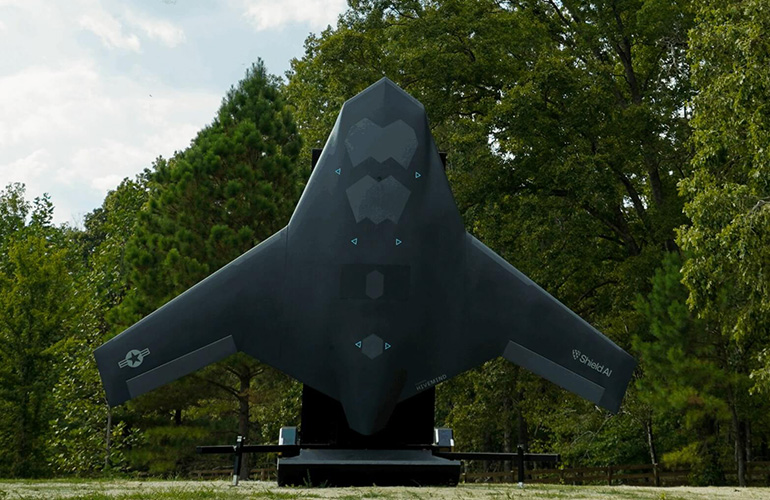
Shield AI has raised $2 billion for defense drone development and plans to acquire Aechelon, according to The Robot Report. The source text available here is limited, but it provides two central facts: the financing round is substantial, and the acquisition target specializes in high-fidelity simulation for aircraft testing and pilot training.
Taken together, those moves suggest Shield AI is not positioning itself as a narrow drone manufacturer alone. It is assembling a broader stack around autonomous defense systems, where software, simulation, testing, and training are increasingly as important as the aircraft themselves.
Why the financing matters
A $2 billion raise is consequential in any sector. In defense robotics, it is especially notable because it signals that investors still see major upside in companies building autonomous military systems despite long development cycles, procurement complexity, and regulatory scrutiny.
The size of the raise implies confidence in more than a single product line. Capital at that scale is usually directed toward production capacity, platform maturation, software development, integration work, and strategic acquisitions. Even with limited source detail, the round clearly places Shield AI among the better-capitalized players in the defense autonomy market.
That is significant because defense technology increasingly rewards companies that can do more than field a prototype. Militaries want systems that can be tested, simulated, validated, integrated, and sustained. Large financing helps bridge the gap between concept and deployable capability.
Why Aechelon fits the strategy
The reported acquisition target, Aechelon, brings high-fidelity simulation capabilities used for aircraft testing and pilot training. That matters because autonomous systems do not develop in a vacuum. They need digital environments where behaviors can be modeled, edge cases can be examined, and operators can train against realistic scenarios.
Simulation has become a central layer in aerospace and defense development for a simple reason: physical testing is expensive, time-consuming, and constrained. A strong simulation capability can accelerate iteration, reduce development risk, and improve training before live deployment.
For a company focused on AI-driven defense systems, that is strategically attractive. Autonomy depends on robust testing across varied conditions. Simulation environments help create those conditions at scale.
A convergence of drones, software, and training
The combination of a multibillion-dollar raise and a simulation-focused acquisition points to a broader market trend. Defense robotics is moving toward platform businesses that combine airframes, autonomy software, synthetic environments, and operator training tools.
That convergence is important because military customers increasingly evaluate systems as part of a lifecycle rather than as isolated hardware purchases. A drone platform that comes with simulation assets for mission rehearsal and pilot or operator training can be more attractive than one that arrives as a standalone vehicle requiring separate infrastructure.
Shield AI’s move therefore looks consistent with a wider shift in defense technology: value is accumulating around integrated ecosystems rather than around individual pieces of equipment.
Why investors still care about defense autonomy
The financing also reflects the strategic importance of unmanned systems in current military planning. Interest in autonomous and semi-autonomous platforms has remained high as armed forces look for ways to expand reach, reduce risk to personnel, and operate at greater tempo. That does not guarantee easy procurement wins for any single company, but it does create durable investor interest in firms seen as credible suppliers.
Capital is particularly likely to flow toward companies that can claim dual strengths in software and mission relevance. Shield AI’s reported focus on drone development, combined with Aechelon’s simulation capabilities, fits that pattern. The message to investors is that this is not only a robotics company. It is a defense autonomy company with an expanding software and testing layer.
What remains uncertain
The limited source text leaves many practical questions unanswered, including the financing structure, valuation context, acquisition timeline, and specific programs that will benefit most from the new capital. It also does not detail how Aechelon’s simulation tools will be integrated into Shield AI’s existing portfolio.
Still, the strategic outline is visible enough. Large capital plus simulation infrastructure usually indicates an effort to widen capability, accelerate development, and strengthen the company’s position in future procurement contests.
A marker for the sector
Even in abbreviated form, the announcement is a useful marker for where defense robotics is heading. Investors are still willing to back big bets in autonomy. Companies are still looking to consolidate adjacent capabilities. And simulation is increasingly treated not as a support function, but as a core component of the product and training ecosystem.
That combination is likely to shape the next phase of defense AI competition. The winners may be the firms that do not simply build autonomous vehicles, but also build the digital environments needed to test them, train around them, and integrate them into operational planning.
Shield AI’s reported raise and acquisition push fit that model closely. The scale of the move suggests the market sees defense autonomy not as a speculative edge case, but as an enduring area of industrial and strategic investment.
This article is based on reporting by The Robot Report. Read the original article.
Originally published on therobotreport.com