The weakest point in an automation cell is often the one most exposed to the real world
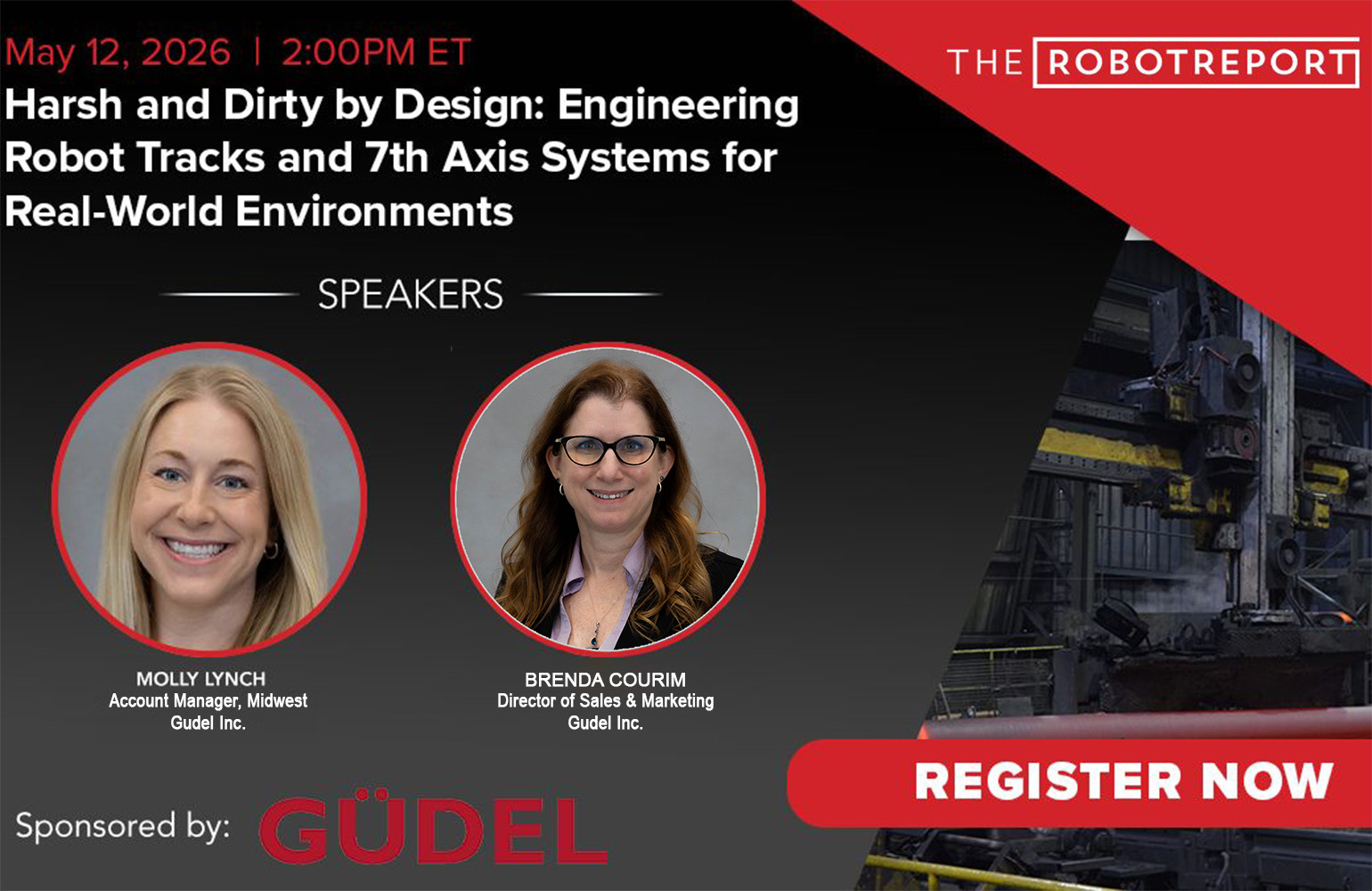
Robot tracks and seventh-axis systems do not usually get top billing in automation conversations. Attention tends to flow toward the robot arm, the software stack, or the end effector. But in many industrial environments, the long-axis motion system is where reliability quietly succeeds or fails. That is the focus of an upcoming webinar highlighted by The Robot Report, which centers on a blunt design reality: systems built for clean, controlled settings often perform badly when dropped into actual production conditions.
The core problem is not mysterious. Robot tracks and seventh-axis systems are frequently the most exposed components in an automation cell. In real-world deployments, they face debris, abrasive dust, moisture, chemicals, overspray, extreme temperatures, and washdown conditions. When designers underestimate that exposure, the result is predictable: accelerated wear, contamination-driven failures, and unplanned downtime.
Why this matters now
Automation is spreading into more difficult environments, not fewer. Welding cells, grinding and finishing operations, paint booths, and harsh-temperature settings all place heavy stress on motion hardware. That means the industry cannot treat linear motion reliability as a secondary mechanical detail. It has to be designed in from the start.
The webinar preview makes that argument directly. Traditional guide technologies, it notes, often struggle once contamination enters the track system. Small rolling elements and conventional sealing strategies may work adequately in cleaner settings, but their limitations become more obvious when dust, fluids, corrosion, or overspray are part of normal operations. In those environments, a component choice that looked efficient on paper can become a maintenance liability.
This is one reason long-axis motion has become a more interesting engineering topic than it first appears. As automation matures, the biggest gains no longer come only from adding robots. They come from making robotic systems durable enough to maintain throughput under imperfect, messy, high-cycle industrial conditions.
The failure modes are practical and expensive
The issues outlined in the event preview are familiar to anyone who works around production equipment: seal bypass, bearing damage, corrosion, and loss of alignment. None of those failures sounds dramatic in isolation, but each can force downtime, degrade motion precision, and shorten service intervals. In a high-utilization environment, even modest reliability problems can cascade into major operational cost.
That is why the discussion is likely to resonate with systems integrators and end users alike. The mechanical architecture around the robot often receives less strategic attention than control logic or vision, yet it is exactly this infrastructure that determines whether an automation cell survives outside idealized test conditions.
The most useful part of the preview is that it treats contamination as a design parameter, not a maintenance surprise. That framing reflects a more mature view of industrial robotics. If dirt, moisture, chemical exposure, and thermal stress are normal for the application, then preventive maintenance and physical protection cannot be bolted on later as reactive fixes.
Designing for survivability instead of elegance alone
The webinar plans to cover design approaches meant to improve survivability, including roller guideways, cam followers, mechanical scrapers, track covers, and protective surface treatments. Those specifics matter because they point to a broader engineering philosophy. In harsh environments, the best solution is not always the most compact or visually elegant one. It is the one that tolerates contamination, preserves access for service, and keeps alignment stable over time.
Configuration also matters. The preview notes that track layout and system architecture influence exposure to contamination, maintenance access, and long-term performance. That is an important reminder that reliability is not just about component selection. It is also about where components sit, how contamination moves through the cell, and whether technicians can actually inspect and service the system before small issues become failures.
For robotics buyers, the takeaway is simple: linear motion hardware should be treated as part of the automation strategy, not as commodity framing around the “real” robot. For integrators, the message is more demanding. They need to engineer the environment into the system from day one, especially when the installation will live in welding, finishing, paint, washdown, or other contamination-heavy conditions.
The industry has spent years proving robots can do more tasks. The next phase is proving they can do those tasks reliably in the environments where manufacturers actually need them. On that question, the unglamorous seventh axis may be more decisive than many robot launches.
This article is based on reporting by The Robot Report. Read the original article.
Originally published on therobotreport.com


