The AI Buildout Is Reshaping Taiwan’s Strategic Role
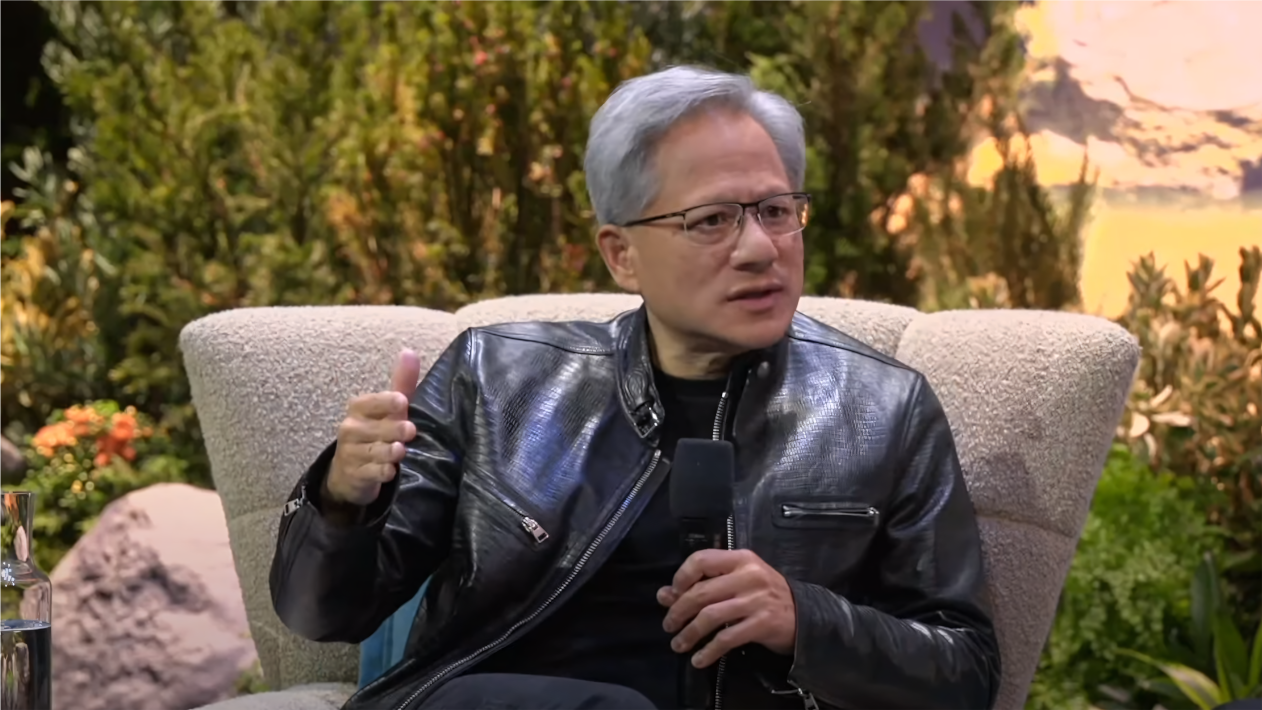
Nvidia says its annual spending with suppliers in Taiwan has risen from roughly $10 billion to $15 billion a few years ago to as much as $150 billion today. That figure, attributed in the supplied source text to remarks by CEO Jensen Huang in Taipei, captures the sheer scale of the AI hardware boom more effectively than most abstract discussions of demand. It suggests that Taiwan is not just a manufacturing base for Nvidia. It is becoming an increasingly central operational partner in the company’s expansion.
The number is striking because it reflects ongoing annual supplier spending, not a one-time capital outlay. In practical terms, it points to the scale at which Nvidia now depends on Taiwanese manufacturing capacity, especially from companies such as TSMC, to sustain its position in AI chips and systems. As AI infrastructure investment accelerates worldwide, that dependence gives Taiwan even greater importance in the geopolitical and industrial landscape surrounding advanced semiconductors.
The source text pairs the spending figure with another concrete commitment: Nvidia plans to expand its Taiwan workforce from 1,000 to 4,000 employees. It also plans a new Taipei campus called Constellation, with construction expected to begin in late 2026 and completion targeted for 2030. Those details matter because they show the company is not merely increasing purchase volumes. It is also deepening its local organizational footprint.
Supplier Relationships Are Becoming Strategic Assets
For years, observers understood that Taiwan sat at the center of the global chip supply chain. What changes in the current AI cycle is the magnitude of concentration. Spending that rises by an order of magnitude in only a few years signals that supplier access is no longer just a procurement issue. It is an existential growth constraint for companies whose products depend on leading-edge fabrication and advanced packaging.
The source notes that rival AMD is also boosting its Taiwan presence, with CEO Lisa Su announcing more than $10 billion for the island’s chip ecosystem to help secure advanced packaging capacity. The article is careful to say the figures are not directly comparable, because Nvidia’s number refers to annual supplier spending while AMD’s refers to a multi-year investment. Even so, the direction of travel is clear. The biggest AI chip players are treating Taiwan as a critical arena for capacity, talent, and long-term positioning.
That has consequences well beyond company earnings. When multiple semiconductor leaders compete to secure manufacturing and packaging access in one geography, the local ecosystem becomes even more strategically valuable. Engineering talent, logistics, supplier specialization, and physical capacity all become harder to separate from larger national and international policy questions.
Why the Workforce Expansion Matters
The planned workforce quadrupling may be almost as important as the spending headline. Expanding from 1,000 to 4,000 employees suggests Nvidia expects Taiwan to play a deeper role not just in external supplier coordination, but in engineering, planning, and long-term product execution. The planned campus reinforces that expectation by giving the company a durable local base at a moment when the AI supply chain is evolving rapidly.
The detail that Nvidia wants to replicate the campus concept at its new California headquarters is also revealing. It implies that the Taipei expansion is not being treated as a peripheral regional office. Instead, it appears to be part of a model for how Nvidia wants to organize itself around the next phase of growth.
From an industry perspective, the announcement underlines a point that is easy to lose in headline discussions about AI models and data centers: physical supply chains still govern what the AI boom can become. Software demand may set the pace of ambition, but semiconductor capacity determines how much of that ambition can actually be built.
Nvidia’s spending surge is therefore more than a financial curiosity. It is evidence that the AI race is deepening dependence on a highly specialized manufacturing ecosystem that few regions can match. As long as compute demand keeps climbing, Taiwan’s role in that system is likely to grow even more consequential.
The company’s latest figures do not settle broader debates about concentration risk or industrial resilience. They do make one thing plain. In the AI era, supplier geography is becoming strategy, and Taiwan remains one of the most important places where that strategy is being written.
This article is based on reporting by The Decoder. Read the original article.
Originally published on the-decoder.com