From Stealth to Shipment in Record Time
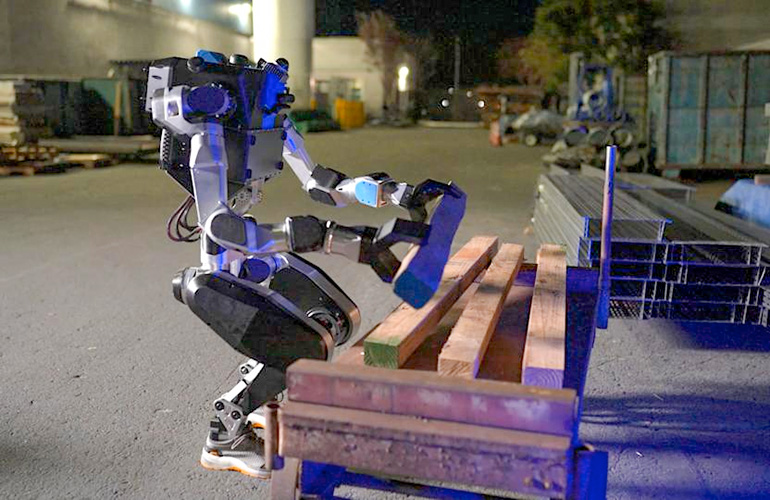
Robotics startup Noble Machines has emerged from stealth mode with the reveal of Moby, a full-scale humanoid robot that the company says has already been delivered to a Fortune Global 500 customer. The achievement is remarkable for its speed: Noble Machines claims to have gone from founding to commercial shipment in just 18 months, a timeline that would make it one of the fastest humanoid robotics companies to reach a paying customer.
The announcement comes amid an intensifying race among robotics firms to bring commercially viable humanoid robots to market. Companies including Tesla, Figure AI, Agility Robotics, and Apptronik have all been developing humanoid platforms aimed at industrial and logistics applications, but few have publicly confirmed revenue-generating deployments at this stage.
What We Know About Moby
Noble Machines has been selective about the technical details it has shared publicly. Moby is described as an AI-driven humanoid designed for real-world work environments, with capabilities that extend beyond simple pick-and-place operations to more complex manipulation and navigation tasks in dynamic settings.
The robot's AI systems are built to operate in unstructured environments where conditions change frequently and tasks are not perfectly repeatable. This contrasts with traditional industrial robots that excel in highly controlled settings but struggle when faced with variability in their surroundings.
Noble Machines emphasizes that Moby was designed from the ground up for practical deployment rather than as a research platform. This commercial-first approach appears to have influenced everything from the robot's mechanical design, which prioritizes reliability and maintainability, to its software architecture, which is built for rapid task configuration by non-specialist operators.
The Fortune 500 Customer
Noble Machines has not disclosed the identity of its Fortune Global 500 customer or the specific use case for which Moby was deployed. However, the company's willingness to name the customer category suggests a deployment in manufacturing, logistics, or a similarly large-scale industrial operation where humanoid form factors offer advantages over traditional automation.
The humanoid form is particularly valuable in environments designed for human workers, where robots must navigate doorways, climb stairs, operate human-scale tools, and interact with infrastructure built to human dimensions. Retrofitting these environments for non-humanoid robots can be prohibitively expensive, giving humanoid platforms a significant practical advantage despite their greater mechanical complexity.
Securing a Fortune Global 500 customer at this early stage also provides Noble Machines with a powerful validation signal for future fundraising and business development. Large enterprises typically subject new technologies to rigorous evaluation processes, and a successful deployment can open doors to additional contracts across the customer's global operations.
A Crowded but Growing Market
The humanoid robotics market has attracted billions of dollars in investment over the past two years, driven by advances in AI that have made dexterous manipulation and autonomous navigation increasingly feasible. Large language models and vision-language models have proven particularly useful for enabling robots to understand natural language instructions, making them more accessible to workers without robotics expertise.
Tesla's Optimus program remains perhaps the most high-profile effort, though the company has been cautious about specific commercial deployment timelines. Figure AI raised substantial funding and has been demonstrating its Figure 02 robot in BMW manufacturing environments. Agility Robotics opened a dedicated factory for its Digit robot and has been working with Amazon on warehouse deployments.
Noble Machines enters this competitive field with the claim that it has already achieved what many of its better-funded rivals are still working toward: a paying customer using the robot in a real operational setting. If validated, this positions the startup as a serious contender despite its relative obscurity until now.
What Comes Next
The company says it plans to scale production and expand deployments across additional industries and geographies. The 18-month timeline from founding to shipment suggests a team with significant prior experience in robotics and AI, likely including veterans from other humanoid or industrial robotics programs.
As the humanoid robotics market matures, the companies that demonstrate reliable real-world performance will separate from those that remain in the demonstration and pilot phase. Noble Machines' early commercial traction, if sustained, could give it a meaningful head start in this increasingly competitive landscape.
This article is based on reporting by The Robot Report. Read the original article.
Originally published on therobotreport.com