A significant reshuffling in warehouse automation
Honeywell is selling its Warehouse and Workflow Solutions business to American Industrial Partners, transferring a business centered on the Intelligrated and Transnorm brands into a new ownership structure expected to close in the second half of 2026. The deal value was not disclosed, but the scale of the business is substantial: the supplied report says the unit generated about $935 million in revenue in 2025.
This is more than a portfolio adjustment. It is a consequential transaction in a warehouse automation market still being shaped by e-commerce growth, labor shortages, software-heavy operations, and continued pressure to digitize supply chains.
What is changing hands
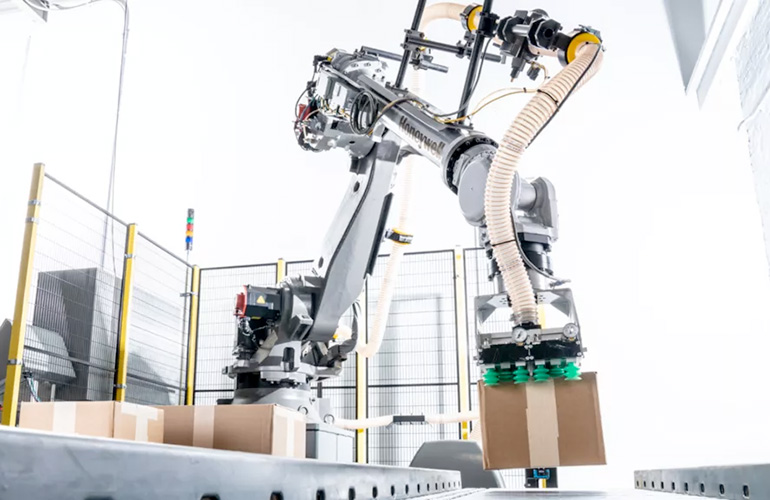
Honeywell Intelligrated is described in the report as an end-to-end warehouse automation and systems integration business offering software-led solutions across sortation, palletizing, conveyors, robotics, services, and aftermarket support. Transnorm adds belt curve technology and serves airport, parcel, post, and e-commerce operations across five continents.
Together, those brands represent a broad installed base and deep exposure to the physical systems that keep distribution centers and logistics facilities moving. Under AIP, the business will be combined with the private equity firm’s existing investment in Trew Automation to form what the buyer describes as a complementary platform.
Why private equity sees an opening
AIP’s thesis, as quoted in the report, is straightforward: warehouse automation demand continues to rise as operators respond to labor scarcity, cost pressure, and the complexity of modern fulfillment networks. That view aligns with the market’s longer trend line. Even where e-commerce growth moderates, expectations for speed, accuracy, and throughput remain high, and those expectations increasingly depend on integrated software and automation layers rather than manual labor alone.
From that perspective, Intelligrated and Transnorm offer an attractive platform. They combine recognized brands, customer relationships, and a wide equipment and services footprint. Folding them together with Trew could give AIP a larger, more varied position in fulfillment and logistics technology.
The end of a Honeywell chapter
The deal also closes a distinct period in Honeywell’s own industrial strategy. Honeywell bought Intelligrated in 2016 for about $1.5 billion, according to the report, after reportedly beating out other industrial bidders. It later acquired Transnorm in 2018 for approximately 425 million euros. Those moves reflected an effort to build a stronger position in the automation infrastructure behind global logistics.
Now Honeywell is stepping away from that business. The supplied report does not spell out the company’s strategic rationale in detail, but the divestiture suggests the company sees greater value in shedding this segment than in continuing to operate it internally.
A market still in transition
Warehouse automation remains attractive, but it is not simple. Customers increasingly want software-first systems, retrofits as well as greenfield projects, and service support that lasts long after the initial installation. They also want systems that can adapt to changing volumes, labor availability, and order profiles. Owning a large installed base can therefore be both an advantage and an operational burden.
AIP is betting the benefits outweigh the difficulty. If the acquisition closes as planned, the combined platform could become a more prominent consolidator in the sector. For customers, the near-term question will be whether the ownership change improves execution and product cohesion. For the industry, the broader message is that warehouse automation remains valuable enough to attract serious capital, even as the ownership map continues to shift.
This article is based on reporting by The Robot Report. Read the original article.
Originally published on therobotreport.com