The Superintelligence Team's Opening Move
Microsoft's recently established superintelligence team — an internal group tasked with developing AI capabilities beyond current large language model performance — has delivered its first product: MAI-Image-2, a text-to-image generation model that Microsoft is integrating across its product suite and making available to developers through its Azure AI platform via API.
The announcement marks the debut of a concrete output from what has been a somewhat mysterious division within Microsoft — one that has attracted significant talent and resources as the company positions itself for what it describes as the next phase of AI development. MAI-Image-2 enters a competitive image generation market that already includes DALL-E 3 (which Microsoft licenses from OpenAI), Midjourney, Stable Diffusion, and Google's Imagen series.
What MAI-Image-2 Is
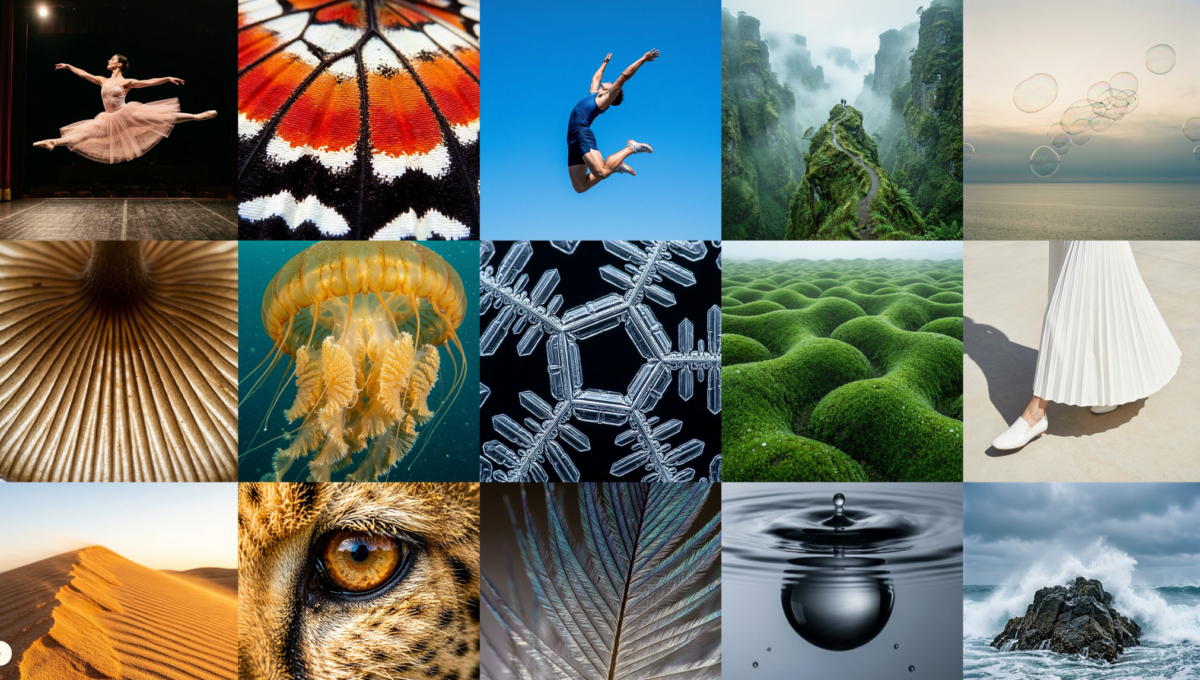
MAI-Image-2 is a text-to-image generative model — users input a text description and the model produces a corresponding image. The quality, coherence, and stylistic flexibility of such outputs have improved dramatically over the past three years, and the state of the art now encompasses photorealistic imagery, artistic styles ranging from oil painting to pixel art, and complex compositional scenes that were impossible to generate automatically just a few years ago.
Microsoft has not released detailed technical specifications for MAI-Image-2, but the model's rollout across Microsoft's products suggests it will be integrated into tools like Microsoft Designer, Image Creator in Bing, and potentially Copilot assistants embedded in Office applications. The API availability indicates Microsoft also intends to compete for developer adoption — building a pipeline of third-party applications that use MAI-Image-2 as their generation backend.
Why Microsoft Needs Its Own Model
Microsoft's current primary image generation capability comes through its partnership with OpenAI, via DALL-E 3. Building proprietary generation capabilities offers Microsoft several advantages: independence from a partner whose priorities may not always align, lower per-inference costs at scale, the ability to fine-tune models for specific Microsoft use cases, and the negotiating leverage that comes from having viable alternatives.
The superintelligence team's mandate is broader than image generation — it encompasses research into future AI architectures that could eventually surpass current transformer-based models. But shipping a product signals that the team is operating on practical product timelines rather than purely research horizons, which changes how the rest of the AI industry should think about Microsoft's in-house capabilities.
The Competitive Landscape
Microsoft's advantage is distribution: the Office ecosystem reaches hundreds of millions of users, and integrating image generation directly into Word, PowerPoint, and Teams creates an accessible entry point that doesn't require users to seek out a standalone image generation service. If MAI-Image-2 performs competitively with the current state of the art, the distribution advantage could matter more than any technical differentiation.
The broader significance of MAI-Image-2 may be less about the specific capability and more about what it signals: that Microsoft is investing in AI capability development that doesn't route through OpenAI, and that the superintelligence team's work is now producing deliverables visible to the outside world.
This article is based on reporting by The Decoder. Read the original article.
Originally published on the-decoder.com