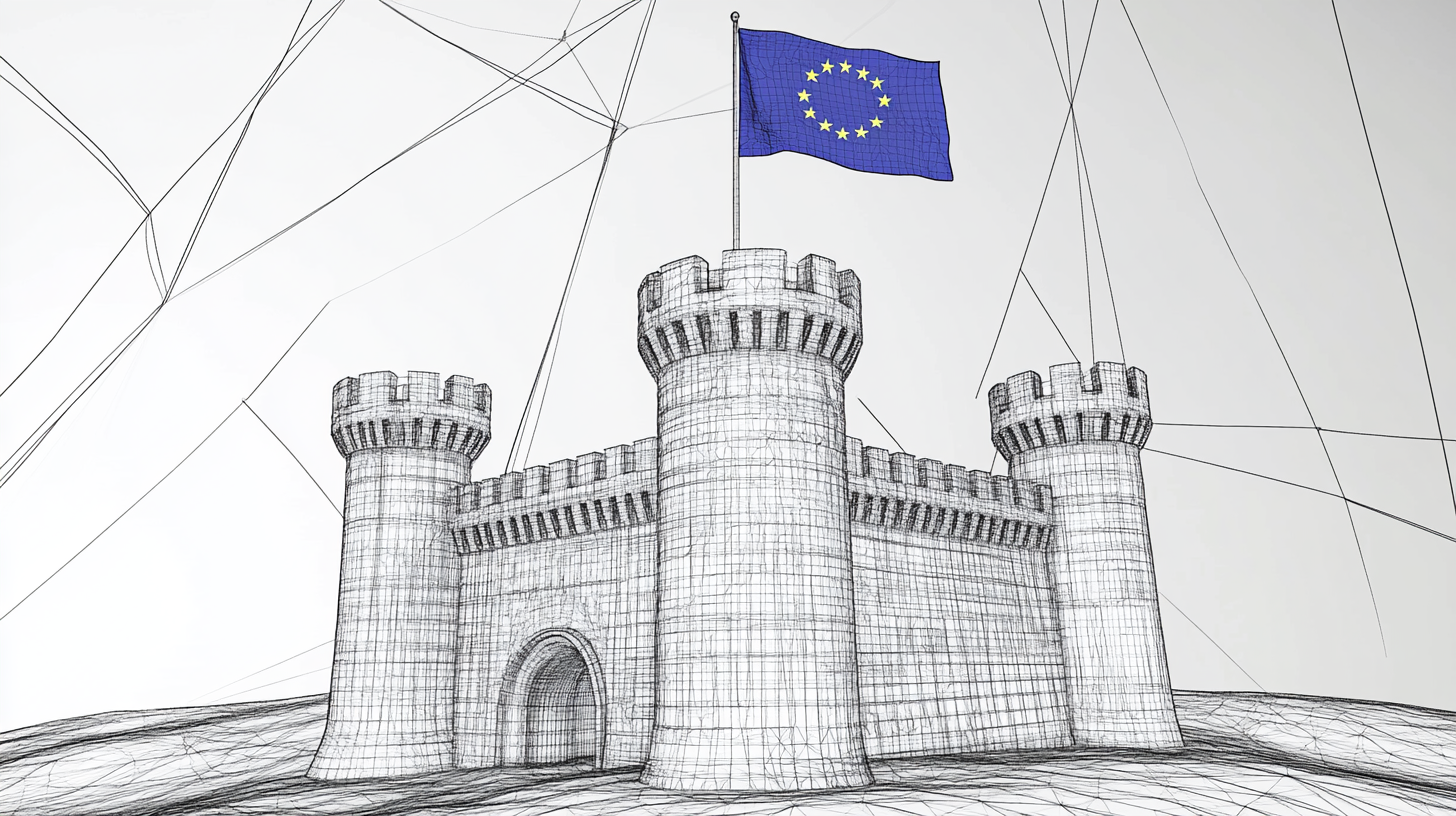
Europe’s institutions are drawing a line on synthetic media
The European Commission, European Parliament, and Council of the European Union have reportedly barred their communications teams from using fully AI-generated images and videos in official output, according to Politico reporting cited by The Decoder. Staff may still use AI to optimize existing visual material, but not to create fully synthetic official visuals from scratch.
The stated rationale is authenticity. Commission spokesperson Thomas Regnier told Politico that authenticity is a priority in order to foster citizens’ trust. In practice, that places the EU institutions on the restrictive side of a rapidly evolving debate over how governments should use generative AI in public-facing communication.
The decision is notable because the European Union has presented itself as a leading regulator of AI. Rather than demonstrate how transparent use of labeled synthetic content might work inside government communications, the institutions appear to be choosing a cleaner prohibition on fully generated visuals.
A policy choice with symbolic weight
This is not just a press-office style guideline. It is a statement about what the EU believes official communication should look like in the age of generative media. By ruling out fully AI-generated videos and images, the institutions are effectively saying that the credibility cost of synthetic visuals outweighs the efficiency and speed advantages they might bring.
That tradeoff is easy to understand. Public institutions rely heavily on trust, and synthetic media can quickly blur the boundary between illustrative content and documentary representation. Even clearly labeled AI visuals can raise questions about whether a government is substituting simulation for reality in settings where factual grounding matters.
At the same time, critics quoted in the report argue that the ban is too blunt. Walter Pasquarelli, an adviser to the OECD who also researches AI-generated content at the University of Cambridge, told Politico that responsible use would be better than abstinence. Synthesia’s Alexandru Voica similarly argued that fast-moving geopolitical crises can make speed and responsiveness newly important. Their criticism is that the EU is missing a chance to model transparent, accountable use instead of defaulting to refusal.

The contrast with political reality elsewhere
The report highlights how different this posture is from practices in the United States and elsewhere. The Decoder notes that Donald Trump has used AI-generated content repeatedly on Truth Social, while some European political figures have also deployed synthetic media in public messaging. That contrast makes the EU institutions’ reported rule look less like a universal norm and more like a deliberate institutional identity choice.
It also exposes a tension inside European AI policy. The EU wants to regulate generative AI risks while also encouraging innovation and credible adoption. Banning fully AI-generated visuals from official communications may help preserve trust in the near term, but it also limits one visible venue where responsible use standards could be demonstrated in public.
Whether this becomes a durable model depends on how synthetic media evolves. If AI-generated visuals become easier to label, audit, and verify, institutions may eventually revisit the line they are drawing today. For now, the message is cautious and clear: official communications should not look synthetic, even if synthetic tools can assist behind the scenes.
What the reported rule allows and prohibits
- Fully AI-generated videos and images are reportedly barred from official communications.
- AI can still be used to enhance or optimize existing visual material.
- The policy is justified by authenticity and trust concerns.
This is a meaningful early governance signal. The EU is not merely writing rules for others. It is deciding how much synthetic media it is willing to associate with its own institutional voice. At least for now, the answer appears to be: not much.
This article is based on reporting by The Decoder. Read the original article.
Originally published on the-decoder.com