Collaborative robots are moving from niche deployments toward everyday industrial tools
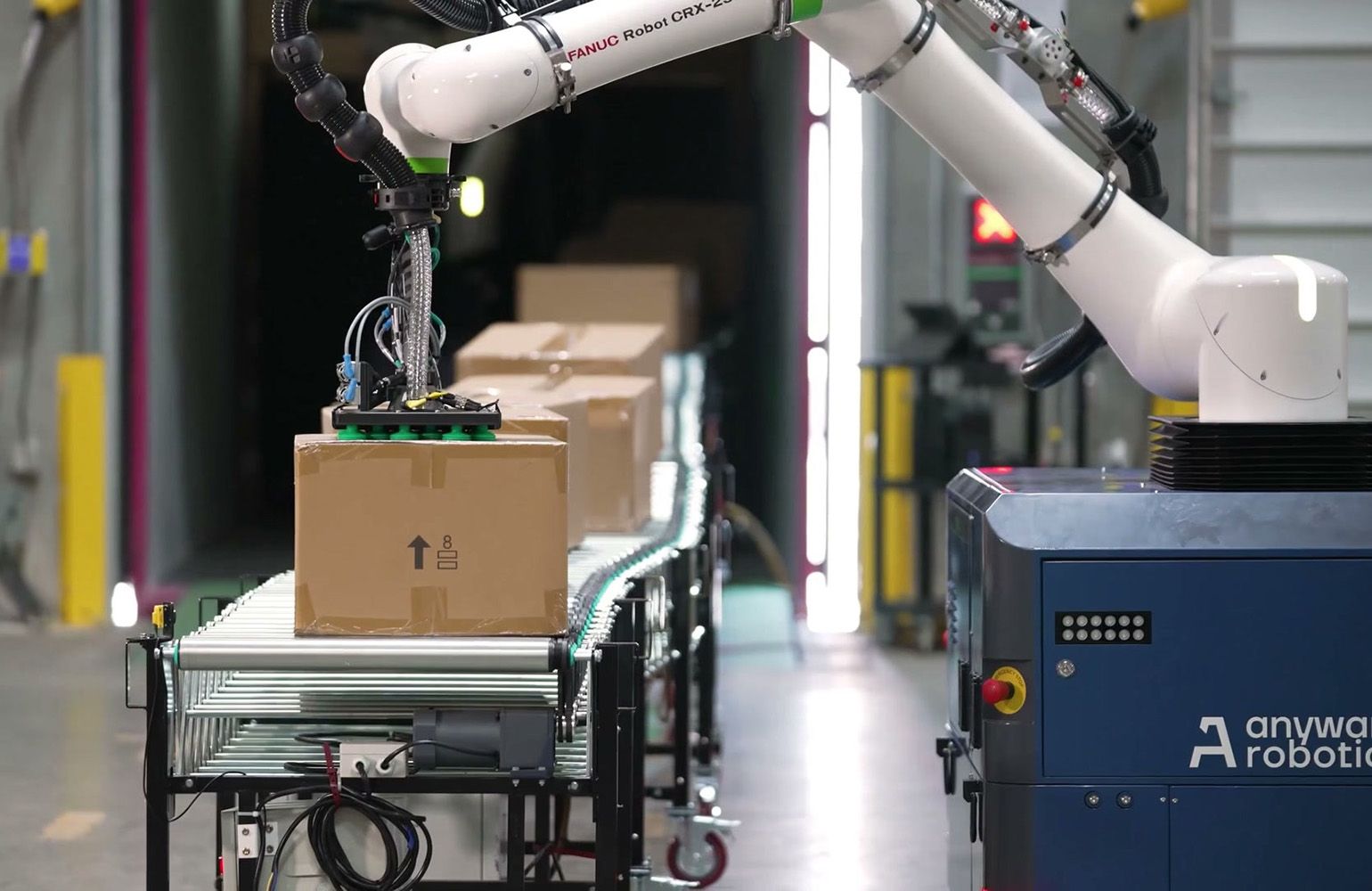
Collaborative robots, or cobots, now represent 18 percent of total North American robot units, according to the latest report from the Association for Advancing Automation cited in The Robot Report. Roughly 90 percent of all cobot orders are coming from non-automotive sectors, including food and consumer goods, semiconductors and electronics, life sciences, and increasingly metal fabrication, palletizing, and data center construction.
That shift matters because cobots were once discussed largely as a promising category waiting for broad commercial traction. The supplied interview with Hirebotics co-founder and CEO Matt Bush presents a different picture: in several labor-constrained industries, cobots are becoming less of an experiment and more of a practical necessity.
Why adoption is accelerating
The underlying driver is familiar. Manufacturers and builders continue to struggle with labor shortages, especially in physically demanding and skilled trades such as welding. Hirebotics says that challenge was the starting point for the company when it launched in 2015. Its founders asked whether robots could be hired like people, then built around the emerging combination of collaborative robotic arms and cloud-connected software.
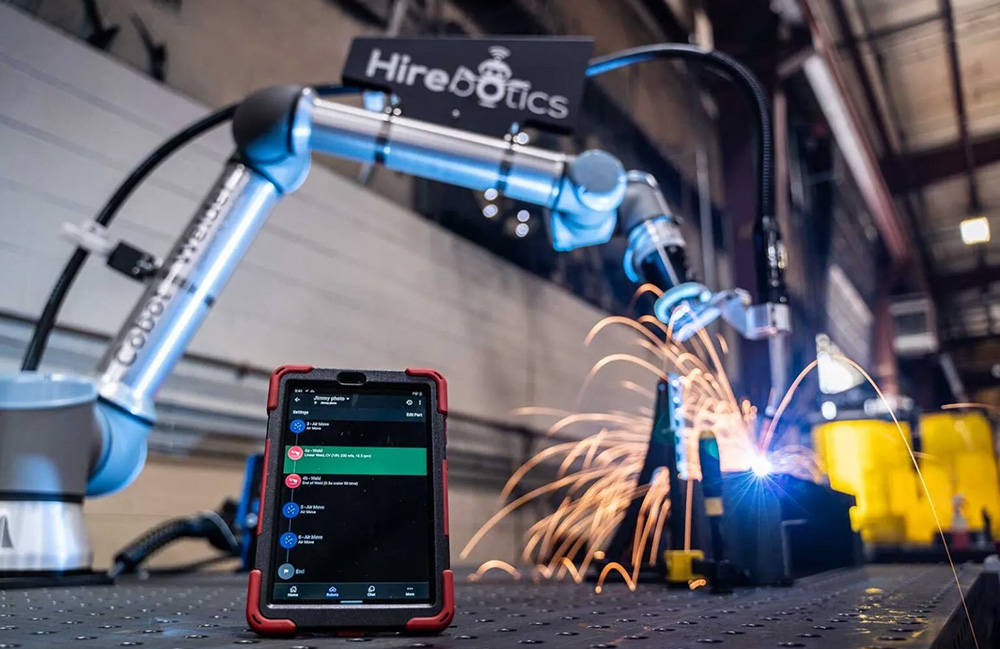
What appears to be changing now is not only the labor market but the usability of the technology. Traditional automation often imposed a high cost in programming complexity and production downtime. The company argues that earlier systems slowed production because operators needed engineering support or coding skills to use them. Its answer was to create tools that fabricators could run without engineers or code, first through rental welding cobots and later through its cloud-based Beacon platform.
That usability claim is central to the broader cobot story. If collaborative robots remain difficult to deploy, they stay limited to specialist teams and large capital budgets. If they become easier to teach, monitor, and repurpose, they begin to look more like general industrial equipment that smaller firms can absorb.
Why fabrication and construction are important test cases
Metal fabrication and construction are especially revealing sectors because they have historically been hard to automate cleanly. Tasks can be variable, site conditions can change, and operators often need systems that are robust without being overly rigid. Cobots are appealing in those settings because they promise a middle ground between full industrial automation and purely manual work.
The interview positions force- and power-limited robot arms as suitable for welding, cutting, and painting applications. It also suggests that the next phase of industrial robotics is not just about placing more arms on factory floors, but about packaging them with accessible software, remote visibility, and business models that reduce adoption friction. The earlier BotX rental welding cobot and the later Beacon platform reflect that logic. They treat automation as a service workflow, not just a machine sale.
That distinction may matter as much as the hardware itself. Many small and midsize manufacturers do not reject automation because they doubt the concept. They reject it because implementation looks risky, expensive, and operationally disruptive. A cloud-based platform that lets users teach, run, and monitor systems without programming addresses one of the sector’s most persistent bottlenecks.
What the trend says about industrial AI and robotics
The cobot market’s growing share also says something larger about robotics adoption in North America. For decades, industrial robot demand was often measured through the automotive sector. The A3 numbers cited here suggest the center of gravity is shifting. Non-automotive applications are now carrying most cobot orders, which indicates robotics growth is broadening into industries with different workflows, margins, and labor realities.
That broadening is important because it can make robotics less cyclical and less concentrated. It also changes the design priorities. Automotive plants can tolerate complex integration projects because volumes are high and processes are standardized. Fabrication shops and construction-related users often need something simpler, faster, and easier to train around. Cobots fit that demand if they can truly be deployed with minimal programming overhead.
The larger question is whether this growth translates into durable productivity gains. Cobots are often marketed as flexible tools that augment workers rather than replace them. In practice, their value will depend on whether they reduce bottlenecks, help firms keep output up despite labor shortages, and deliver returns without creating new technical burdens.
Based on the adoption numbers and the direction described in the interview, that test is increasingly happening in real production settings rather than pilot labs. Cobots are no longer defined mainly by their promise. They are being evaluated as operational infrastructure.
If that continues, the industries now adopting them most aggressively may help determine the next stage of industrial automation: not giant, isolated robot cells, but software-led collaborative systems designed for the uneven realities of fabrication, welding, and construction.
This article is based on reporting by The Robot Report. Read the original article.
Originally published on therobotreport.com