A practical robotics problem is getting attention
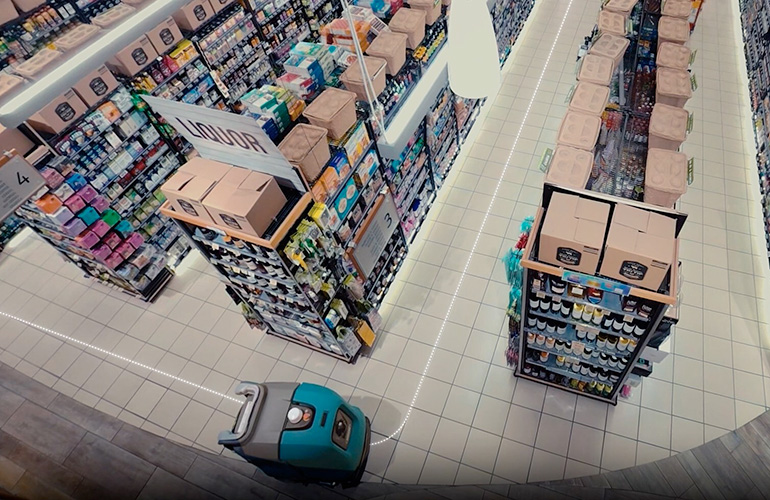
Brain Corp’s latest software release with Tennant focuses on a simple but important challenge in commercial robotics: deployment friction. BrainOS Clean 2.0 introduces SelfPath AI, which the supplied source says enables Tennant cleaning robots to autonomously map spaces and adapt their routes without manual training.
That may sound incremental compared with more dramatic robotics announcements, but it addresses one of the most persistent barriers to scaled adoption. Many robots look impressive in a demonstration and much less attractive when a customer has to configure, retrain, and maintain them across messy real-world facilities. A robot that can start faster and adapt on its own is more likely to be useful in practice.
Why route autonomy matters
Autonomous cleaning machines operate in environments that change constantly. Retail aisles shift. Warehouse layouts evolve. Temporary obstacles appear. Staffing patterns alter when and where floors can be cleaned. If each change requires a human to retrain routes manually, the operational burden rises and the value proposition weakens.
SelfPath AI appears aimed directly at that issue. Instead of depending on manual instruction for every layout update, the robots are intended to build maps and adjust routes themselves. That moves the product closer to what commercial buyers usually want: a machine that behaves more like an appliance and less like an ongoing integration project.
The importance of partnerships in service robotics
The partnership angle also matters. Brain Corp provides the autonomy platform, while Tennant brings an established position in professional cleaning equipment. In service robotics, that kind of combination can be more powerful than a standalone startup pitch. Customers often prefer automation layered onto familiar procurement channels, maintenance relationships, and equipment categories they already understand.
That is especially true in cleaning, where labor shortages and operating-cost pressure create interest in automation, but buyers still expect reliability and predictable support. A software improvement that reduces setup complexity can therefore have outsize commercial value even if it is less glamorous than humanoids or warehouse picking robots.
What this says about the robotics market
The release also reflects a broader shift in robotics toward operational autonomy rather than just task execution. The first wave of commercial service robots often succeeded only in controlled circumstances. The next wave is being judged on whether systems can handle variation without constant human intervention.
That is where features like autonomous mapping and route adaptation become strategically important. They do not merely improve convenience. They reduce labor overhead around the robot itself, which is often the hidden cost that slows deployments after the initial sale.
If SelfPath AI performs as described, Brain Corp and Tennant could strengthen their position in a market that rewards practical reliability over spectacle. Facilities managers are not looking for a robotics demo; they are looking for floors to be cleaned with less disruption, fewer configuration headaches, and a better return on capital.
Why the story matters despite limited fanfare
Commercial cleaning robots rarely command the same attention as warehouse automation, surgical robotics, or general-purpose AI machines. Yet they remain one of the clearest examples of robotics delivering repeatable work in everyday settings. Improvements in this category can therefore be a better indicator of sector maturity than splashier announcements in less proven areas.
BrainOS Clean 2.0 fits that pattern. It is not promising a revolution in machine intelligence. It is promising a reduction in setup work and a more adaptable route engine. In many enterprise settings, that is exactly the kind of upgrade that determines whether a robot moves from pilot to routine deployment.
The next benchmark is adoption
The real test will be whether customers see a meaningful difference in deployment speed and operational flexibility. If autonomous mapping and route adaptation reduce the need for manual training in busy facilities, the feature could help push service robotics further into day-to-day operations.
For now, the significance of the launch is clear enough. Brain Corp and Tennant are focusing on one of the most practical levers in commercial robotics: lowering the cost and complexity of using robots in changing environments. In a sector that often overpromises, that is a credible place to compete.
This article is based on reporting by The Robot Report. Read the original article.
Originally published on therobotreport.com