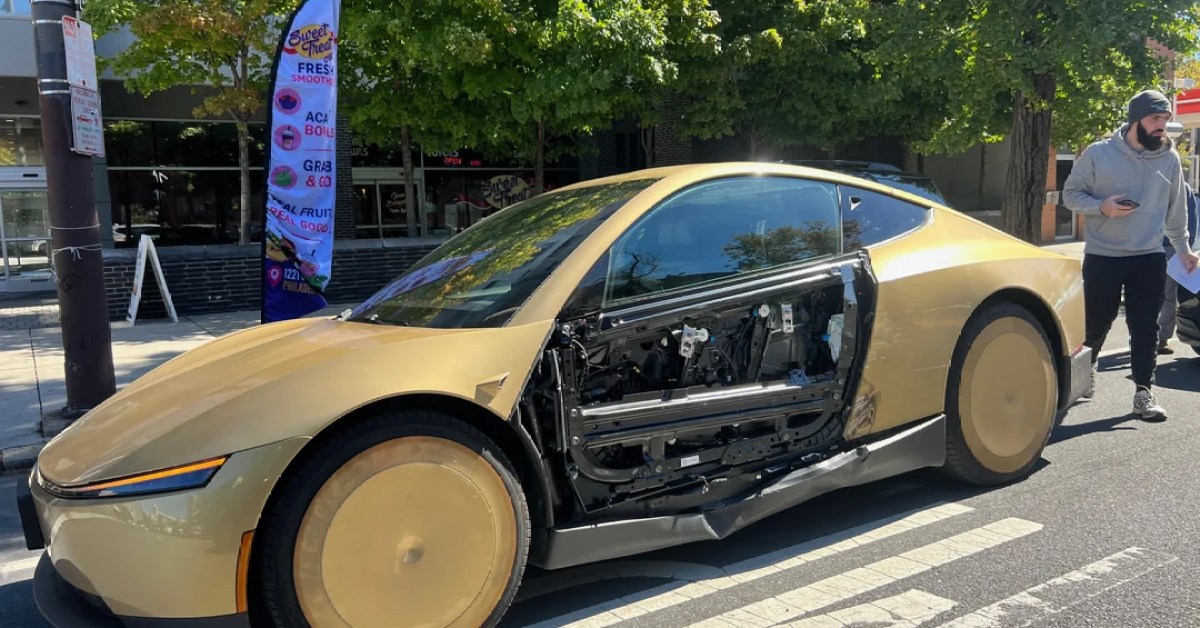
Lotus is changing course after betting too aggressively on battery-electric demand
Lotus has become one of the clearest examples of how quickly an automaker’s product strategy can collide with market reality. The company had pushed hard toward a battery-electric future, aiming to reposition itself as a more modern, high-performance luxury brand. That approach now appears to be under revision.
According to Automotive News, Lotus CEO Feng Qingfeng said the company moved fast because it believed battery-electric vehicles would define the market. In his account, the central problem was not the technology itself but the pace of adoption. Electric-vehicle penetration, he said, did not develop as Lotus had expected. The result is a strategic reversal that puts internal combustion back into the company’s plans.
The pivot is not subtle. Candidate metadata indicates Lotus is preparing a new V-8 hybrid supercar aimed at Ferrari and has cut its sales goals by 80 percent. Taken together, those moves say more than any general statement about “flexibility” or “customer choice” could. Lotus is not simply broadening its lineup around the margins. It is rebalancing the company around the conclusion that a pure EV roadmap is too narrow for the market it actually faces.
Why this matters beyond one brand
Lotus operates in a part of the car industry where image, performance and exclusivity carry as much weight as drivetrain efficiency. That makes it a useful stress test for the premium EV thesis. If a brand known for engineering identity and enthusiast appeal cannot rely on an EV-only proposition to carry its business plan, the challenge is not just one of product timing. It is a sign that even affluent buyers remain selective about how and when they want electrification.
This does not mean electric performance cars have failed, nor does it mean Lotus is abandoning EVs outright. It does mean the company no longer appears willing to assume that demand will rise quickly enough to justify a one-direction transition. A hybrid supercar, especially one positioned against Ferrari, is a commercial and symbolic answer to that problem. It lets Lotus keep a future-facing story while restoring the drama, range flexibility and customer familiarity that high-end combustion platforms still provide.
Sales-target cuts are equally revealing. Reducing goals by 80 percent signals that earlier expectations were built for a market environment that did not arrive. Ambitious growth plans are common during industry transitions, but when a company cuts that deeply, it is usually acknowledging a structural gap between forecast and actual demand rather than a short-term fluctuation.
The wider industry context
Lotus is not alone in adjusting the speed of its EV ambitions. Across the automotive sector, manufacturers have had to balance emissions regulation, capital spending and uneven consumer uptake. Mass-market brands have struggled with affordability and charging concerns. Premium brands have had to confront a different issue: buyers willing to spend heavily on a vehicle are not necessarily willing to give up the sensory and performance characteristics long associated with internal-combustion flagships.
In that context, Lotus’s reversal looks less like an isolated retreat and more like a case study in calibration. Companies that moved early into EVs expected faster improvements in infrastructure, stronger consumer confidence and a smoother replacement cycle for legacy performance models. Instead, many found a market that supports electric expansion without yet rewarding full-line abandonment of combustion.
The Lotus adjustment also highlights the cost of product timing. A carmaker can be directionally correct about long-term electrification and still misjudge when customers will move. Betting too early can leave brands with lineups that are strategically coherent but commercially misaligned. Betting too late risks regulatory and competitive exposure. Lotus now appears to be trying to recover from the first error without creating the second.
What to watch next
The practical question is whether the new strategy gives Lotus enough room to stabilize. A V-8 hybrid supercar could help restore excitement and improve relevance in the segment where badge perception matters most. But a product alone will not answer the deeper issue: how Lotus defines itself after swinging so decisively toward electrification and then back toward a mixed powertrain future.
If the company can present the shift as performance-led rather than defensive, it may regain control of the narrative. Hybridization gives Lotus a bridge technology that can satisfy emissions pressures while keeping one foot in the traditional supercar market. If it cannot make that case convincingly, the reversal risks looking like a forced retreat from an overextended plan.
Either way, the significance of the move is clear. Lotus once stood as a brand willing to accelerate into the EV transition ahead of many rivals. It is now signaling that speed alone is not strategy. In an industry where the end state may still be electrified, the route there is proving much less linear than automakers promised.
This article is based on reporting by Automotive News. Read the original article.
Originally published on autonews.com