Honda appears ready to put the Ridgeline on pause to rework the formula
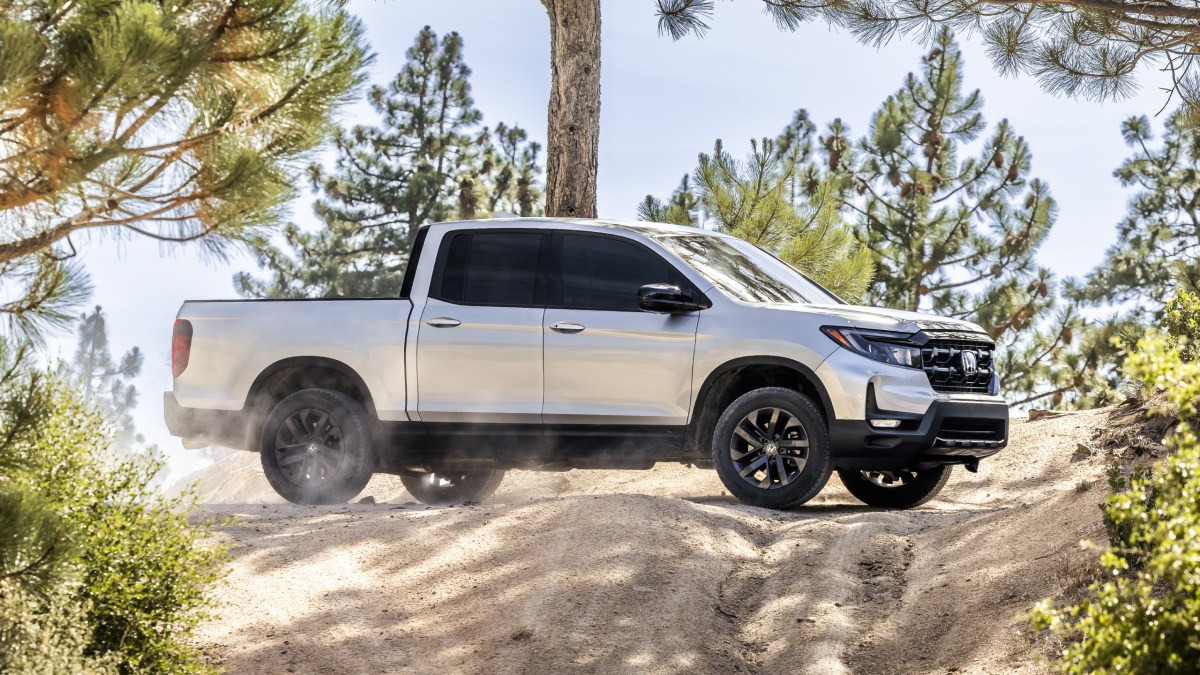
The Honda Ridgeline may be headed for an unusual transition: an approximately 18-month hiatus followed by a return in 2028 with a redesigned body and a dual-motor V6 hybrid powertrain. If the timeline holds, the move would mark a significant break for one of the midsize pickup market’s more unconventional products and signal how aggressively Honda is retooling legacy internal-combustion platforms for the next phase of emissions compliance.
The source report, citing Automotive News and supplemented by a statement from Honda to The Drive, says the pickup will step away while the company prepares a re-engineered powertrain. Honda did not confirm the full report, but it did say that Ridgeline remains an important model in the lineup and will continue to play an important role now and in the future. That language stops well short of confirming an 18-month disappearance, yet it does reinforce that the truck is not being abandoned.
The underlying issue is straightforward. Like the Pilot and Passport, the Ridgeline relies on a conventional V6 architecture that now has to be adapted to stricter future standards.
The new hybrid layout is more than an efficiency patch
According to the source text, Ridgeline’s next powertrain will pair a redesigned V6 with two electric motors. In Honda’s system, that dual-motor arrangement does more than add battery assistance. It also replaces the need for a conventional transmission, which is a defining trait of the company’s hybrid engineering approach.
That matters because it suggests Honda is not just adding electrification around an old engine. It is rethinking the drivetrain package in a way that could materially alter how the truck feels, performs, and is packaged. The source report says the new combination should improve full-throttle performance by 10% and efficiency by 30%.
For a pickup that has often been judged less by towing theatrics than by everyday usability, the efficiency gain may matter more than the acceleration bump. Ridgeline buyers have historically accepted that the truck is not aimed at heavy-duty extremes. Better fuel economy, smoother hybrid operation, and more low-end response could make the vehicle more compelling without changing its core identity.
The sales pause, if it happens, would be unusually disruptive
Automakers routinely phase in engines, facelifts, and new trims without taking a model off the market for a year and a half. That is what makes the reported pause notable. It would imply either a major production changeover or a decision by Honda that the old truck is not worth stretching through the transition period.
The source article suggests the visual refresh will be substantial enough to create the impression of a next-generation truck. That phrasing matters because the Ridgeline has long occupied an awkward cultural space in the pickup market. Its unibody platform, shared architecture with crossovers, and comfort-first character have made it practical but easy to dismiss among buyers looking for a more traditional truck image.
A meaningful redesign gives Honda an opportunity to alter that perception without giving up the platform advantages that set Ridgeline apart in the first place. If the truck looks more robust and the hybrid system improves both response and efficiency, Honda could emerge from the gap with a product that better matches where the segment is heading.
The powertrain shift is bigger than the pickup
The report also indicates that Honda’s clean-sheet V6 and hybrid setup will spread across other vehicles that currently use the company’s existing six-cylinder engine, including the Pilot, Passport, Odyssey, and Acura MDX. That turns Ridgeline into a visible part of a larger corporate transition rather than a one-off product experiment.
Seen that way, the pickup’s hiatus becomes easier to interpret. A low-volume model with shared underpinnings can serve as a useful bridge between legacy architecture and a new electrified powertrain family, especially if production timing, redesign cycles, and regulatory pressure converge at once.
The larger question is whether buyers will tolerate the disappearance. Eighteen months is a long time in a competitive segment, and market share rarely waits. Competitors will not stand still while Honda retools. If the pause does happen, the return product will need to justify the break clearly, not just mechanically.
Ridgeline’s next chapter depends on whether Honda can turn necessity into advantage
There is still uncertainty here. The most dramatic elements of the story come through a report rather than a formal product announcement, and Honda’s public statement is deliberately broad. But the direction of travel is clear enough: the Ridgeline is being pulled into Honda’s next-generation hybrid strategy, and that will likely reshape both how the truck performs and how it is positioned.
In many ways, Ridgeline is a logical candidate for this change. Its reputation has always leaned toward ride quality, usability, and daily-driver practicality rather than old-school pickup orthodoxy. A dual-motor hybrid V6 fits that identity better than it would for some rivals. The challenge is execution. If Honda returns with a truck that is more efficient, more responsive, and more visually confident, the pause could read as a disciplined reset. If not, it risks looking like a long absence in a segment that punishes hesitation.
For now, the reported hiatus is best understood as a sign that powertrain regulation is no longer a quiet engineering backdrop. It is shaping model calendars, redesign strategies, and the survival path of vehicles once considered stable fixtures of the market.
This article is based on reporting by The Drive. Read the original article.
Originally published on thedrive.com