A Car Photographer Shapes a Car Game
Forza Horizon 6 arrives on May 19, but one of the more revealing details about the game is not a spec sheet or vehicle list. It is the role played by automotive photographer Larry Chen, who appears in the game as a character and also worked behind the scenes to make its photo mode and cultural presentation more convincing.
According to Chen’s interview with The Drive, his contribution went beyond a cameo. He said he helped connect the Forza team with Canon because he wanted to improve the realism of the game’s photo mode. That collaboration, he said, drew on technical knowledge about optics, photography, and lens behavior that goes beyond ordinary visual tuning.
Turning Photo Mode Into a Photography Tool
Chen said one of his specific suggestions was to incorporate actual Canon focal lengths that photographers use in the real world. The point was not only cosmetic. He said it would help players better understand what it feels like to shoot with real cameras and real lenses.
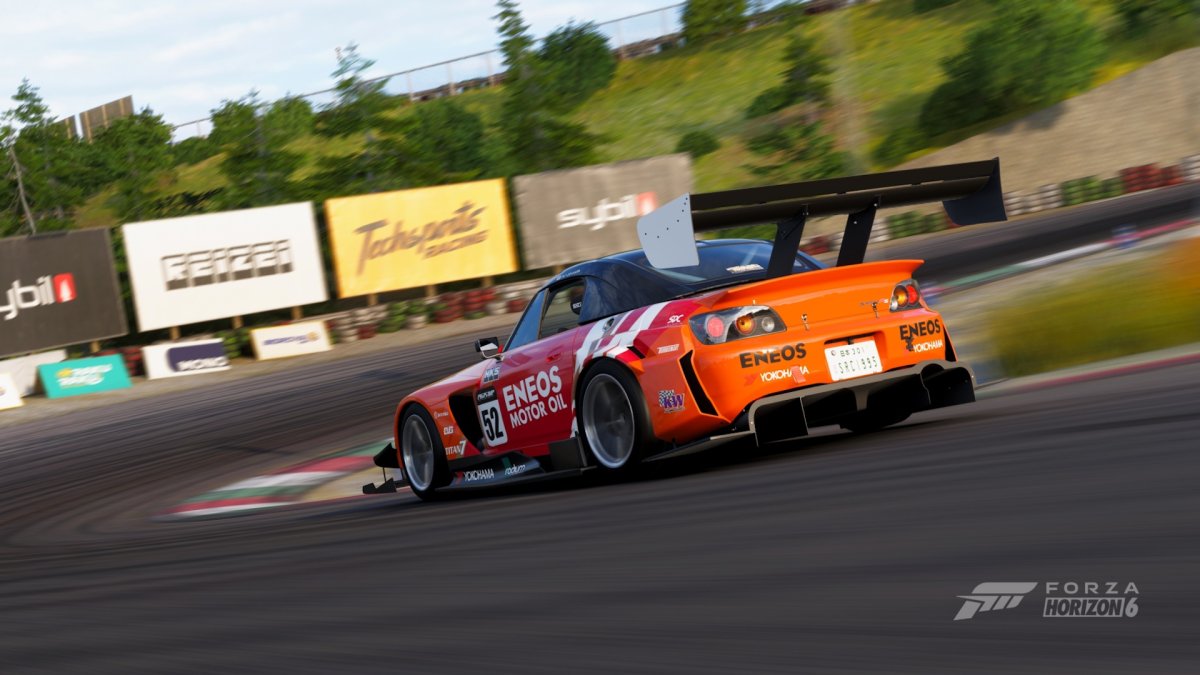
That detail matters because photo modes have become a significant part of automotive game culture. They are no longer just extras attached to racing titles. For many players, they are creative tools that shape how cars are appreciated, shared, and remembered. By grounding the system in familiar focal lengths, the developers appear to be treating photography as part of the simulation rather than as a novelty feature.
Importing Real-World Pressure Into Gameplay
Chen also said the missions built around his character were informed by the timing-sensitive nature of his real work in Japan. He described a workflow where nearly everything is time critical: rolling shots, clear streets with less traffic, the right lighting conditions, and precisely timed flyby images with the Shinkansen in the background.
That explanation offers a useful distinction. Developers often focus on how a car behaves from behind the wheel. Chen’s input was about what happens around the moment of capture: urgency, chance, and the split-second judgment involved in photographing moving machines in a dense environment.
By his account, those real-life scenarios directly influenced gameplay and missions. That suggests the game is trying to simulate not just driving, but a slice of automotive media culture itself.
Authenticity Beyond Visual Fidelity
Chen said he was most impressed by the team’s commitment to authenticity, and emphasized that the goal was for the game to feel culturally accurate, not just visually accurate. That distinction is important for a title centered on Japanese car culture. Replicating scenery and vehicle models is one challenge; capturing how enthusiasts interact with those spaces is another.
The supplied source text does not claim exhaustive cultural representation, but it does show an intentional effort to avoid superficial treatment. Chen’s role, as described, was partly technical and partly interpretive, translating lived automotive experiences into missions and tools players would notice.
A Signal About Automotive Media and Games
This is also a reminder that the boundary between automotive culture and interactive media continues to thin. Chen is not only a recognizable photographer inside enthusiast circles; he is also being used here as both subject-matter advisor and in-game personality. That reflects how game studios increasingly borrow authority from practitioners who can validate the feel of a world, not just the look of it.
The result, if the collaboration lands as intended, is a game where photography is treated as part of the automotive experience rather than a side activity. Early access players, the source notes, have already captured strong images, suggesting the feature is resonating before full release.
What the Source Supports
- Forza Horizon 6 launches on May 19.
- Larry Chen appears in the game as a mission-giver.
- He said he helped improve photo mode realism by connecting the team with Canon.
- He suggested using real Canon focal lengths in the game.
- He said the developers wanted cultural accuracy as well as visual accuracy in representing Japanese car culture.
That combination makes this more than a promotional footnote. It is a case study in how automotive expertise is being folded directly into game design, with photography, timing, and scene authenticity treated as core elements of the experience.
This article is based on reporting by The Drive. Read the original article.
Originally published on thedrive.com