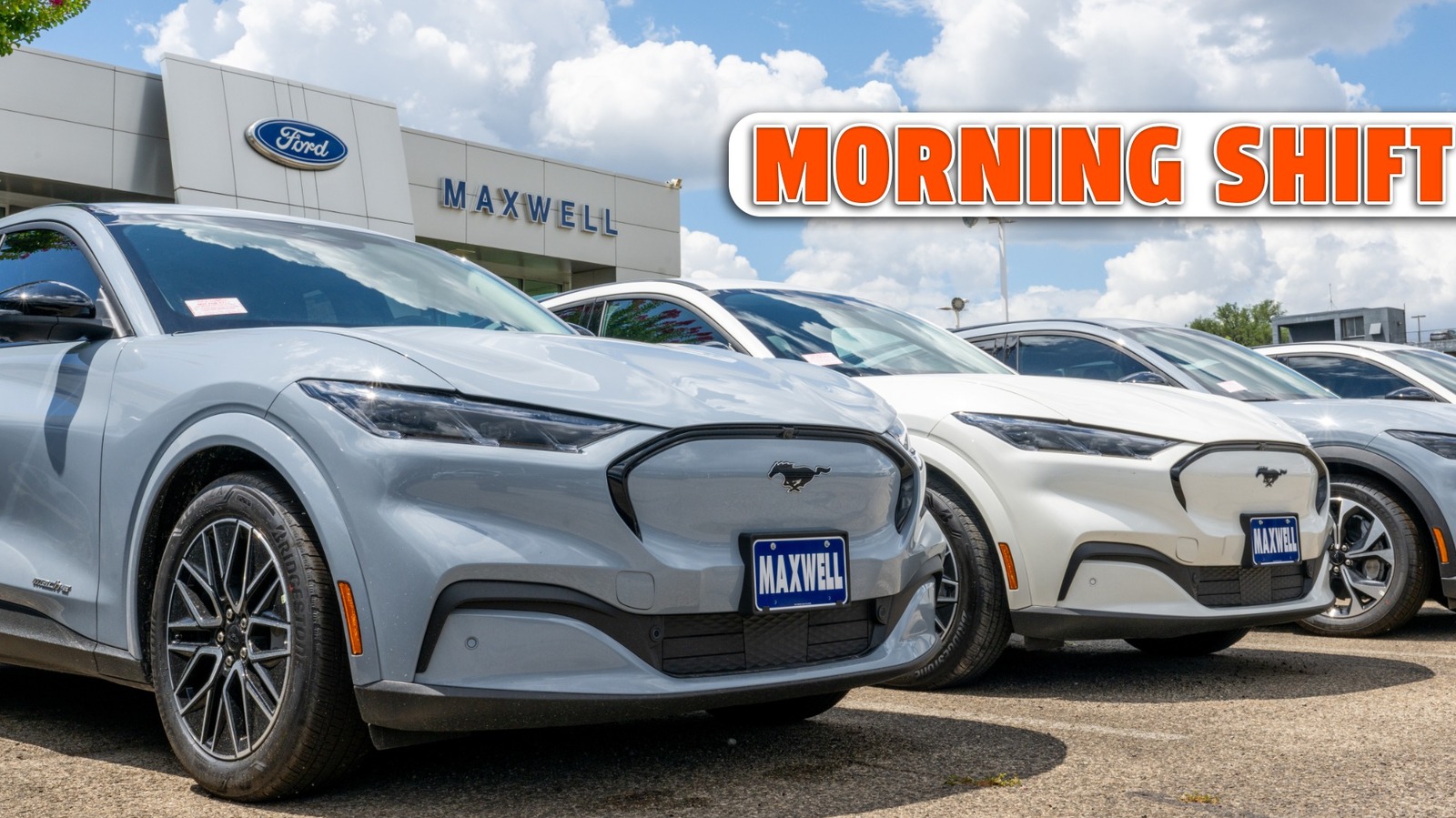
Ford keeps a foot in the mass-market EV race
Ford is developing an affordable all-electric vehicle intended to compete with Tesla’s Model 3 and Model Y, according to comments from CEO Jim Farley cited in the supplied report. The statement is notable because it comes at a time when the broader EV market remains unsettled and several automakers have moderated or delayed earlier electric ambitions.
Farley’s remarks suggest Ford is trying to thread a difficult needle. On one hand, the company has been leaning into hybrids and has openly discussed extended-range electric approaches for use cases such as towing. On the other, it does not appear ready to walk away from a lower-cost battery-electric future.
What Ford said
The clearest claim in the supplied text is straightforward: Ford expects to have an all-electric, affordable vehicle to compete with the Tesla Model Y and Model 3. The report says the vehicle would be all new rather than a simple repositioning of the Mustang Mach-E, which has already served as one of Ford’s better-known EV offerings.
The article ties the future model to Ford’s Universal EV Platform, or UEV platform. According to the report, that architecture can support as many as eight body styles, including compact and midsize crossovers, a three-row crossover, a pickup, cargo van, passenger van, and sedan variants.
That platform breadth matters because it suggests Ford is not designing a one-off halo product. It is potentially building a scalable EV family with economics that improve if multiple vehicle types share the same core architecture.
Why Ford wants a stronger answer to Tesla
The supplied report says Ford sold 51,620 Mustang Mach-E crossovers in 2025. That is a meaningful number, but it remains far below the estimated Tesla volumes cited in the same article: about 172,800 Model 3s and 317,800 Model Ys. The gap helps explain why Ford still wants a more direct mass-market challenger.
In other words, the issue is not whether Ford participates in EVs at all. It already does. The question is whether it can field a product with pricing, scale, and positioning strong enough to compete in the highest-volume part of the segment.
Farley’s comments imply the company believes the answer could be yes, provided the vehicle is affordable enough and built on the right platform economics.
The market context is complicated
The EV landscape described in the article is neither euphoric nor collapsing. It is murky. Automakers are reassessing timelines, and buyers remain sensitive to price, charging convenience, and use-case fit. That environment is forcing companies to be more selective about where they place their bets.
For Ford, that appears to mean a mixed strategy:
- Continue working on a lower-cost EV capable of taking on Tesla’s best-selling models.
- Preserve flexibility through a platform that can support multiple body styles.
- Keep hybrids and other electrified formats in play rather than betting everything on one pace of EV adoption.
This is a pragmatic position. It avoids an all-or-nothing stance while still acknowledging that the most important long-term EV fight may be over affordability rather than luxury features.
What remains unknown
The supplied report does not provide a final launch date, target price, battery details, range, or manufacturing plan for the forthcoming vehicle. Those omissions matter because affordability in EVs depends not just on sticker price but also on cost discipline, supply chain execution, and scale.
Still, Farley’s statement is meaningful on its own. It signals that Ford still wants a larger slice of the EV market and sees Tesla’s mainstream products, not just premium niches, as the benchmark to beat.
If Ford can translate that ambition into a well-priced, widely available product, it could become one of the more important competitive moves in the next phase of the EV market. For now, the headline is narrower but still significant: even in a cautious market, Ford says it is still building for an affordable electric future.
This article is based on reporting by Jalopnik. Read the original article.
Originally published on jalopnik.com