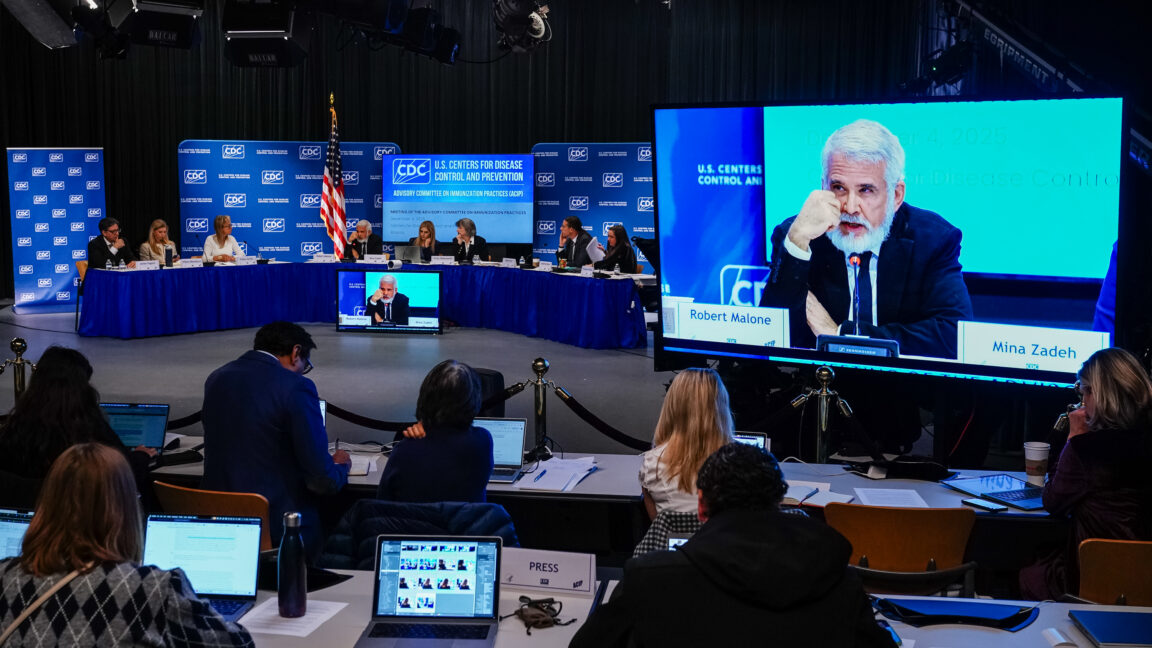
A new move in a widening fight over vaccine policy
U.S. Health Secretary Robert F. Kennedy Jr. has taken a new step to reshape the federal vaccine advisory process, publishing an updated charter for the Centers for Disease Control and Prevention’s Advisory Committee on Immunization Practices, or ACIP, after a court recently blocked his previous handpicked advisers. Based on the supplied report, the revised charter appears designed to give Kennedy broader authority over member selection and to loosen prior expectations around expertise and balance.
The development follows a ruling last month by U.S. District Judge Brian Murphy, who temporarily blocked advisers Kennedy had chosen after firing all 17 experts on the panel. According to the report, the judge found that Kennedy’s selected replacements largely lacked expertise in the relevant fields required under the committee’s charter and broader federal advisory rules.
The court also concluded that a panel lacking relevant experts could not fairly represent the range of views within the expert scientific community. As a result, all activity of the ACIP panel has been suspended, and the changes Kennedy’s version of the committee had made to federal vaccine policy were temporarily reversed.
Why ACIP matters
ACIP is not a symbolic committee. Its recommendations shape federal vaccine policy and strongly influence how vaccines are used, recommended, and discussed across the U.S. health system. When the panel changes, the effects can ripple through public health guidance, provider expectations, and the wider vaccine landscape.
The supplied report says the blocked Kennedy-appointed panel had already made major changes, including dropping recommendations for COVID-19 vaccines and a birth dose of the hepatitis B vaccine. Those moves were widely criticized by medical and public health groups, according to the article, which underscores how consequential the panel’s composition has become.
That is why the procedural fight matters as much as the policy fight. If the rules for selecting members are altered, then the direction of vaccine guidance can be altered through personnel choices rather than through scientific consensus or customary advisory practice.

What changed in the charter
ACIP’s charter is renewed every two years, and the last renewal period ended on April 1, 2026. The report notes that prior renewal notices had generally been brief and unremarkable for at least the past two decades. This year’s renewal, by contrast, included substantial new language.
The most important issue appears to be membership. The report says the existing charter contained a lengthy sentence stating that ACIP members shall be selected by the secretary, but the newly published renewal introduces language that seems intended to reinforce Kennedy’s direct discretion in choosing who serves.
Even without the full text reproduced in the supplied material, the reporting makes the thrust clear: Kennedy appears to be using the routine charter renewal process to strengthen his legal and procedural footing after the court found his earlier panel choices deficient. In other words, rather than simply appealing the ruling in spirit, he appears to be trying to rewrite the governing framework around the committee itself.
The legal and institutional stakes
The conflict is no longer only about individual appointees. It is about whether an agency leader can alter the structure of an expert advisory body in ways that reduce the role of recognized expertise and professional balance. That question carries implications beyond vaccines.
Federal advisory committees are supposed to provide specialized knowledge that agencies do not simply manufacture internally. If membership criteria become more elastic, then a committee can still retain the appearance of formal process while changing the substance of what it contributes. The court’s earlier intervention reflected concern about precisely that issue: a scientific advisory panel that may no longer function as a genuinely expert body.
The renewed charter raises the prospect of a second phase in this fight. Instead of challenging the secretary’s prior choices under the old rules, opponents may now have to challenge the rules themselves, or the way the new language is used in practice. That would shift the dispute from a one-time appointment controversy to a more fundamental argument about administrative design and statutory intent.

Public health implications
Vaccine policy depends heavily on trust, predictability, and visible scientific credibility. Even before any new recommendations are issued, repeated disputes over who gets to sit on ACIP and what qualifications they must hold can weaken confidence in the advisory system.
The supplied report highlights how quickly those tensions have escalated. A judge blocked Kennedy’s earlier advisers, suspended ACIP activity, and temporarily reversed the panel’s recent policy changes. Now the charter itself has been revised in a way that appears meant to restore or expand Kennedy’s control.
That sequence risks turning a technical public health process into an openly political struggle over the structure of expertise. For clinicians, health systems, and patients, that uncertainty matters. Advisory recommendations are most effective when they are seen as the product of rigorous and durable institutional process rather than an extension of ideological turnover.
What to watch next
The immediate question is whether the revised charter will allow Kennedy to repopulate ACIP with a panel more aligned to his preferences while surviving judicial review. Because the committee’s activity is currently suspended, its future role depends not only on administrative action but also on whether courts and challengers accept the new framework.
Another key issue is whether the revised language materially changes the standards for relevant expertise and fair balance or merely tries to reframe them. That distinction will likely shape the next legal arguments. If the new charter is used to justify a panel composition similar to the one already blocked, the conflict is unlikely to fade.
The supplied report presents this as a deliberate response to a court defeat, not a routine paperwork update. That makes the charter renewal one of the most consequential procedural shifts in federal vaccine governance this year. The committee that advises the CDC on vaccines is now also a battleground over how much power a cabinet secretary can wield over scientific process itself.
This article is based on reporting by Ars Technica. Read the original article.
Originally published on arstechnica.com