A Historic Role Reversal
For years, Western nations trained Ukrainian troops in the tactics and techniques of modern warfare. Now the flow of military expertise is reversing. Ukrainian military advisors will be embedded with the German Bundeswehr to teach German soldiers how to fight and win a modern war, with the ambitious goal of achieving combat readiness by 2029.
The announcement, as reported by Reuters, marks one of the most striking developments in European defense since Russia's full-scale invasion of Ukraine in 2022. A country that has been fighting a large-scale conventional war for four years will now share its hard-won battlefield knowledge with the army of Europe's largest economy, an army that has not fought a war in eight decades.
Why Germany Needs Ukraine's Help
Germany's military, the Bundeswehr, has been widely acknowledged as unprepared for conventional combat. Decades of underinvestment following the end of the Cold War left the German armed forces short of equipment, ammunition, and the training necessary for high-intensity warfare. A 2022 internal assessment famously concluded that the Bundeswehr could sustain major combat operations for only a few days before exhausting its supplies.
Russia's invasion of Ukraine triggered what German Chancellor Olaf Scholz called a Zeitenwende, a historic turning point, in German defense policy. The government pledged a 100 billion euro special fund for military modernization and committed to meeting NATO's two percent of GDP defense spending target. But money alone cannot create combat capability. Equipment can be purchased, but the institutional knowledge of how to fight effectively must be learned.
This is where Ukraine's value becomes unique. The Ukrainian armed forces have accumulated more direct experience with modern conventional warfare than any NATO military. They have fought against a peer adversary equipped with advanced weapons systems, electronic warfare capabilities, and air power. The lessons they have learned about what works and what does not in this environment cannot be replicated in any training exercise or simulation.
What Ukraine Can Teach
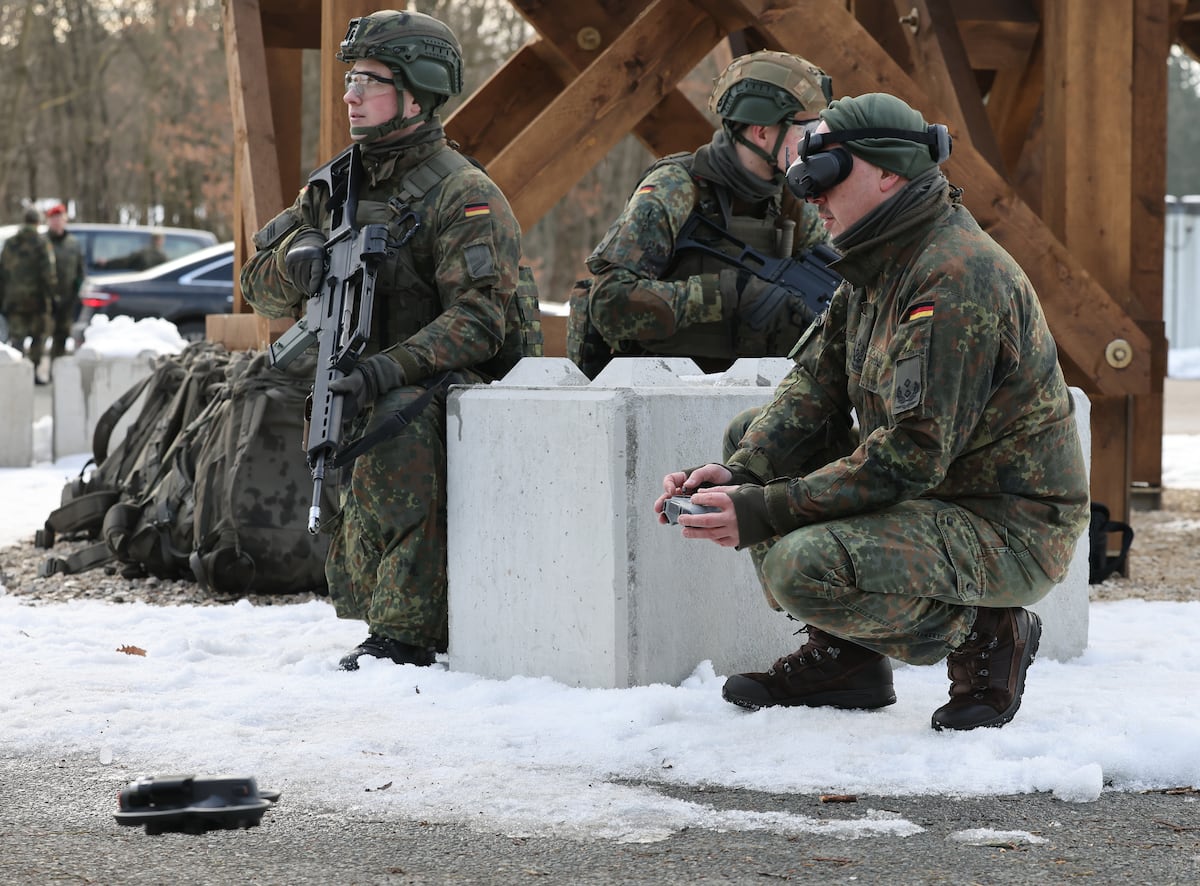
The areas where Ukrainian expertise is most valuable reflect the specific characteristics of modern warfare that have emerged from the conflict with Russia. Drone warfare stands at the top of the list. Ukraine has pioneered the use of small commercial drones for reconnaissance, artillery spotting, and direct attack, developing tactics that have fundamentally changed how ground forces operate.
Electronic warfare is another critical area. The electromagnetic environment on the Ukrainian front lines is among the most contested in history, with both sides deploying extensive jamming and signal-intelligence capabilities. Ukrainian forces have learned how to operate, communicate, and coordinate in conditions where GPS is unreliable, radio communications are intercepted, and drone control links are constantly challenged.
Combined arms operations in the age of pervasive surveillance represent a third key area. The modern battlefield is transparent in ways that previous conflicts were not. Satellites, drones, and signals intelligence mean that concentrations of forces are detected and targeted within minutes. Ukrainian units have developed techniques for dispersed operations, rapid movement, and concealment that allow them to survive and fight effectively in this environment.
The 2029 Timeline
The goal of making the Bundeswehr war-ready by 2029 aligns with NATO assessments that Russia could potentially reconstitute its military capability to threaten NATO territory within that timeframe. The date is not arbitrary; it reflects a genuine strategic calculation about when Germany and other European NATO members need to be prepared for the possibility of conflict with Russia.
Achieving combat readiness in three years is an ambitious goal, given the Bundeswehr's starting point. It requires not just equipment modernization and increased training but a fundamental cultural shift within an organization that has spent decades oriented toward peacekeeping and crisis management rather than high-intensity combat.
Ukrainian advisors can accelerate this transformation by providing firsthand accounts of what modern combat actually looks like, what skills and capabilities are essential, and what traditional military practices have become liabilities in the current environment. This kind of combat-derived knowledge transfer is invaluable and historically rare.
Precedent and Implications
The arrangement has few historical precedents. It is unusual for a country at war to simultaneously serve as a military trainer for a major power, and even more unusual for a country that has been receiving military aid to become a source of military expertise for its donors.
The development reflects Ukraine's transformation from a military that was struggling to reform when Russia first invaded Crimea in 2014 to one that has become one of the most combat-experienced and innovative forces in the world. The Ukrainian military's ability to adapt, innovate, and fight effectively against a larger adversary has earned it respect across NATO and reshaped assumptions about what a determined, agile military can achieve.
For Germany, accepting Ukrainian military advisors signals a degree of humility about its own readiness that would have been politically unthinkable before 2022. The decision acknowledges that decades of peace, while a tremendous achievement, left the Bundeswehr without the institutional combat knowledge that a credible defense posture requires.
Broader European Defense Implications
The German-Ukrainian training partnership is part of a broader reconfiguration of European defense in response to the changed security environment. Multiple European NATO members are increasing defense spending, expanding their armed forces, and seeking to build the kind of combat capabilities that were allowed to atrophy during the post-Cold War peace dividend.
Ukraine's role as a source of modern combat expertise positions it as an increasingly important player in European security architecture, regardless of how the war with Russia ultimately concludes. The knowledge and capabilities that Ukrainian forces have developed have lasting value for any European military that takes the possibility of conventional conflict seriously.
The partnership also deepens the strategic relationship between Germany and Ukraine at a time when Ukraine's future security arrangements remain under intense diplomatic discussion. By embedding Ukrainian expertise within its own military, Germany is building institutional connections that extend beyond any single weapons delivery or financial aid package.
This article is based on reporting by Defense News. Read the original article.
Originally published on defensenews.com