A sudden turn after a day of escalation
President Donald Trump said on April 7 that he had agreed to a two-week ceasefire with Iran, marking a sharp reversal after a day dominated by threats of broader U.S. attacks if Tehran did not reopen the Strait of Hormuz.
According to the report, Trump announced the pause on social media less than two hours before his own deadline for Iran to end its blockade of oil and gas traffic through the strait. He described the arrangement as a “double sided” ceasefire and said the United States had already met and exceeded its military objectives.
The announcement came after Trump had warned earlier in the day that catastrophic consequences would follow if Iran failed to comply. That change in tone underscored how volatile the current conflict has become, with battlefield pressure, energy-market risks, and diplomatic maneuvering all colliding in the same day.
What the proposed ceasefire includes
Trump said the deal was negotiated with Pakistan acting as mediator and was tied to Iran agreeing to pause its blockade of the Strait of Hormuz. That waterway typically handles about one-fifth of global oil shipments, making any disruption there a matter of global economic consequence, not just regional security.
Iranian state television separately announced that Trump had accepted Iran’s terms for ending the war and said talks between the United States and Iran would begin on Friday in Islamabad. Trump also said Iran had presented a 10-point proposal that he considered a workable basis for negotiations, adding that he expected a broader agreement to be finalized during the two-week ceasefire.
Two White House officials told the publication that Israel had also agreed to the ceasefire and to suspend its bombing campaign on Iran. Even so, the report said the Israeli military identified missiles launched from Iran toward Israel just minutes after Trump’s announcement, highlighting the fragility of any pause before it is fully implemented on the ground.
Why the move matters beyond the battlefield
The significance of the announcement extends well beyond the immediate military situation. The war is now in its sixth week, and the struggle over the Strait of Hormuz has rattled global financial and energy markets because the route is central to oil and liquefied natural gas flows.
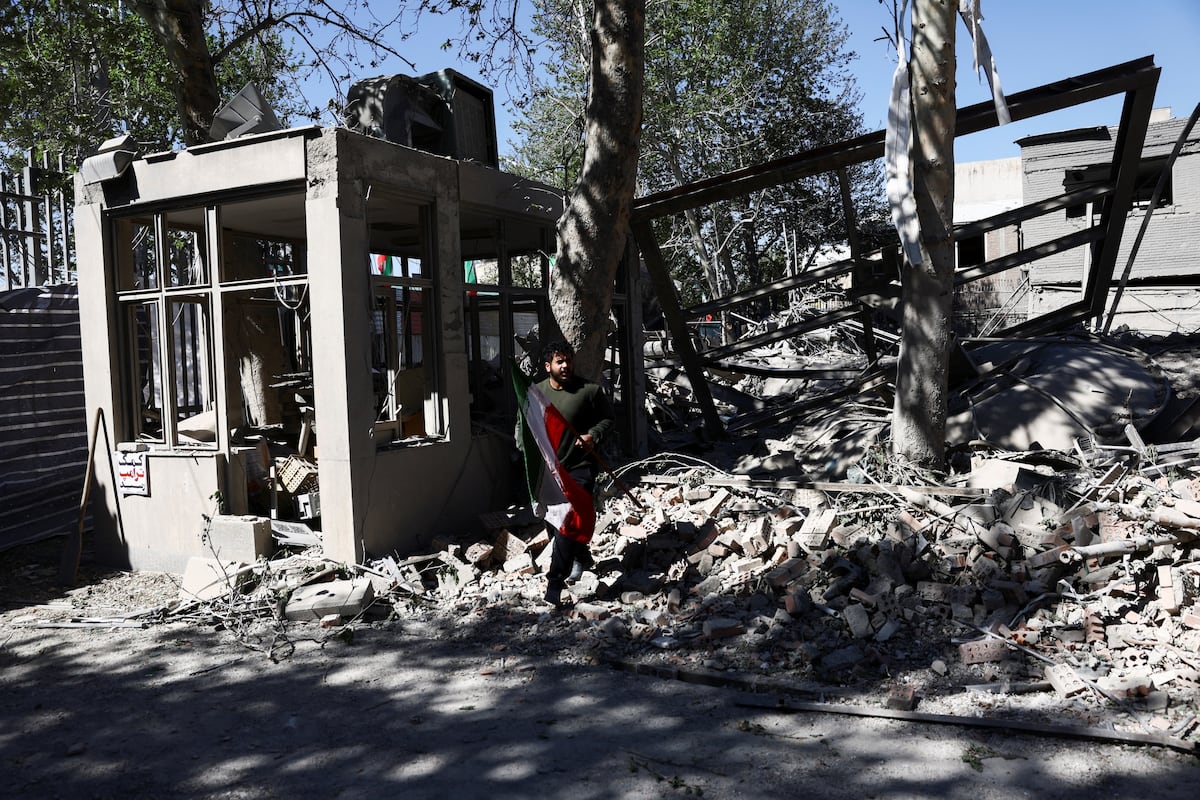
Earlier on April 7, U.S. and Israeli strikes intensified as the deadline approached. The report said the targets included bridges, an airport, a petrochemical plant, and facilities on Kharg Island, home to Iran’s main oil export terminal. Iran, in turn, warned that it would no longer refrain from hitting Gulf neighbors’ infrastructure and said it had launched new attacks on a ship in the Gulf and on a major Saudi petrochemical complex.
That exchange shows why even a temporary ceasefire would carry immediate strategic weight. A reduction in attacks could lower the risk of a broader regional war, reduce the danger to energy infrastructure, and create space for diplomacy after weeks of steadily rising violence.
Diplomacy under pressure
What stands out most is not simply that talks may begin, but that they emerged at the edge of a self-imposed deadline and after a day of unusually stark rhetoric from Washington. That suggests both sides may see an opening, even if the opening is narrow and highly conditional.
Trump framed the pause as evidence that military pressure had already delivered results and that negotiations were far advanced. Iran’s messaging, by contrast, portrayed the U.S. move as a retreat. Those competing narratives matter because they signal how difficult any durable agreement may be: both governments appear to want the diplomatic benefit of talks without appearing to yield.
Pakistan’s role is also notable. Its position as mediator points to the widening cast of states being pulled into the crisis, whether to contain escalation, preserve shipping lanes, or prevent spillover across the region.
The challenge ahead
A two-week ceasefire is not a peace settlement. It is, at most, a narrow window in which both sides can test whether negotiations are possible while military operations temporarily cool. The near-immediate report of missile launches after the announcement shows how easily such a window could collapse.
For now, the key questions are practical ones: whether the blockade of the Strait of Hormuz is actually eased, whether Israeli and Iranian strikes stop in practice rather than in principle, and whether Friday’s reported talks in Islamabad produce a negotiating structure that can outlast a short truce.
If those conditions hold, the ceasefire could become the first real off-ramp in a war that has threatened to widen across the Middle East and into the global economy. If they do not, April 7 may be remembered not as the start of de-escalation, but as a brief pause between more dangerous rounds of confrontation.
This article is based on reporting by Defense News. Read the original article.
Originally published on defensenews.com