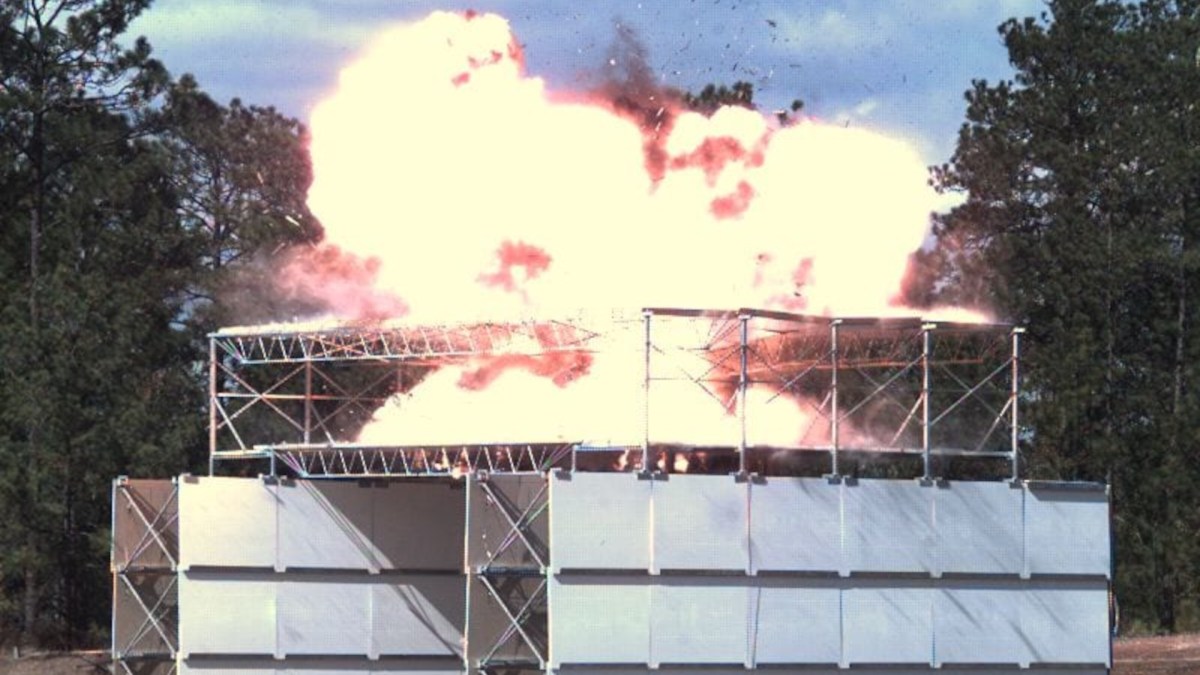
Low-Tech Solutions for a High-Tech Threat
The Pentagon's Joint Interagency Task Force 401, the body leading national counter-drone efforts, has released new guidance that places hardened structures, overhead netting, tensioned cables, and other passive physical defenses at the center of America's drone defense strategy. The document, published in early February 2026, represents a significant shift from the electronic warfare and kinetic interception systems that have dominated the counter-drone conversation.
The guidance arrives at a moment when the drone threat to both military installations and civilian infrastructure has become impossible to ignore. Incidents involving unauthorized drones near military bases, power plants, and airports have escalated throughout 2025 and into 2026, and the lessons from Ukraine's brutal aerial drone war have made clear that no electronic countermeasure is foolproof.
The Harden, Obscure, Perimeter Strategy
Central to the new guidance is what JIATF-401 calls the Harden, Obscure, Perimeter strategy. Rather than relying solely on detection and interception systems, which can be overwhelmed, jammed, or evaded, the strategy focuses on transforming the physical environment to cut access, visibility, and opportunity for drone operators.
Specific measures outlined in the document include structural shielding to protect critical equipment from blast and fragmentation damage, overhead netting and tensioned cable systems designed to physically block drone access to sensitive areas, visual clutter and camouflage measures to reduce the effectiveness of drone-mounted cameras and targeting systems, permanent and temporary physical barriers, decoy equipment to draw drone strikes away from actual assets, and redesigned crowd and workforce flow patterns to reduce vulnerability during mass gatherings.
FIFA World Cup Preparations
The timing of the guidance is not coincidental. Brigadier General Matt Ross, the director of JIATF-401, made clear that the document is intended to support security planning for the 2026 FIFA World Cup, which the United States is co-hosting. Large outdoor sporting events present particularly challenging drone defense scenarios due to their open-air nature, massive crowd concentrations, and the limitations on deploying electronic warfare systems in areas dense with civilian communications infrastructure.

A Shift in Pentagon Thinking
The Pentagon openly advocating for hardening facilities against drone attacks stands in stark contrast to pushback from officials in recent years. For much of the past decade, the Department of Defense invested heavily in sophisticated electronic counter-drone systems, radio-frequency jammers, radar networks, and directed-energy weapons while treating passive physical defenses as an afterthought.
Ukraine changed that calculus. The war demonstrated that cheap commercial drones, costing a few hundred dollars each, could evade sophisticated air defense systems and deliver devastating attacks on fixed positions. The math is brutally simple: when the attacker can send hundreds of drones for the cost of a single interceptor missile, electronic and kinetic defenses alone are insufficient.
Layered Defense Doctrine
The new guidance does not abandon active counter-drone systems. Instead, it positions passive physical defenses as the foundation of a layered approach. Electronic detection provides early warning. Active countermeasures, including jammers, lasers, and kinetic interceptors, engage threats at range. Passive physical barriers serve as the last line of defense, protecting assets even when active systems are overwhelmed or circumvented.
Civilian Infrastructure Implications
Perhaps the most significant aspect of the guidance is its explicit extension beyond military installations. General Ross emphasized that homeland defense now includes places where people gather in large numbers, not just military bases or power plants. This broadened definition of critical infrastructure means that stadiums, convention centers, transportation hubs, and government buildings may all need to incorporate drone-resistant physical features.
For architects, engineers, and facility managers, the implications are substantial. Future construction standards may need to account for drone threats in the same way they currently account for seismic activity or blast resistance. Retrofitting existing structures with overhead netting, reinforced roofing, and physical barriers will create a new category of security infrastructure spending.
The Cost Advantage
Passive physical defenses offer a compelling cost advantage over active systems. A section of overhead netting costs a fraction of a single anti-drone missile. Cable barriers require minimal maintenance and no electrical power. Structural hardening, once installed, provides continuous protection without operator intervention. In a threat environment where adversaries can produce drones faster than defenders can produce interceptors, this cost asymmetry favors the defender for the first time in the drone era.
This article is based on reporting by The War Zone. Read the original article.
Originally published on twz.com