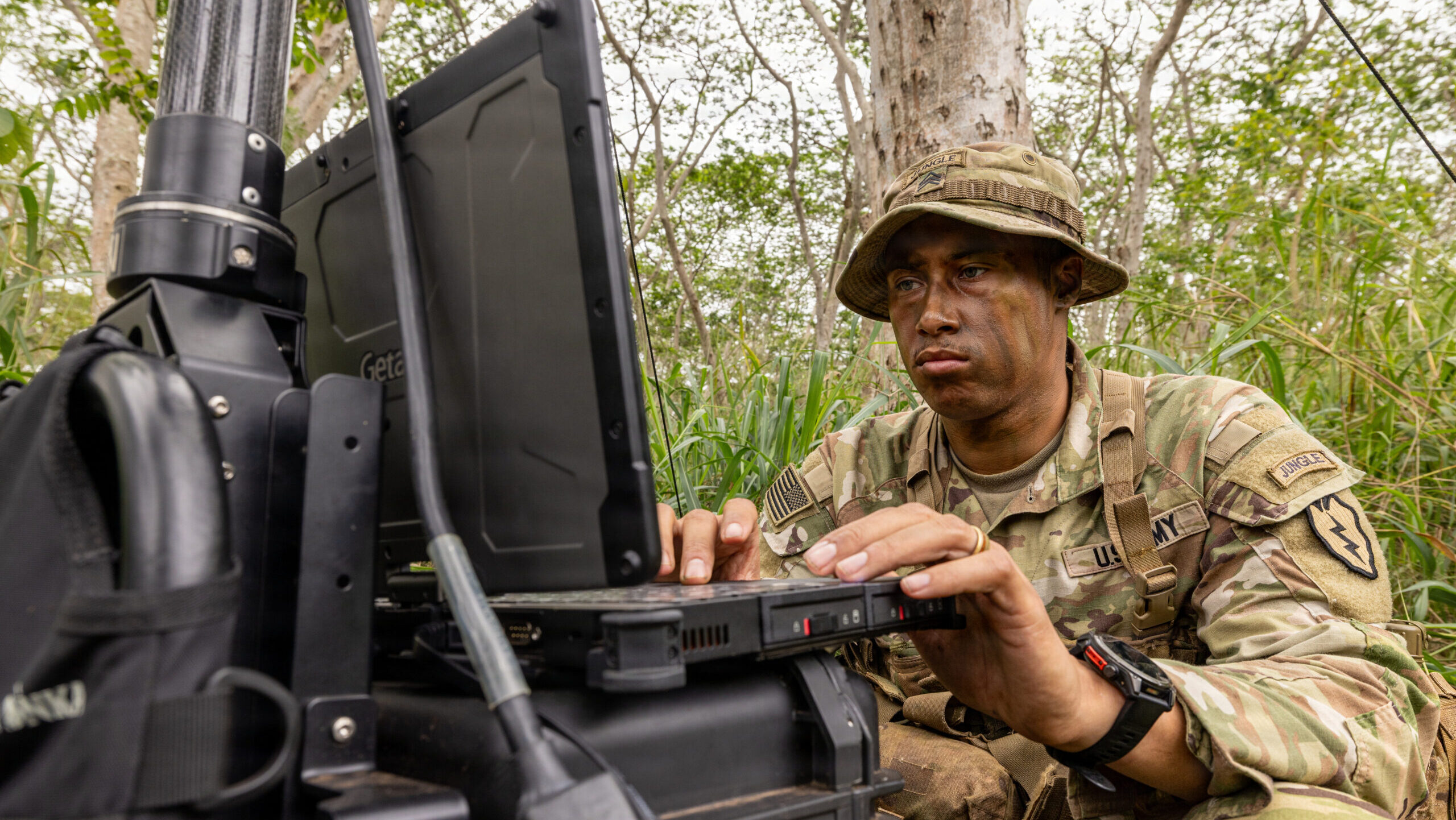
The Army wants a help desk for operational data problems
The U.S. Army has formally launched a pilot Data Operations Center designed to help tactical units deal with one of modern command-and-control’s least glamorous but most persistent problems: moving data where it needs to go, when it needs to get there, without forcing frontline teams to spend their time untangling access and infrastructure issues.
According to Brig. Gen. Michael Kaloostian, who also serves as director of the Command and Control Future Capability Directorate, the new Army Data Operations Center is meant to act as a kind of emergency support line for operational forces. The center officially stood up on April 3 and will run for 180 days under Army Cyber Command as a pilot program.
Why the Army created the center
Kaloostian described the problem in practical terms. Units are trying to connect data objects across different cloud environments, work with enterprise data owners, and pull mission data into tactical systems tied to next-generation command and control. In the field, those tasks can quickly become an operational distraction.
That burden has been falling on division-level operational data teams and other officers who end up trying to troubleshoot feeds, permissions, and latency under exercise or operational conditions. In Kaloostian’s account, the issue is not simply technology performance. It is also the accumulation of approval chains, access rules, and outdated bureaucracy that slows data sharing even when the military has systems capable of generating the information.
His description of the mission was blunt: the new center is intended to relieve divisions and their operational data teams so they can focus on commanders’ priorities rather than acting as their own data integration help desks.
From cloud friction to mission delays
The Army’s examples show why that matters. One scenario involved the challenge of getting a full-motion video feed from a partner nation ingested into a commander’s common operational picture. Another centered on latency problems with systems used in tactical environments. These are not abstract back-office inconveniences. When targeting data or shared situational awareness slows down, commanders lose time and confidence.
Kaloostian pointed to one exercise involving the 4th Infantry Division, where latency in the Army Intel Data Platform disrupted the flow of targeting. Users had to stop and investigate the bottleneck instead of concentrating on the fight itself. That kind of interruption is precisely what the pilot center is supposed to reduce.
The underlying theme is that the Army’s data challenge now sits at the intersection of software architecture and operational tempo. Tactical units increasingly depend on pulling together information from multiple systems, clouds, and partners, but the institutional machinery for doing that cleanly has not always kept pace.
A pilot with larger implications
The Army says the 180-day effort is meant to create a blueprint for what a permanent organization could look like. That makes the pilot more than a temporary support function. It is also a test of whether the service should centralize a portion of its operational data troubleshooting and integration expertise instead of leaving those problems to be solved ad hoc at the unit level.
If the concept works, it could have implications beyond better technical support. A successful permanent version might become part of the Army’s broader shift toward data-centric operations, in which commanders expect cross-domain information to move rapidly between enterprise systems and tactical users. If it fails, the Army risks confirming a familiar pattern in defense modernization: advanced digital concepts on paper, but too much friction in the final mile to operators.
What success would look like
The center’s value will likely be judged by whether it can reduce the time required to make data accessible, identify latency sources more quickly, and cut through the administrative red tape that currently slows units down. The source report makes clear that frustration in the field often stems from bureaucracy as much as from missing technology.
That is a notable point. Many military modernization programs focus on acquiring new tools, but the Army’s own framing here suggests that practical integration and permissions work may be just as decisive. Units do not merely need more data. They need reliable ways to connect existing systems, partners, and feeds in time to matter.
The Data Operations Center is therefore a modest-sounding initiative with outsized operational relevance. Modern warfighting increasingly depends on data flows that work under pressure. By creating a dedicated organization to solve those problems for tactical units, the Army is implicitly acknowledging that the fight for decision advantage can be lost not only on the battlefield, but also inside the architecture that is supposed to connect it.
This article is based on reporting by Breaking Defense. Read the original article.
Originally published on breakingdefense.com