TROP2ను మరింత నిర్దిష్టంగా చదివే విధానం
అధునాతన nonsquamous non-small-cell lung cancer ఉన్నవారిలో datopotamab deruxtecan ద్వారా ఎక్కువ ప్రయోజనం పొందే అవకాశం ఉన్నవారిని గుర్తించడంలో సహాయపడగల computational pathology biomarkerను పరిశోధకులు అభివృద్ధి చేసి ధృవీకరించారు. ఈ antibody-drug conjugateను Dato-DXd అని కూడా పిలుస్తారు.
Nature Medicineలో ప్రచురితమైన ఈ పని trophoblast cell surface antigen 2, లేదా TROP2పై దృష్టి పెడుతుంది. TROP2, Dato-DXdకు లక్ష్యం. అయితే pathologists చేసే TROP2 staining యొక్క సంప్రదాయ దృశ్య స్కోరింగ్, non-small-cell lung cancerలో TROP2-directed antibody-drug conjugatesకు ప్రతిస్పందనను అంచనా వేయలేదు. ఈ లోటు ముఖ్యమైనది: ఒక tumourలో లక్ష్యం ఉండవచ్చు, కానీ దాని expressionను సాధారణంగా అవును-లేదా-కాదు అని అంచనా వేయడం ద్వారా ఆ లక్ష్యాన్ని ఉద్దేశించిన చికిత్స పనిచేస్తుందో లేదో తెలియదు.
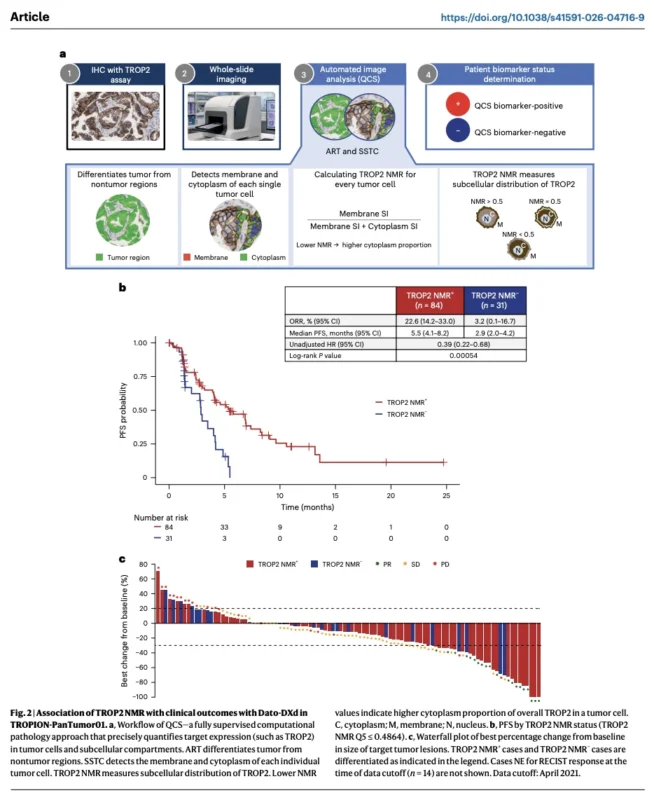
కొత్త విధానం TROP2 ఎంత ఉందో మాత్రమే కొలవదు. వ్యక్తిగత tumour cellsలో protein ఎక్కడ కనిపిస్తుందో కూడా అంచనా వేస్తుంది. పరిశోధకులు ఈ పద్ధతిని TROP2 quantitative continuous scoring, లేదా QCS, అని పిలుస్తున్నారు. ఇది immunohistochemistry-stained slidesకు వర్తించే fully supervised computational pathology విధానం.
QCSను ఉపయోగించి, వ్యక్తిగత non-small-cell lung cancer cellsలో membrane మరియు cytoplasmలోని TROP2ను బృందం పరిమాణీకరించింది. ఆ కొలతల ఆధారంగా normalized membrane ratio, లేదా NMRను అభివృద్ధి చేసింది: cell membraneలోని TROP2 పరిమాణాన్ని membrane మరియు cytoplasmలోని కలిపిన పరిమాణంతో పోల్చిన నిష్పత్తి.
స్థానం ఎందుకు ముఖ్యమై ఉండవచ్చు
Antibody-drug conjugates ఒక ఉపరితల లక్ష్యంతో బంధించి, దానికి అనుసంధానించిన drug payloadను అందించేలా రూపొందించబడతాయి. అందువల్ల అధ్యయనం యొక్క కేంద్ర hypothesis జీవశాస్త్రపరంగానే కాక computational పరంగానూ ఆచరణాత్మకమైనది: tumour-cell membraneలో ఉన్న TROP2, దాని subcellular locationను పరిగణించకుండా కొలిచిన TROP2తో పోలిస్తే వేరే predictive value కలిగి ఉండవచ్చు.
ఈ తేడాను NMR పట్టుకోవడానికి ప్రయత్నిస్తుంది. Pathologist సంప్రదాయ visual scoreపై ఆధారపడటానికి బదులుగా, ఈ వ్యవస్థ staining patternsను cells మరియు cellular components స్థాయిలో నిరంతర quantitative measurementsగా మారుస్తుంది. ఫలితంగా NMR-positiveగా వర్గీకరించిన samplesను NMR-negative samples నుంచి వేరు చేయడానికి ఉద్దేశించిన biomarker లభిస్తుంది.
ఈ కొలత మొదట TROPION-PanTumor01 studyలోని biomarker-evaluable populationలో అభివృద్ధి చేయబడింది; ఇందులో అధునాతన non-small-cell lung cancer ఉన్న 115 మంది patients ఉన్నారు. తరువాత TROPION-Lung01 trialలోని biomarker-evaluable populationలో NMR cut-pointను optimize చేసి validate చేశారు.
Validation analysisలో 352 biomarker-evaluable patients ఉన్నారు. దీని primary intended-use population actionable genomic alterations లేని nonsquamous non-small-cell lung cancer patients; ఈ సమూహంలో 221 మంది ఉన్నారు.

NMR-positive సమూహంలో ఎక్కువ progression-free survival
Dato-DXdతో చికిత్స పొందిన patientsలో, NMR-negative samples ఉన్నవారితో పోలిస్తే NMR-positive samples ఉన్నవారికి progression-free survival ఎక్కువగా ఉంది. Median progression-free survival NMR-positive సమూహంలో 7.2 నెలలు, NMR-negative సమూహంలో 4.0 నెలలు.
Reported hazard ratio 0.40; 95% confidence interval 0.25 నుంచి 0.64 వరకు. ఈ analysisలో, NMR-negative సమూహంతో పోలిస్తే Dato-DXd పొందిన NMR-positive సమూహంలో study periodలో disease progression లేదా మరణం సంభవించే ప్రమాదం గణనీయంగా తక్కువగా ఉందని ఈ association సూచిస్తుంది.
వేరే treatment arm అయిన docetaxelతో పోలిక ఈ findingలో కీలక భాగం. Docetaxel పొందిన patientsలో median progression-free survival NMR-positive సమూహంలో 4.1 నెలలు, NMR-negative సమూహంలో 4.4 నెలలు. ఆ treatment groupలో hazard ratio 0.94; 95% confidence interval 0.59 నుంచి 1.49 వరకు.
మరో విధంగా చెప్పాలంటే, reported analysisలో NMR grouping Dato-DXdతో outcomeలో తేడాతో సంబంధం కలిగి ఉంది, కానీ docetaxelతో అలాంటి సంబంధిత తేడా కనిపించలేదు. Study treatment-by-biomarker-status interaction P value 0.0098గా నివేదించింది. ఇది NMR status మరియు progression-free survival మధ్య సంబంధం రెండు treatmentsలో వేరుగా ఉందనే అర్థానికి మద్దతు ఇస్తుంది.
కేవలం prognostic signal కాదు, సంభావ్య predictive biomarker
ఈ treatment-specific pattern కారణంగానే పరిశోధకులు TROP2 NMRను Dato-DXdకు సంభావ్య predictive biomarkerగా వివరిస్తున్నారు. Prognostic marker చికిత్సతో సంబంధం లేకుండా outcomeతో అనుబంధం కలిగి ఉంటుంది; predictive marker ఒక నిర్దిష్ట therapy నుంచి ప్రయోజనం పొందే అవకాశం వేరుగా ఉండవచ్చని సూచించడంతో ఉపయోగకరంగా ఉంటుంది.
చికిత్స అభివృద్ధికి ఈ తేడా ముఖ్యమైనది. Clinical use కోసం validate చేస్తే, ఈ settingలో responseను విశ్వసనీయంగా అంచనా వేయని broad TROP2 expression assessmentsను దాటి selectionను ముందుకు తీసుకెళ్లడంలో predictive biomarker సహాయపడవచ్చు. TROP2-directed antibody-drug conjugateను ఇతర optionsతో పోల్చి అంచనా వేయడానికి clinicians మరియు patientsకు ఇది మరింత evidence-based మార్గాన్ని కూడా అందించవచ్చు.
ప్రస్తుతం, ఈ study validated analytical approachను, trial populations నుంచి వచ్చిన clinical outcomesతో ఉన్న associationను చూపిస్తుంది. NMR-positive tumour ఉన్న ప్రతి patientకు ప్రయోజనం కలుగుతుందని లేదా NMR-negative patientsకు ప్రయోజనం కలగదని ఇది నిరూపించదు. Treatment choiceను నిర్ణయించడానికి అవసరమైన విస్తృత clinical assessmentకు ఇది ప్రత్యామ్నాయం కాదు.

Computational pathology image review నుంచి treatment selection వరకు
Digital pathologyలోని విస్తృత దిశను కూడా ఈ study చూపిస్తుంది. Immunohistochemistry చాలా కాలంగా oncologyలో కేంద్రంగా ఉంది, కానీ visual interpretation సంక్లిష్ట tissue patternను broad categoriesగా కుదించవచ్చు. Computational methods stainingను నిరంతరం quantify చేయగలవు, individual cellsను గుర్తించగలవు, membrane మరియు cytoplasm వంటి cellular compartmentsను వేరు చేయగలవు.
ఈ సందర్భంలో అదనపు detail కీలకంగా కనిపిస్తోంది. Non-small-cell lung cancerలో TROP2-directed antibody-drug conjugatesకు responseను TROP2 expressionపై conventional pathologist assessment అంచనా వేయలేదని పరిశోధకులు కనుగొన్నారు. Conventional scoring మిస్ చేసే సమాచారాన్ని వెలికితీయడానికి వారి NMR method ప్రత్యేకంగా రూపొందించబడింది.
ఇలాంటి biomarker routine clinical practice మరియు future studiesలో ఎలా పనిచేస్తుందనేది తదుపరి ప్రశ్న. ప్రస్తుత ఫలితాలు మరింత clinical developmentకు స్పష్టమైన కారణాన్ని అందిస్తున్నాయి: reported trial analysisలో membrane-normalized TROP2 expression Dato-DXd outcomesను వేరు చేసింది, docetaxelకు సమానమైన separation కనిపించలేదు.
Molecular మరియు pathological detailపై treatment decisions మరింతగా ఆధారపడుతున్న వ్యాధిలో ఇది అర్థవంతమైన అడుగు. Drug target ఉండటం మాత్రమే కాకుండా, cellలో దాని placement కూడా targeted therapy ప్రయోజనం అందించే అవకాశాన్ని నిర్ణయించడంలో సహాయపడవచ్చని ఇది సూచిస్తుంది.
ఈ కథనం Nature Medicine reporting ఆధారంగా రూపొందించబడింది. అసలు కథనాన్ని చదవండి.
Originally published on nature.com
